Opera zeitgeist – industrial market garden, gas station or the kitchen?

Not sure what the zeitgeist is here.

Last week we saw L’Elisir d’Amore set in the distribution area of a market garden (Holland Park Opera). This looked good and was a very jolly production, but musically a little pedestrian? less elastic than it should be?

In Bayreuth they have set Das Rheingold in a gas station. This, plus other violations of the audiences expectations, seems to have lit the blue touch-paper and caused fury. I am not a Wagner enthusiast, so not sure what the big beef is here as musically it was apparently great.

Last night we saw Glyndebourne’s Baroque opera, Hippolyte and Aricie (Rameau) set, at least for some of the time, inside a commercial fridge. As the director Jonathan Kent said in an interview: ‘Just think of the Opening Ceremony of the 2012 Olympics – that was a Baroque event.’ I just wish I had read this interview before watching the opera.

For me, new to the Baroque genre, this was a baffling mixture – every part of which gave me something – from the exquisite sounds of the ancient instruments, to a farcical sailor dance routine from the vaudeville stage. At the heart of it was a moving, classical forbidden-love story.

I admired the way the stage designer had observed The Fridge and put all the details of it on stage. Cupid breaking cockerel-like out of an egg, on the upper shelves, in orange-yolk colours against the crystalline white of the ice-flakes (hand-maids of Diana) in fur coats, was a delight. Hell was depicted in amongst the working entrails at the back of a (gigantic) fridge – great detail.

I could just about follow the main story as the characters were dressed in modernish clothes. There was a really moving scene in which both upstairs and downstairs rooms of a 1950-60s house were seen. Each room had a singer stuck in their own dilemma within.  BUT, the mayhem of styles among the gods and chorus that surrounded them, the killing of stags and distributing of blood onstage and the costumes of the denizens of the underworld distracted me from the singing and the story.

Dancing – and there was masses of it (essential in French Baroque opera) – was beautifully executed but randomly choreographed. I don’t mean it was unskilful, it wasn’t, but the sense of going in whatever direction the whim took you was extreme.

Having, too late, read the interview between the director Jonathan Kent and Cori Ellison, I think they achieved exactly what they intended and that this was a clever modern update of the composers wish ‘to astonish and delight’ and to appeal to all the senses. I also think that a trad opera goer probably needs to read this elucidation in order to sit back and enjoy.

Highlight for me the long and sweet aria (from the upper chamber of a giant morgue fridge) by, I think, a shepherdess. This must be the Nightingale aria, but I don’t know the opera well enough to be sure.

Sorry, long post, but a weird and wonderful experience for me, though of limited interest to non-opera goer.

Below is an intro video from Glyndebourne, including part of the opera and below that a couple of good reviews.

http://glyndebourne.com/production/hippolyte-et-aricie

http://www.seenandheard-international.com/2013/07/01/glyndebourne-captures-spirit-of-the-baroque-in-rameaus-first-opera/

http://www.operatoday.com/content/2013/07/glyndebourne_ra.php

Independent Swallow in the opera house

Although I have seen bats joining in on stage at Glyndebourne, this was the opera La Rondine – the Swallow at the Royal Opera House, London.

EG said that, as usual Puccini’s female lead was a victim. But as we talked about this, we realised that this is not the case. The story, like Traviata, is of a courtesan finding true love with an innocent boy. In Traviata, the boy, Alfredo, knows all about Violetta’s past, but she is persuaded by his father into sacrificing her happiness to free Alfredo’s family from the shame of associating with her. In Rondine, Magda deceives her innocent lover into thinking of her as equally innocent, and then when he wants to marry her, freely decides to renounce her him and return to her courtesan life, rather than pollute the expectations of his pure family. She is distraught, but she is a free agent and it is her lover, Ruggero, who is the weeping victim at the end.

The setting, in charming detail, was the 1920’s. The direction was so detailed that the singers gestures brought the period to mind as much as the costume. All the characters continued to act their roles (with some very funny by-play), while the main singers carried the story. It was an evening beautiful to watch and listen to and especially moving at the end. It was the last of three performances by the two singers of the main parts – Magda and Ruggero – and they both ended in tears at the final onstage parting.

And in this opera there are no bodies on stage, everyone lives, though not necessarily happily, ever after.

Carmen in the Garden

Carmen, with an orchestra of 6 and a cast of 6 in a marquee in the grounds of a beautiful house (Thurston End Hall) in the wilds of Suffolk.

DSCN4137 DSCN4139

A balmy summer evening, a garden smelling of roses, everyone picnicking happily on the grass, (very high quality Portaloos), and an entertaining, well sung interpretation of Carmen. This was in English (which I don’t usually like) but as they had set it in a New York bar with a boxing theme, it worked perfectly and I heard every word. Escamillo, the Toreador, was a boxer. Carmen, Frasquite and Remendado were immigrant siblings running a bar. And Jose was a new police recruit with a murky past, while his commander, Zuniga, ran a protection racket. This cast of six managed to be chorus and all parts, it was impressive, fun and wonderful to hear. The orchestra created amazing effects.

Butterfly in Venice

Since EG had three day’s work in Venice, he naturally needed my support. I learnt more than I probably needed to know about managing digital archives (though a session on appraising records was very helpful. I will now write a plan of what needs keeping, set a timetable, then select and delete accordingly. The loft will lose some of it boxes-of-paper insulation, but there will be less to deal with in the long run.)

I love Venice.

Canaletto lives.

DSCN4049

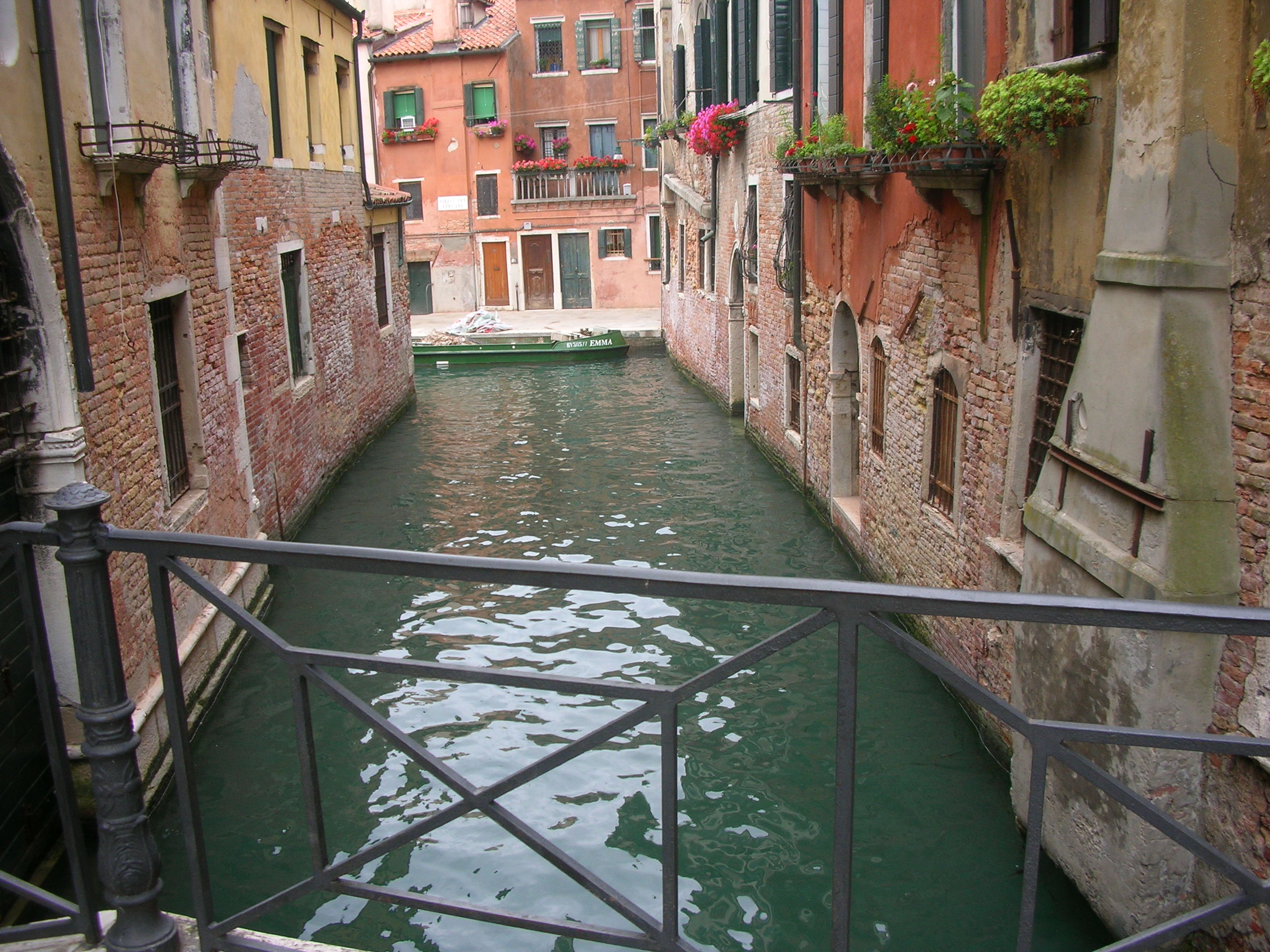
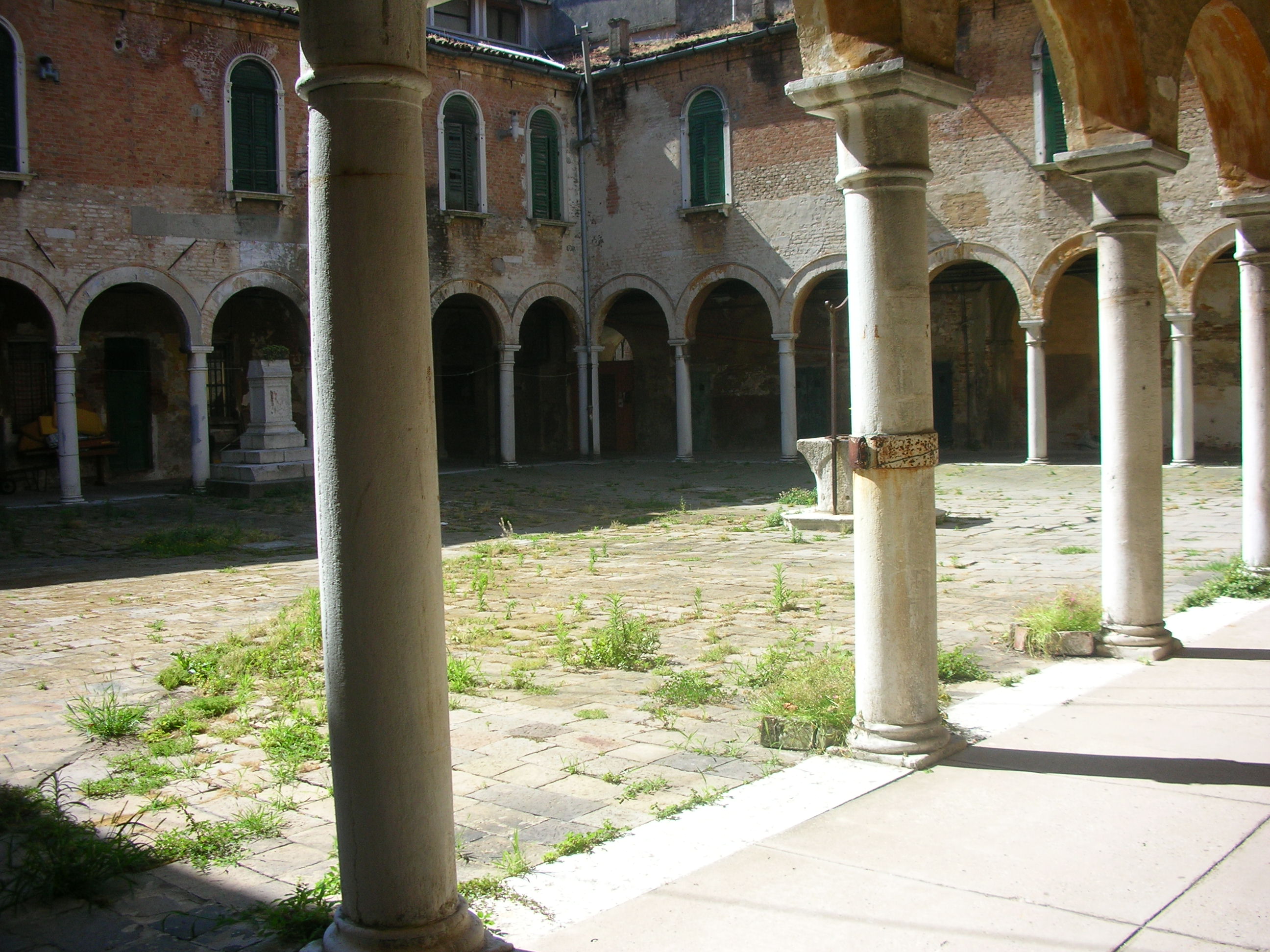
Walk one minute in any direction off the main drags and you find a cool, empty, grey-green world.

DSCN4106 DSCN4070

DSCN4025

DSCN4032

We got lost in one empty quarter and were rescued by a cheerful elderly lady with a trolley who marched us to the vaporetto stop. She explained that she was a little deaf, yet she chatted, coping well with my stumbling Italian, and at the same time guiding my footsteps round every small obstacle (polythene bag, dog mess, loose flagstone).

And then there is La Fenice opera house. We were able to buy (restricted view) tickets for Madame Butterfly and spent a happy evening peering over people’s shoulders and listening to a terrific production. The humming chorus was sung from the back of the auditorium and during Butterfly’s long night of waiting, after she had left the stage, a backdrop came down leaving Suzuki and the boy asleep in view. Then vast and incredible cosmic fireworks were shown while they orchestra played to match. We knew none of the singers, but all were good.

A city you could visit over an over again and still find something new.

Hungary to Japan in a weekend

Wonderful couple of days. Small but international poetry meeting with the theme ‘dwelling’ very freely interpreted. Poems ranged from the romantic to the starkly tragic, with English, Hungarian, Czech, Polish and Bengali contributions, most read in both English and the original. For bonus we had two singers – one operatically trained (who indulged me and delighted us all with the Handel aria Did You Not Hear My Lady unaccompanied), the other a charming cabaret/folk story-teller singing in (?) Turkish. We all regretted that these meetings are so very rare.

Yesterday we went to the Holland Park Opera for Madame Butterfly. The best interpretation and staging of this that I have ever seen. A story of its period, but no longer silly. Anne Sophie Duprels made us believe in Butterfly’s moral outlook, her dilemma and her ultimate choice. She brought out a strangely modern problem – that of the cultural immigrant who accepts a country’s hype at face value, and is fatally damaged as a consequence. Strong stuff, cleanly and simply staged.

Sleepwalking opera

Last night four of us watched the DVD of the MET Sonnambula (Bellini). New opera, new composer for two of us. I love this production (Mary Zimmerman), it breathes dramatic life into a rather unlikely, sentimental story set in a Swiss village and gives the fabulous music  a chance to shine. The setting is a New York rehearsal room and by interleaving the tribulations of the modern lovers who are singing the main parts with the story, the whole thing becomes a glorious comedy. Of course, with Juan Diego Flores and Natalie Dessay the casting is perfect.

We talked afterwards about what works for new opera goers. The singing, according to the newcomers is mainly noise to start with, so you need to fall for the principal singers and be able to follow the story they tell. Sonnambula was a little complex from that point of view. Two DVDs work well are the made-for-Cinema Bohême (Puccini) directed by Dornhelm. The mangled subtitles bother me, but Anna Netrebko and Rolando Villazon are beautiful, passionate and have voices I could listen to as I leave the world. This is made for screen viewing too. For me though, the best of all to start off with is La Traviata (Verdi – my favourite opera composer), in the 2005 Willy Decker Salzburg Opera production. Same soloists as the Bohême in a production that is almost like Greek theatre. This seems to be a hit for new comers and old timers every time we watch.

We also talked about the difference between live and DVD/Cinema. In the first a sound experience so amazing in quality and a total view of the events on stage. In the second wonderful close-ups, emotional contact with the singers/actors… plus comfortable seats, good view and freedom to stop and start. Both great ways to watch/listen to opera, just different.

Personally I like my opera in the original language – it fits the music and the libretto much better that way – with English subtitles.

jet-lagged from Chicago

I am planning a blog reassessment, but first I will put up some posts of various things on my mind.

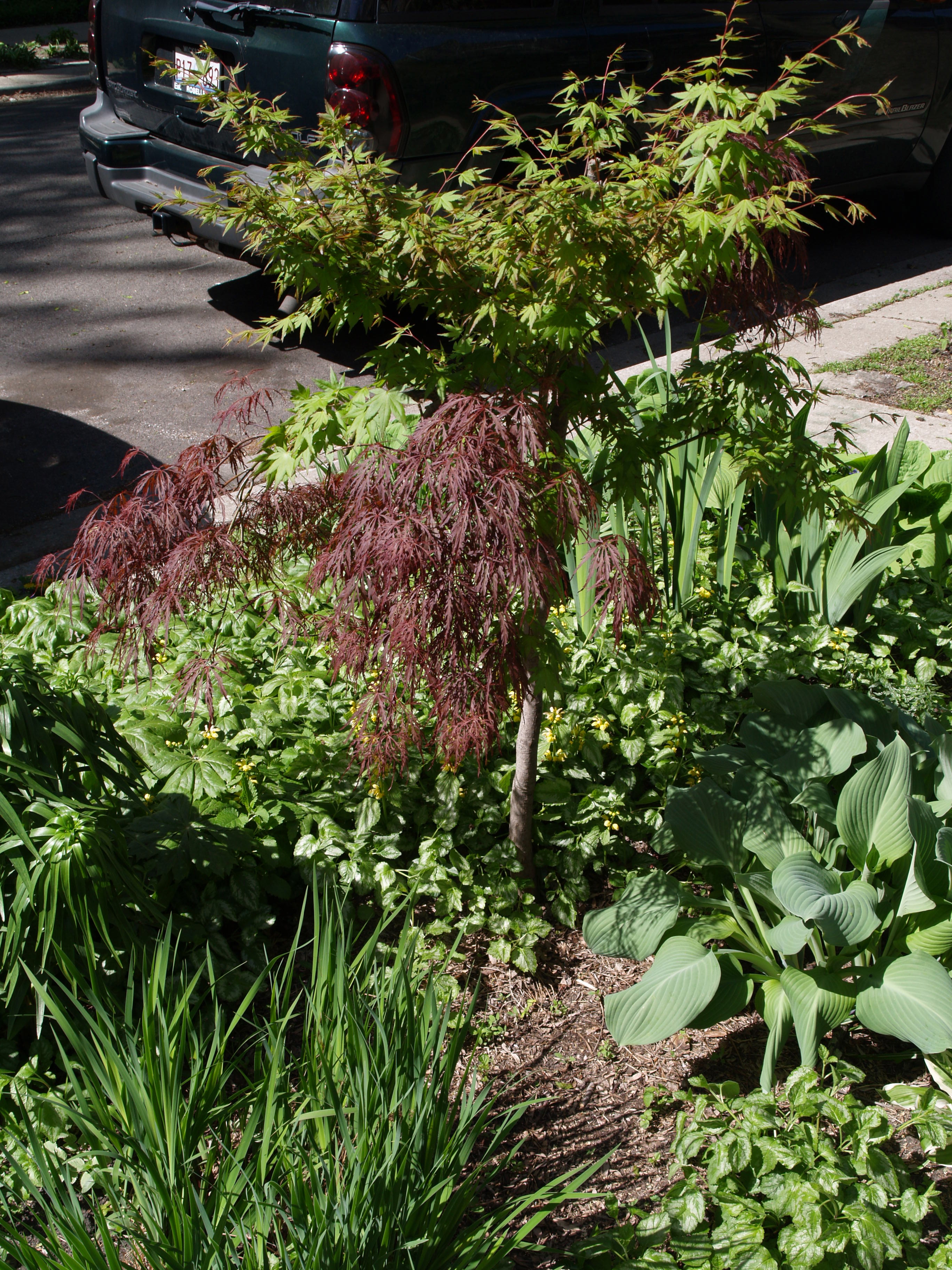
Chicago has totally charmed me. We stayed on the North Side and all the streets were full of an explosion of spring into summer; narcissi, tulips, maples in leaf, cherry blossom, hostas everywhere. The sidewalks often have cultivated strips beside them, all individually designed by the house owners.

The number of theatres is quite astonishing. We saw three excellent productions in three different theatres (two directed by Elly Green), we listened to a (free) string/clarinet lunchtime concert in the beautiful Culture Centre. We saw a superb exhibition in the Museum of Contemporary Art – Destroy the Picture – the anger and innovation made visible in post WWII ‘paintings’. The Smart Museum of Art had an astonishing collection (and a foyer with people of all ages having a go at producing a Rothko painting).

The highlight was being caught and soaked by the high canon of water from the Buckingham fountain in Grant Park and then drying off within about 15 minutes in the sunlight and warm wind.

P5200197

Our first and only baseball match (to date) saw The Cubs win. Altogether a visit of enormous entertainment and happiness.

OLYMPUS DIGITAL CAMERA OLYMPUS DIGITAL CAMERA

Villazon on Verdi

Someone at the BBC had me in mind when they commissioned this programme (earlier this evening on BBC4). An hour of Rolando Villazon talking with passionate simplicity about Verdi. As he talked, he interviewed equally passionate conductors and singers about what it is that Verdi gives us that works so well. Verdi cared more about moving his audience than about impressing them. He used not just the notes but the pitch, the timbre of the voice or the musical instruments to convey the emotion in the words. More than anything he wanted us to feel what the characters are feeling. (I may possibly have added some of my own views to this summary). We got to hear excerpts from a select quartet of operas and rehearsal sequences with Rolando.

From the hour that I sat right up against the stage and watched the tension of opera singers in the wings as they prepared to walk on, the sweat and the physical effort they threw into producing both small and great sounds, their exhaustion as they reached the end of the opera, I was hooked. I have followed and sought out many singers, especially those whose repertoire centred on Verdi, and Rolando epitomises all the qualities I love best. He climbs right inside the character, he sacrifices perfection for authenticity, the result is very moving and has an edge because giving everything is a little dangerous. Most of all he brings Verdi to life in the way, I am sure, Verdi would have wished.

Yet more Verdi

Don Carlo at the Royal Opera House, and it turned out to be the first night of the run so there was a buzz in the audience and we spotted several musical bigwigs during the intervals. The contrasts between this and the six-man Ballo in the pub on Thursday were mind-bending, though my personal enjoyment of both was high (and I preferred the seating in the pub).

Don Carlo is just about my favourite opera, and we must have seen this particular production at least three times. The music is magical and with Pappano at the helm I could have shut my eyes and been in bliss the whole evening. On stage, the opening didn’t quite grab me – Kauffman as Don Carlo, in spite of his admirable voice and acting ability doesn’t move me in the way both Villazon and Alagna have in this production, he and Hateros (as Elizabetta) were passionate, anxious and tentative in a modern way – and not enough to set up the drama, which needs vulnerability and individuals caught up and made helpless by bigger events (i.e. classical tragedy). EG was enthralled by the Cloister scene – as were the rest of the audience and I thought Kwiecień as Posa was in stunning voice and perfect for the part and they gave us a ringing duet. In the garden scene there was a new singer, Uria-Monzon, in the part of Princess Eboli, pretty, but her voice was uneven.

If anyone has read this far they will notice that I have sat though Acts I and II without becoming absorbed by the music – this may be my fault for being too tired or overdoing the opera this week. And yet, as the opera progressed and Furlanetto as Philip took the stage I did become involved and lose myself.  By the time of King Philip’s great nighttime lament that his wife never loved him, I was hooked. This was hauntingly sad and as good as I have ever heard it. Eboli’s aria to her beauty was much more secure than the veil song. Posa’s death and the final scene with Don Carlo and Elizabetta in the monastery were musically superb.

Three great operas in a week in a cinema, a pub and a grand opera house, with enthusiastic audiences of all ages. Tickets at the pub were £23 each [this is a correction]. Who says opera is dead or only for the rich?

Ballo at The King’s Head

Our second Verdi opera this week. This was Verdi with a gigantic twist that still conveyed the musical emotions in Verdi’s score. The cast of six from OperaUpClose performed in the tiny back-of-the-pub King’s Head Theatre (Islington, London) with a piano accompaniment. If I was awarding bouquets for the evening the first would go to the pianist  (not even named in the programme), who kept the score rolling with tremendous flair and warmth. I did not miss the orchestra and there were many times when the piano seemed the perfect accompaniment.

The twist: For those who think of Ballo in Maschera as set in the 18th Century either in the Swedish court or alternatively in colonial Boston (America), it comes as a shock to find that ‘Ballo’ is a modern-day Ikea-style store with Riccardo as manager and Amelia as a checkout operator. The new libretto is hilarious in the first act, yet still within the original story line (a successful and popular – in his own eyes – Riccardo, with a camp sycophantic PA, Oscar, a dour jobs-worth assistant Renato and a disgruntled store cleaner, Tom).

Ulrica, when she appears, is the Customer Complaints Manager making the best of a poorly paid job, well below her degree-level capacity, by doing fortune-telling on the side. Those of us who knew the opera well were laughing at the cleverness of the plot adaptation, Amy and others, new to the opera, were laughing because they recognised the bind she was describing. Amy felt the opera dealt with real modern issues.

Act 2 had Amelia waiting in the freezing car park of the Ballo store to buy drugs. Her aria about her life, her dilemma and her hopelessness was genuinely moving. Riccardo turned up, now serious and confused, to declare his (rather abbreviated) passion. Renato appeared to save Riccardo from Tom, who is on his way to kill him. Tom (who deals drugs to boost his income) appears and cruelly taunts Renato for trysting with his own wife in a car park. The plot events from this point and through Act 3 are close to the original and achieve that satisfying flip of turning comedy into tragedy.

I haven’t mentioned the singing. In a venue this small, the operatic voice is twice as exciting, but also very in-your-face. It is also, with only a piano to back it up, very exposed. The evening we attended (Thursday), the voices that were most positively beautiful and assured were Tom and Ulrica (bass and mezzo). I am not a musician and it may be that the lower voices fare best in such circumstances. The others varied with great moments and the odd squeak. It was fun to have a male soprano in the trouser role and his acting was sheer delight as he echoed every movement Riccardo made and reacted brilliantly to both events and characters. All the acting was good and this enormously enhanced the singing and brought great intensity in the ensemble sections.

I really love to hear the voices only an arm’s length away and felt privileged that these singers should perform for us (at minimal pay) in this pocket-sized venue. Overall verdict from both old timers and new comers – the adaptation really worked, the music that mattered was there, a great experience, fun, moving and something to repeat.