Writing to a Ghost – POWs 16

While Barry is slowly recovering his strength in the big base camp at Chungkai, Phyllis has managed to move out of her parents house. Like so many other relatives, she struggled to write again and again with absolutely nothing coming back. It was, as someone said, like writing to a ghost – which sadly many of them were.

In November 1943 Phyllis wrote:

DEAR DARLING I HAVE NOT WRITTEN FOR SOME TIME, BECAUSE THERE SEEMS TO HAVE BEEN SO MUCH DOUBT ABOUT WHETHER YOU WILL EVER RECEIVE THE LETTERS AND THE MUST BE TYPED [IN CAPITALS] NOW. I HAVE BEEN ABLE TO BORROW THIS TYPEWRITER FOR A SHORT WHILE THIS MORNING. ROBIN AND I MOVED UP HERE AT THE END OF SEPTEMBER AND ARE NOW REALLY GETTING SETTLED IN. I HAVE A VERY NICE SITTING ROOM OF MY OWN. … ROBIN HAS BEEN RATHER SEEDY SINCE WE CAME HERE … BUT IS NOW PICKING UP AGAIN.

Robin

Robin

HE IS, NEEDLESS TO SAY, A CONTINUAL SOURCE OF DELIGHT TO ME. HE IS DEVELOPING IN SOME WAYS VERY LIKE YOU, AND IS REALLY AN INTELLIGENT COMPANION TO GO ROUND WITH NOW, THOUGH THE CLARITY OF HIS VOICE IS MATCHED BY THE DIRECTNESS OF HIS QUESTIONS AND OFTEN EXERCISES ALL MY TACT AND PATIENCE WHEN IN COMPANY, BECAUSE HE NEVER MISSES A POINT OR ALLOWS ME TO EVADE A DIRECT ANSWER. … HE IS ALWAYS TALKING ABOUT WHEN DADDY COMES HOME. … AND WHEN HE COMES HOME AND WE ALL HAVE A …HOME, AND A LITTLE BABY SISTER (PLEASE I WOULD LIKE A LITTLE BABY SISTER) LIFE WILL BE PERFECT.

HOW AM I? QUITE WELL, VERY BUSY, AND GLAD TO BE SO. TRYING TO POSSESS MY SOUL IN PATIENCE, NOT TO THINK WHAT LIFE MAY BE LIKE FOR YOU NOW, AND TO CONCENTRATE ON DOING ALL I CAN FOR YOU NOW BY WHAT I CAN DO FOR YOUR SON. ALSO TO SAVE AS MUCH AS POSSIBLE TOWARDS OUR FUTURE, … TO ONE IDEA I HANG ON FIRMLY, NAMELY THAT YOU WILL NOT BE WASTING YOUR TIME MORE THAN CAN BE HELPED, AND WILL BE LEARNING ALL THAT YOU CAN FIND ANYBODY TO TEACH YOU. ALSO, IF I KNOW ANYTHING OF YOU, YOU WILL BE DOING A LOT OF HELPING OTHER PEOPLE, TOO. SO MANY PEOPLE HAVE SAID TO ME THAT IF ANYBODY COULD ‘TAKE IT’ YOU CERTAINLY COULD. AND THANK GOD I KNOW THEY ARE RIGHT, MY DARLING. NEVER FORGET THAT I LOVE YOU, WILL YOU? EVER YOUR OWN, Phyllis

Sadly, Phyllis has missed notices in the post office saying that correspondence to Far East POWs has been limited by the Japanese to 25 words. Her letter is returned by the  censor.

Her next communications look like this.

permitted Far East POW letters

permitted Far East POW letters

Mantel’s ghost – my fury

Hilary Mantel – Giving up the ghost, a memoir

This book has roused profound emotions in me. I should wait until we discuss it next week, but by then the iron will no longer be so hot.  Reading it has cured me – possibly only temporarily – of envy and prejudice; it has also aroused in me a retrospective anger on a vast scale for the treatment of women in the past as well as firing me to write better.

This memoir is very short. As I read, I ached with envy over Mantel’s delicious touch with words and her self-deprecating humour. After admitting that she hardly knows how to write about herself, and listing her usual recommendations to writers, she continues:

“Rise in the quiet hours of the night and prick your fingertips, and use the blood for ink; that will cure you of persiflage!

But do I take my own advice? Not a bit. Persiflage is my nom de guerre. (Don’t use foreign expressions; it’s élitist.)”

She takes us back with her to the smells, sensations, fears, confusions and delights of very early childhood. She captures that total sense of being the centre of the world, that we all once had. She hammers on about the family Catholicism that is an unavoidable, and mostly pernicious, influence in her upbringing. She enables us to follow, step by step, as her body is consumed by an ill-defined disease. Her ‘unwellness’ is alternately treated or dismissed by her relatives and doctors.

As a young married woman, taking her body and its persistent pains to doctors, she meets  breathtakingly patronising assumptions: that she will be fine once she starts breeding, that she is perhaps overestimating her intellectual capabilities (as a law student), that she really needs mental treatment – in that period that would be tranquilizers and antidepressants. When these fail to cure her pain, she is hospitalised on antipsychotics and then given the whole pharmacopeia. No one actually listens to her.

In her mid twenties she finally researches and correctly diagnoses her acute form of endometriosis. By the age of 27 she has had a total hysterectomy and a medically induced menopause. In the succeeding years the problem returns crippling her already stick-like body.

Treatment, including steroids, then turns her from a wraith into the substantial woman with which we are familiar. And yes, I tend to make assumptions about substantial people. I try not to, and reading this memoir will help me to greater compassion.

I still envy Mantel her writing skills, but I no longer wish to swap places with her. I think she would have developed her astonishing skills with or without the extreme trials in her life and the sadness induced by her loss of fertility. But I remain furious with the ignorant, presumptuous people who prolonged her pain and made her achievements such hard work.

I think this book should be compulsory reading for all doctors – not to teach them to diagnose better, but to LISTEN.

Sorry, far too long a post, but her courage in writing this tricky memoir should be celebrated.

Invisible DIY, finding heroes, writing and autumn outside

It been a busy week!

Today I relaxed by covering another two wall areas with thin woollen jackets. Our house has a mere nine solid inches of brick between us and the winter storms, so each year we add another layer here or there or another piece of secondary glazing. Some panes arrived with the new magnetic attachment system which works brilliantly (though to my embarrassment I had the dimensions of one of them wrong).

I needed to relax from the excitement of two days of Internet connections. Pierre Lagacé, of Lest We Forget, found a website for me with the story of my airman uncle’s Commanding Officer (http://www.marcusbicknell.co.uk/nigel/). I have been in touch with his son, Marcus, and had a a wonderful and productive email exchange and the blog (http://johncustancebaker.wordpress.com) has now become a rich repository of Mosquito and meteorological lore of WWII.

Signalman William Dawson

Signalman William Dawson

Both these activities have been punctuations in my all out blitz on the manuscript of Writing to a Ghost: Letters to the River Kwai 1941-45. A few weeks ago we visited the museum where some of the materials – letters to my mother from the wives and mothers of my father’s Unit, all Far East POWs – are housed. This time we photographed all the photos my mother had collected. I have been able to put faces to nearly half the men in the story. They are brilliant, but some of them make me weep.  I have also been following a friend’s advice as I worked over the manuscript.

Meanwhile, the sun has come out again and the air is warm, and autumn is raging outside. I want to be in the garden. (We did have lunch in the garden.)

Rosa Mary Rose

Rosa Mary Rose

DSCN4320

Acer palmatum Sengokaku

Acer palmatum Sengokaku

DSCN4321

Beyond the call of duty – POWs 15

As the cholera epidemic raged, the POWs including Barry and the remnants of 27 Line Section were still working long hours on the railway. He remembers:

Towards the end of June 1943 several of us found it increasingly difficult to swallow and digest even the small ration of watery rice porridge that was our daily portion. We rapidly became so thin and weak that we were no longer able to get out to the working site. I carried on for a few days trying to do something useful in the camp or cookhouse, but eventually gave up.

The Japanese commander decided to make up a party of thin useless men and send them south in barges. We were a group of about twenty, I believe, unable to walk and barely able to stand, it was assumed that we would soon die, which most of us eventually did.

The day chosen for the evacuation was a Sunday, one of our rare ‘yasme’ (rest) days. We had about 7km to walk to reach the barges. Two of my men helped me, one carried my pack and I was supported between the two of them. After a short distance we found that we were making poor progress and one of them took me on his back and carried me the rest of the way. The two names of Gibby Douglas and Corporal McWhirter are in my mind but I cannot be at all sure that this is a true recollection.

The first proper camp the sick men reached was Tha Khanun (Tarkanoon). One of the POWs there was Dr Robert Hardie. His diary describes: “a lot of very sick men are coming down from 211 camp in a shocking condition – gaunt spectres of men, riddled with malaria and food deficiencies. One can do very little for these people. They can’t assimilate the sort of food we have except eggs, of which we have very few”.

Barry, and the men who reached this camp alive, were welcomed by:

 a proper reception committee of doctors and orderlies who first examined us very thoroughly to make sure that none of us was carrying a cholera infection and then did whatever they could to restore our strength. After we had been thoroughly tested we were all weighed on a beam balance, built in the camp and calibrated against a 50kg rice sack. My weight, about average for the group, was noted as 5 stone 12lbs, or 37kg.

apples and plums

It’s a bonus year; the plum that turned out to be an apple fruited for the first time (see The approach of Autumn) and the plum that we planted to replace this also fruited. In fact it overdid it and I should have stripped half of the plums off in early summer. We have had several colander’s full already.

Victoria plum

Victoria plum

The weather has jumped from August straight into October, with gales, hailstorms and temperatures barely in double figures. The remaining tomatoes are very unhappy.

Last week while I was having a writing hiatus, it was too miserable to work outside, so I started ambitious insulating projects in the house. However a break in the clouds sent me out and I spent some spare energy taming an old Forsythia hedge. I may have overdone this a trifle, but it was completely covering the bed beneath. I have to admit it is looking very unsightly now. Never mind, it will get up and go again next spring.

Forsythia tamed

Forsythia tamed

The dwarf Blenheim Orange that we planted several years ago to replace another one (a giant 60-year-old hollow tree with mistletoe, but inclined to drop branches), is now really established. It’ll be another month before the fruit is truly ripe. I know because I ate them non-stop as I was waiting for Eleanor’s birth. Happy days!

Apple Blenheim Orange

Apple Blenheim Orange

Spoiled for choice – writer’s support network

My writing has been stalled because I had finished one project and was in desperate need of feedback on the other two.

The project, an article on my airman uncle (A Very Unlikely Hero) had been sent to a specialist blogger. My non-fiction (Writing to a Ghost: Letter to the River Kwai) was being read, as a favour, by a wonderfully meticulous friend and my re-re-re revised fiction book (Border Line) was in a queue to a busy writing friend.Two days ago my writing frustration peaked and I also felt a need of independent professional advice for some tricky chapters. So I sent them off to Sally Jenkins, who had done such a swift and helpful job on the synopsis, agent letter and first chapter of Border Line.

Later that same day the blogger, Pierre Lagacé, of Lest we Forget, http://athabaskang07.wordpress.com came up trumps and starting posting a new blog using parts of my article on my Mosquito Navigator uncle at http://johncustancebaker.wordpress.com/2013/09/10/and-if-by-chance/ I am thrilled with this.

Yesterday my friend, Lesley, came round with a wonderfully annotated manuscript of my non-fiction book and some very good advice.

Today, to my amazement, Sally Jenkins came through with the critique of my tricky chapters in Border Line. Her speed of turnaround only equalled by the seriously helpful advice on my chapters. http://www.sallyjenkins.wordpress.com/

Writing is something of a game of snakes and ladders. Today I am on a ladder. Back at my desk, I feel like a bee in clover – totally happy and busy though spoiled for choice about which manuscript to tackle first. It is this wonderful network of support from people we know and, in this new age, those we have never met that make writing possible.

This state of affairs has been very good for the house. DIY flourished, I have insulated a tricky section of bay wall with thermal lining, put up a pane of secondary glazing and ordered more lining, glazing panels etc.

(And my L reg. Nissan passed its MOT!)

The darlings he killed

A fascinating and salutary article about how life can sometime rob a writer. Mark Lawson, journalist, broadcaster, writer has had both fiction and non-fiction books snatched from him, half-written, by a variety of circumstances. In a his article he talks about each of these lost enterprises with modesty, humour and insight.

http://www.theguardian.com/books/2013/sep/06/mark-lawson-books-never-were

The approach of Autumn

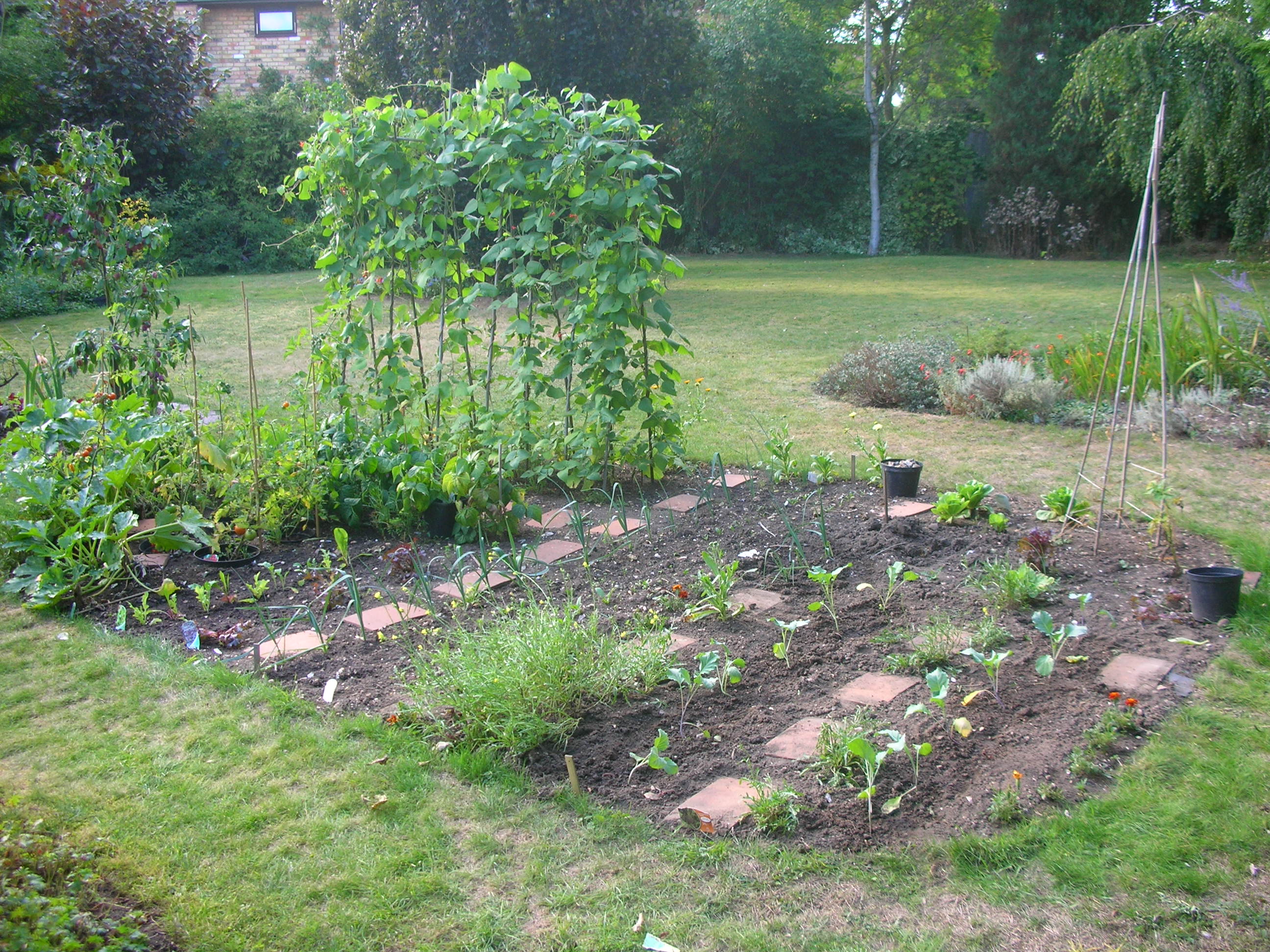
A week ago I was depressed at the idea of the end of summer, today I am cheered by the approaching autumn. I have planted broccoli and spinach and the vegetable garden still looks amazingly orderly. DSCN4246The potatoes plants were all zapped by ants so we only had one colander full. The sweet peas fried in the heatwave, but everything else has been OK. The leeks are growing and there are plenty of runner and french beans, tomatoes, courgettes and salad to come.

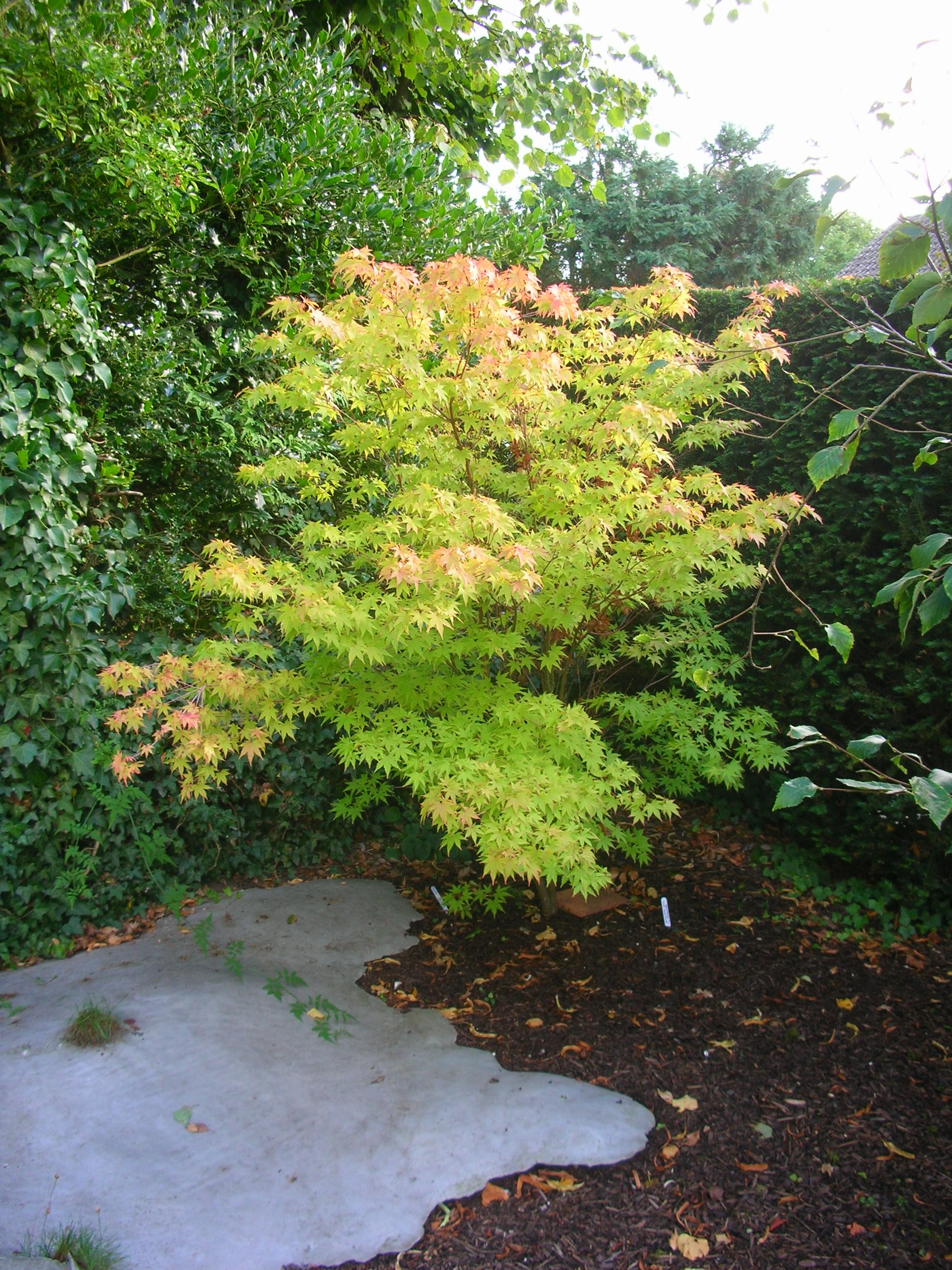
The maples are beginning to turn.

Acer palmatum Sangukaku

Acer palmatum Sangukaku

From now on until leaf drop they provide me with almost daily excitement. Another happy event is the first fruit on the apple tree (sold to us four years ago as a plum!) We have no idea what sort of apple this is, so it has been a long wait. They look on the small side, but I like the green/orange colour, as I’m not a fan of red apples. I pulled off a tiny one and ate it today.DSCN4250


It has a lovely scent and is thin-skinned and crisp, but with only two tiny bites it was difficult to assess the flavour. Any suggestions about what they might be?

We still have martins feeding young, there have been at least three broods. I hope they have not left it too late to raise them before the cold weather arrives. I made a brave attempt to take a photo of them feeding.

House martins feeding

House martins feeding

Hungrier, thinner, speedo and then cholera – POWs 14

Barry and the remaining men of 27 Line Section reached a big well-run camp, Tha Khanun, more than 200 km up the river Kwai Noi. To their disappointment they had to march on up-river and then inland:

When we reached the site of (the misnamed) 211kilo camp it was as usual raining and there were no preparations at all, in particular there were no huts or latrines or cookhouses. Our Jap O.C. pointed out a heap of green tents… There were not nearly enough to accommodate the whole group but fortunately these tents were supplied with separate fly sheets, and these extra sheets could be pitched on improvised bamboo poles to provide extra cover although without ends.

On our first morning at 211 we were roused out very early, in the rain and in darkness for a full scale Tenko [parade headcount]. Through the medium of a Japanese interpreter who spoke very little English, our Jap commander told us that the progress of the railway building had fallen far behind schedule and that this was caused by the idleness and incompetence of the British workers and their officers… This speech was recognized as a “speedo”, which meant longer working hours and more harrying, shouting and beating by the guards.

There was no barge traffic up to 211 camp and our rice ration came up through the jungle paths on a hand cart or carried on our backs by ourselves. A 50kg bag (one hundredweight) is not an impossible burden for a fit man, but by now most of us were far from fit and were anyhow already fully occupied building the new section of railway, so that the rice ration was small and became steadily smaller.

…the rice ration, now down to a very few ounces, would be calculated strictly according to the number of men who went out to work. This put us in the unhappy position of being forced to detail for work men who were too weak to stand. It was quite usual to see a man actually suffering from a malaria rigor being supported between two others on the march out to the railway site. Such men were, of course, no use for actual work.

One day a few dysentery cases started violent vomiting as well as producing sudden dehydration and death within a day or two. Men who had served in India recognised the symptoms of cholera… The cholera spread rapidly and it soon became impossible to bury the dead so, on the advice of those who had experience of such epidemics in India, we started to burn the bodies… The fire was kept burning continuously by a small duty party. We never ran short of fuel.

Wineberry bliss

Today, just as I did aged five in my grandparent’s garden, I crammed my mouth full of wineberries. These bushes are the offspring of those same wineberries that I ate so many, many years ago. They seed freely so I have them all over the garden. The young stems are reddish and almost furry, but they become greener and very prickly as they age.

Japanese wineberries

Japanese wineberries

You will never see the berries sold commercially, they are too small and sticky to pick, preserve and travel, but there is nothing more blissful than to fill your mouth with them. In fact I think I will have to go out for a midnight feast after writing this.