How Intelligence Happens

DSCN4649This is a great read for anyone who likes to keep up with the research on how brains work, or who likes to understand better how they themselves make decisions. It is extremely readable (and a slim paperback), though there are some passages that made high demands on my ageing mental capacities. I kept shouting ‘yes’ as I progressed, though I found I had stuck post-it notes in at intervals and I didn’t agree with everything, but where would be the fun in a book on this subject that was cut and dried. This is open-ended research, there are many questions still to answer, but there are also many convincing answers to fundamental questions here.

Enjoy!

Hercules Editions – small and mighty

DSCN4816

On Thursday night I attended the launch of a small book, The Heart Archives, by Sue Rose (a poet with a published collection to her name and another due later this year). Sue has photographed things meaningful to her and accompanied them with a series of sonnets, many relating to her own family. The poems have a sweet rhythm and a deep undertow, with mortality lurking in the background. Each is titled with a number in reference to the heartbeats recorded by Christian Boltanski and played continuously for his installation, Les Archives du Coeur. Sue’s book is one of two published by Hercules Editions (http://herculeseditions.wordpress.com), a press that came about to fill a need – the combination of photos and poetry.

DSCN4805The other book, Formerly, records disappearing London in photos by Vici MacDonald and poetry by Tamar Yoseloff. If you have ever wandered those streets of the city that have lost favour or are due for ‘redevelopment’, you will recognise in the photos the traces of the people who once lived and thrived here. The poems are sharp, bright, funny and heartbreaking. I love the verbal high jinks within them and the way they capture the flavour of what has now  disappeared (http://formerlysonnets.wordpress.com).

DSCN4810

One poem and photo, The Rose, took me back to my time as a struggling sculptor when my flatmate and I rented two bedrooms and a studio in The Rose and Crown in Deptford (long since demolished). The Studio was in the old strip bar (complete with appropriate murals). One of our bedrooms had to be given up to the Great Dane (who lived there too) to occupy with her puppies. I remember one day being told to stay away from the bar for a few days as Mick would be out (of prison) tonight. The barman then hid the rifle that used to hang above the bar. Exciting times!

The Glass Room

I have just read Simon Mawer’s The Glass Room.

DSCN4746 - Version 2As a writer I am gagging with envy. As a reader I am one satisfied customer. The book is set in Europe between 1928 and 1990, with the meat of the story taking place during WWII. The frame of the story is a dream modern house (which actually exists), built in the 1920s for a private family, during the short-lived Czech Republic. Although the style of the house and the spaces it creates are central to the story, it is the characters that grab you, entertain you and make you care about their fate.

The language is immensely rich, graphic and easy to read. It is haunting, but never sentimental. It depicts some of the richness and beauty of the spaces we live in. If I have a caveat, it is one I often find in male writers, an inability to resist depicting one or more women as a vamp. Mawer’s particular vamp is one of the most interesting and entertaining of the characters, so I am not really complaining. Her very boldness allows him to say things that most characters would not get away with.

I can’t work out if this is a heartbreaking story or one of hope, which sounds strangely indecisive*. The coverage of war experiences, however fictional, is in essence true and devastating. The longevity of an idea, embodied in the Glass House and persistence in survival of the human race under a variety of repressive regimes as well as war, are elements of hope.

*My discussion group are in no doubt that it is heartbreaking.

writing magic

A few weeks ago a friend lent me a book she had been unable to put down.

DSCN4655

John William’s book Stoner sets out from page one to kill expectations. The tone is matter-of-fact, and the novel opens with Stoner’s death at the end of a clearly unremarkable life. This life is led almost entirely within the walls of an American university, though, crucially, Stoner is the only child of a small farmer.

So why has it become a bestseller here in the UK? The prose is mesmerising in its clarity and simplicity. The life it unfolds is unpromising in modern terms; bare, unambitious, and with few happy contributions from chance. Yet, this is an extraordinary and moving novel. I have rarely felt more sympathetic towards a protagonist. This remains true, in spite of the fact that much of his experience is marred by the limitations of his own personality. His background and upbringing are hidden shackles which the reader continues to hope (and not in vain) will crumble just a little some day.

It is also a story about the ordinariness of love and the magic of the written word.

A Time to Talk

I read this book just after Christmas and it made a happy contrast to some of the bleak writing I had waded through in the run-up to the festivities.

DSCN4652

A Time to Talk is written in the style of a memoir and the voice is engaging, with a delightful turn of phrase and an often original way with language. There is also a self-deprecating tone, which allows the reader to feel both sympathy and mild exasperation with the protagonist as he flounders among the ‘slings and arrows’. Max Frei, a freelance counsellor with nothing but the good intentions towards his clients, finds himself in conflict with the law and in debates with not only experts in his own area, but criminals outside it. All of this is accompanied by his bewildered but happy reactions to his own love affair.  The story is told at a gentle pace giving the narrator plenty of time for introspection, while events unfold around him.

Within this story there is much thought about the serious subject of mental health and the treatments available, but all told with humour and insight that I found refreshing. It is rare to find such serious debate wrapped in such an easy conversational package with much laughter alongside.

The Railway Man

Yesterday I went to see the film of The Railway Man (Colin Firth, Nicole Kidman, Jeremy Irvine, Hiroyuki Sanada). Last night I re-read the book on which it is based that came from my father’s shelves.

DSCN4650The film was a moving depiction of a man finding redemption late in life, through the love of a woman who helped him to confront his traumas and finally to meet and even make friends with one of the men responsible for his traumas. It is ‘based on’ rather than an exact version of the true story.

The film also does two important things:

It renews my shame, as a UK citizen, at being even distantly connected to inhumanity of Guantanamo Bay and what the American military are still doing there. We have in the last twelve years thrown away the right to condemn any other nation for treating people inhumanely.

It gives me hope that people have the capacity to forgive their enemies, if they can only meet and talk.

The film is only a brief window on a relationship in trouble and the torture Eric Lomax underwent during interrogation. What the film does not, cannot, do is give the full long-term picture of what Eric Lomax and thousands of other men suffered as Far East POWs and the suffering consequently visited on their families when they returned. After lengthy torture, Eric spent a year or more in unimaginable squalor and imposed silence in Outram gaol. After release, first in India, he met the ignorance and indifference to his their sufferings that blighted these men’s lives – a lady volunteer who suggested that since they had been POWs during most of the fighting, they must now be anxious to ‘do their bit’. In England, so much had changed. Eric’s mother had died in 1942 and his father had remarried. People had suffered and were not keen to revisit, let alone deal with, something that was over and done with.

The book, not surprisingly, tells a more profound, detailed and informative story. There are many tributes to the book. Ian Jack of The Guardian writes: ‘This beautiful, awkward book tells the story of a fine and awkward man.’

Finding big errors

This is a thank you to the whole business of blogging. A few posts ago, I wrote about Barry in the Japanese POW camp, Chungkai, in Thailand in 1943 and 1944. I mentioned the Thai merchant Boon Pong, and because of your interest in this amazing hero, I did a little research and added a post about him. In the course of that research I discovered an error in the book I have put together using letters and memoirs of that period.

Barry was in his eighties when he wrote about his time as a prisoner. He was in Chungkai camp from July/August 1943 to February 1945. He remembered in detail (far, far greater than anything I have posted) working for the surgeon Marcowitz as he carried out amputations on those men with incurable tropical ulcers. But he remembered this period as the end of 1944, beginning of 1945. Marcowitz left Chungkai in January 1944. It is over the previous Christmas period that Barry worked for him.

I have had to move several chunks of text around, all with some tricky knock-on effects on the rest of the story. But I am so grateful to have discovered this. So thank you everyone.

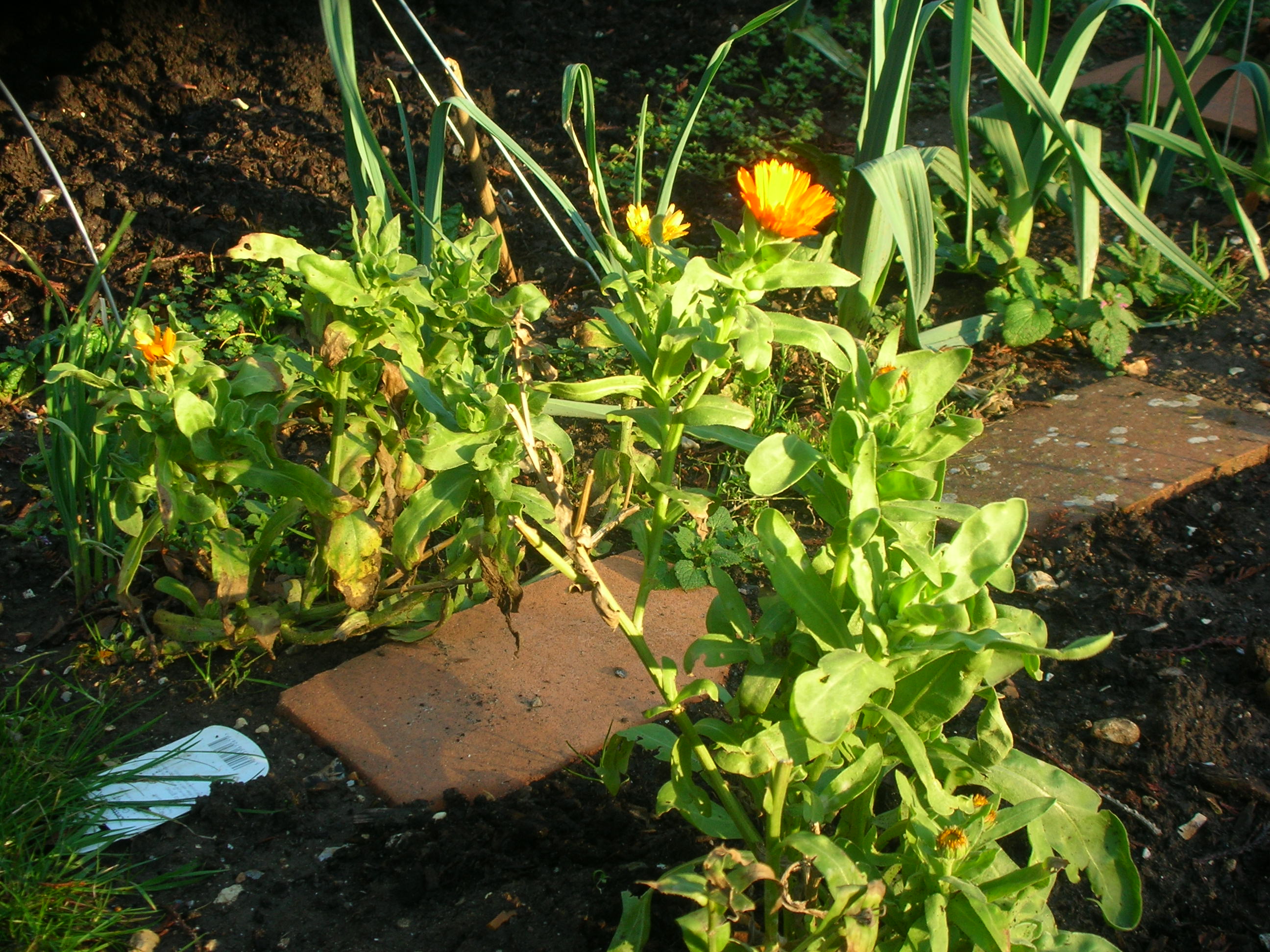
A little spring cheer to say thank you, a marigold is still blooming in the vegetable garden (and I have been squashing greenfly on the new rose growth today).

DSCN4630
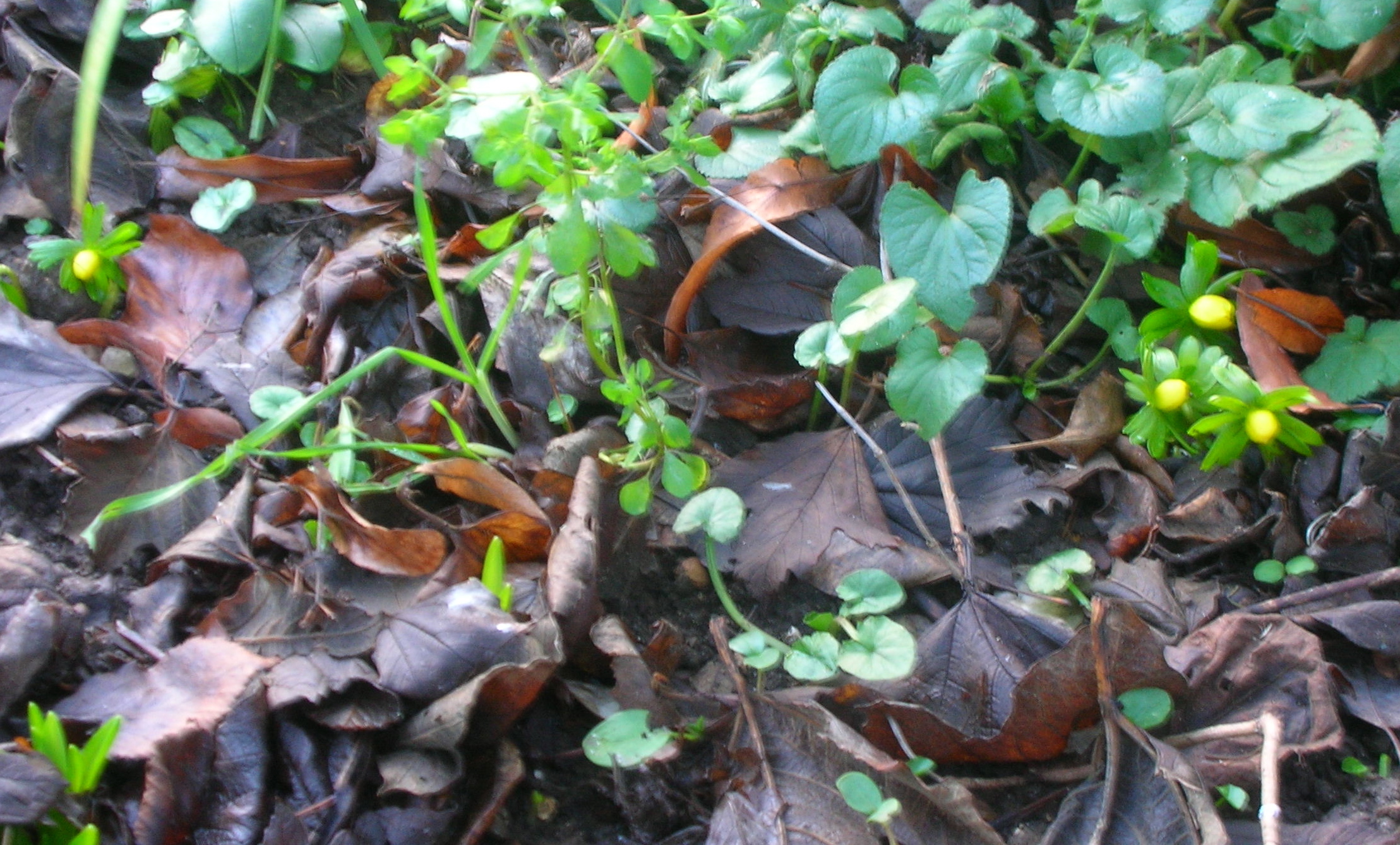
The most cheering pre-spring sight I know – winter aconites springing up all over. Sorry it’s not a great picture, but they really are unfurling in every corner of the garden.

DSCN4633

Haunted by War – 2

DSCN4549Chimamanda Ngozi Adichie’s Half of a Yellow Sun is a book with such a broad palette that it is difficult to know where to begin. I put it down feeling enlightened, chastened, saddened and satisfied.

Half of a Yellow Sun is both a novel and a history of the conflict in Nigeria in the 1960s with the rise and fall of the infant state of Biafra. It is a tour de force in both fields. The main characters cover the social gamut including educated middle class Nigerian, poor uneducated servant class and lost educated European, they all draw you in to their stories of love and aspiration and eventually the pain of watching their country die.

Adichie’s insight into human behaviour, her sharp observations of the many different ways people are foolish are very funny and totally believable. Her passion for the forgotten pain she and her countrymen and women have suffered is palpable. She teaches us (less well informed Europeans), without lecturing, to see beyond our assumptions about Africa (and indeed the lesson we are so slow to learn – that Africa is not a country). She shows us directly and simply and without polemic, the effects of Imperial occupation.

If I have made Half of a Yellow Sun sound heavy, I mislead you, it is the reverse. It is absorbing, witty, moving and a cracking good read.

Haunted by war

My research has meant reading around the subject of Far East POWs, but recently my recreational reading seems to have homed in on the subject of war too.

DSCN4544

Amand Hodgkinson’s 22 Britannia Road, is a touching and human portrait of a young Polish couple and their baby, split apart by war (WWII) and each living, for six years, through their own separate nightmares. The story tracks back and forth between their new home in Ipswich, and their war experiences – a difficult trick to pull off, but it worked for me. This is a very convincing portrayal; the almost feral small boy, the war-shattered woman and the lonely and determined young man struggle to find common ground and a way to move forward. There are complications and a past that has too many secrets. The period features were well handled and there was a wonderful level of atmospheric detail to all the descriptions.

The scope of this book is intensely, and intentionally, small. War is outside these people something that happens to them in which they have no active role. They simply survive. For this reason it would be inappropriate to talk about my second ‘war’ story (Chimamanda Ngozi Adichie – Half of a Yellow Sun) in the same post.

Two tricky reads

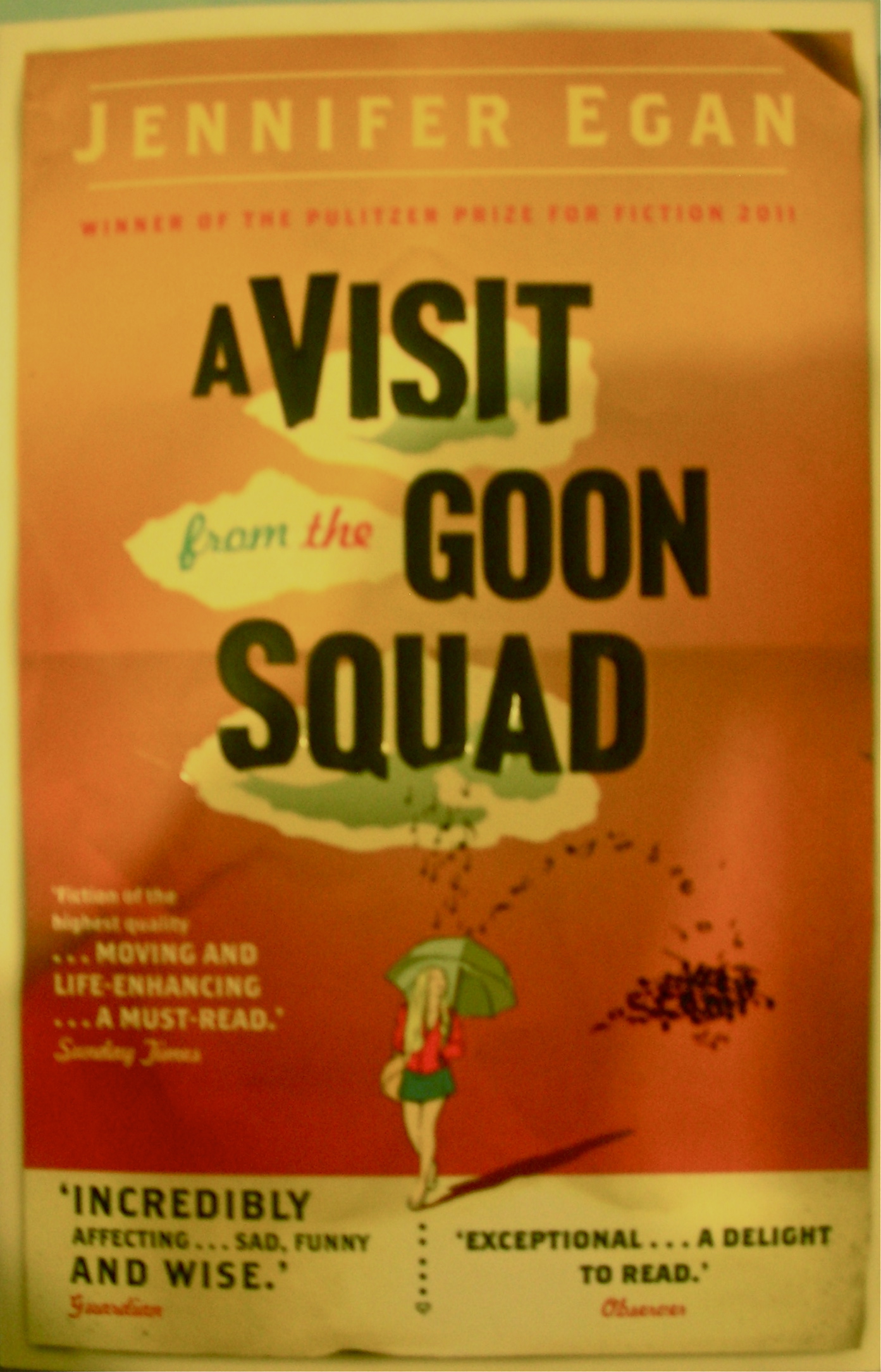
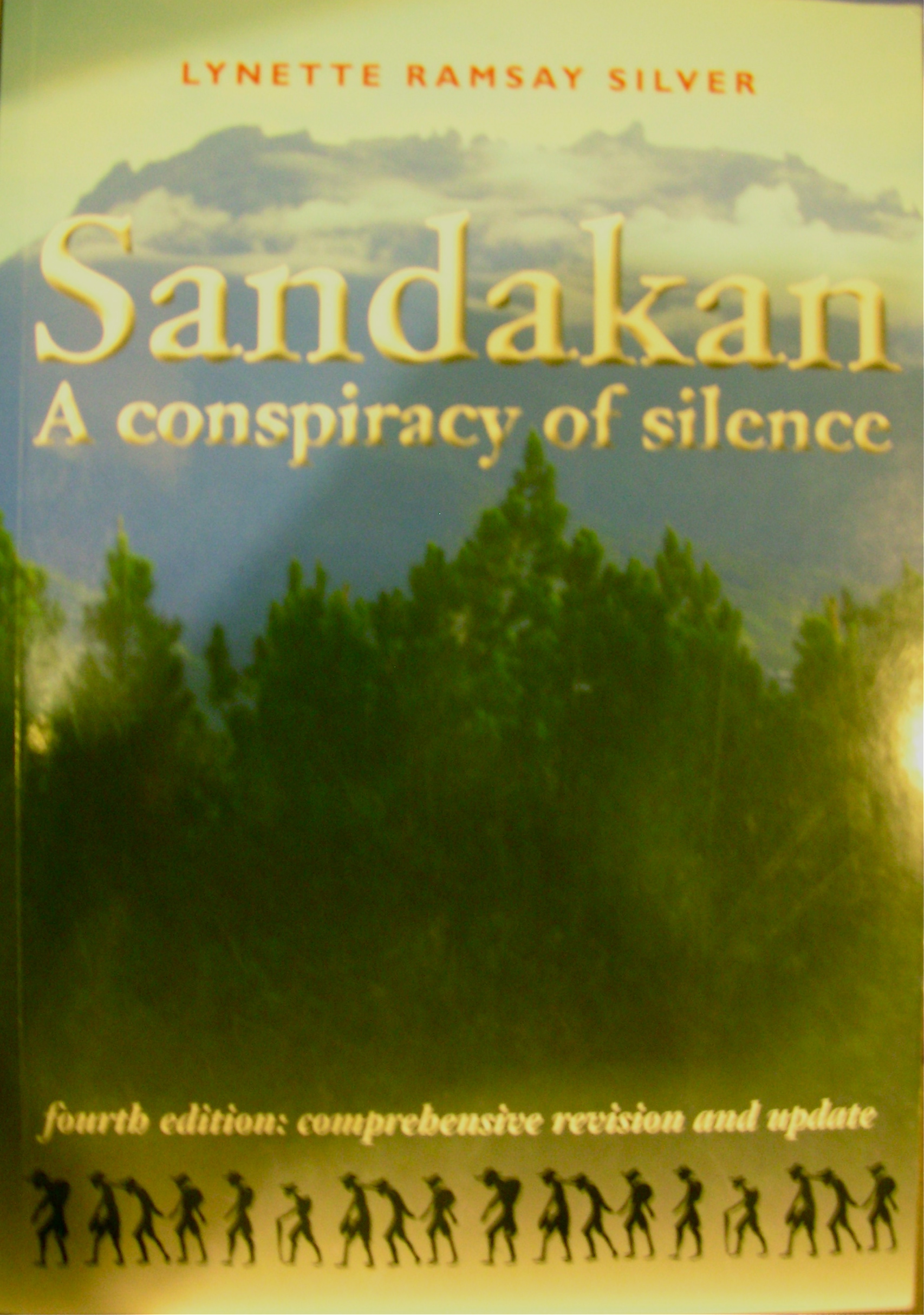
These two books, A Visit from the Goon Squad by Jennifer Egan and Sandakan A Conspiracy of Silence by Lynette Ramsay Silver, are both important, admirable, interesting to read and yet painful in different ways.

Jennifer Egan’s A Visit to the Goon Squad came with starry recommendations from many sources. The writing is sharp, uncomfortably realistic and funny. It tracks forwards and backwards through the individual lives of a group of people who all have connections with each other. For me, the milieu – the American music and celebrity scene from the 1960s to some terrifying future – is strange and alien.DSCN4543 - Version 2 So, as a reader I felt a bit of an outsider peering through the bars in a zoo. Only occasionally could I empathise with the characters.
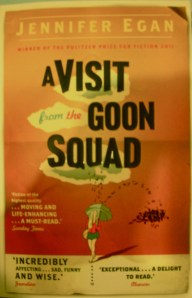
This distance vanishes with the graphic section (flow charts, not comic strips) of the book (set in the year 202-). This is a child’s diary and also a brilliant description of day-to-day family life with an autistic sibling. I loved this, it is 3D writing at its best, it has the concentration of poetry, but an almost sculptural structure.

Did I enjoy this book? Not really, but I am immensely glad I read it.

Lynette Ramsay Silver’s Sandarkan, A Conspiracy of Silence (4th Edition), I bought for research purposes. It is the story of the death by disease, malnutrition, brutality and outright murder of 2428 POWs in Borneo during WWII and the failure of Allied plans to effect any rescue. The majority of the men, 1787, were Australian, but the among the 641 British were four young men from Barry’s 27 Line Section. DSCN4542 - Version 2There was a total of six survivors, all Australian. This book is a monument to the memory of these men and to painstaking research. Every name, every known detail of the men, their lives, their deaths, the recovery of bodies and possessions littering inaccessible jungle areas and their burial, has been uncovered and recorded.

My research has made me familiar with the worst deprivations, diseases, brutalities and appalling working conditions of Far East POWs in WWII. So as I started reading about the Sandakan POWs, the early years of their incarceration, though grim, seemed better than for POWs on the Thailand-Burma Railroad. From late 1944 onwards, however, their lives grew unspeakably awful and death inevitable. Large numbers of the men were marched in groups across impossible territory until they fell out and either died or were despatched by their guards. Others were starved to death, massacred in Sandakan or even killed by allied bombing.

The book is even more painful to read because, with hindsight, we know that all their attempts to survive were futile. The ones who died early on were the lucky ones. Even worse is the knowledge that rescue attempts, planned but cancelled, could have been successful.

I am in awe of the monumental task undertaken by Lynette Ramsay Silver and very grateful to her for the scope of her grim, but I hope rewarding, research. For me it has been necessary, but anguished, reading.