Surviving the Death Railway – to be published

Surviving the Death Railway: A POW’s Memoirs and Letters from Home

To my intense joy and relief the military publishers Pen & Sword and will be launching this title in June/July 2016.

For six years I have been researching and editing a story using a unique collection of letters and a memoir. The letters between my parents, Barry and Phyllis, and my father’s memoir of life as a Japanese POW tell a chronological story of a young couple during World War Two – these are special, but not, perhaps, unique.

What is unique is another collection of letters and a dossier. Phyllis spent the war looking after her baby son AND trying to look after the relatives of the men in Barry’s Royal Signals Unit, 27 Line Section. There were 68 men under Barry’s captaincy and Phyllis had addresses for many of the wives, mothers and fiancées. She sent circular and individual letters, at first to keep up spirits, later to co-ordinate information, and towards the end of the war to create a simple dossier of the men to help identification by rescued POWs at the War Office. To do this she gathered information about each man.

If it is of any help my son was a jolly natured chap, with wavy hair and a gap between his front teeth.

Although there was nothing outstanding in his appearance… he had a tattoo done on his right forearm, it began at the wrist, and went almost to the elbow. It was the figure of a highlander in full national costume…

These letters are heart-breaking and heartwarming and give and insight into the lives of ordinary people coping with the wall of silence that came down with the Fall of Singapore on February 1942.

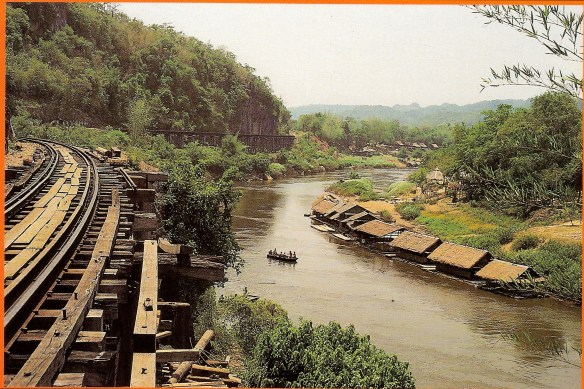
Barry memoirs record, without  bitterness or bravado, what the lives of the men were like during those years.Wampo pc1He helped to build the Wampo viaduct, he nearly died, he became a chorus girl and he assisted at amputations. After giving blood he remembers a happy encounter with one of the men from his Unit:
“Sir, yesterday I had some of your blood, and last night I dreamt about a woman for the first time since capitulation!”

This story records the two streams of life in Britain and the Far East. What I find so moving is that year after year these relatives wrote into the blue. Although some received a few multiple-choice field cards; no one, as far as I know, ever received an answer to a letter in three and a half years.

Please forgive me, but for the next two months I will only be a very rare visitor to your blogs.  I am already deep in the final editing of the manuscript, gaining permissions for the ninety odd illustrations and preparing them and the maps for publication.


Tomatoes (plus a little DIY and writing) rule my life

Now that the DIY on our two rotten windowsills, after much resin filler and elbow-grease, is nearing completion, I can concentrate on my writing…

DSCN7843 DSCN7840DSCN7840 DSCN7846 DSCN7848DSCN8106DSCN8102DSCN8027DSCN8107

Except that last year my new greenhouse was a pitiful desert. All I managed to grow were three sweet peppers (on one plant). Everything else got fried or damped off as I was ignorant about managing the ventilation. So this spring, I sowed madly… perhaps a little too madly. I was miffed when tomatoes failed to germinate, so I sowed more. Various seedlings got potted on and moved into the garden and veg plot, but new tomato seedlings – unlabelled – kept popping up in unlikely places.

Apart from three pepper plants, tomatoes now rule the greenhouse and my life. There are more than 34 plants. The greenhouse ones need constant  water, and ventilation and they all need non-stop disbudding (a skill I have acquired late in life, but will lead, I am assured, to more tomatoes and less greenery).

DSCN8100DSCN8099 DSCN8097 DSCN8095 DSCN8088 And the hosta, of course, just keeps on growing. DSCN8024I am still writing, and I have exciting news on the POW letters book front, but I will wait for tangible confirmation before sharing it.


Pedants revolt – honing, homing and homing in (and waterlilies).

Sorry, I have to get this off my chest.

Honing = to sharpen

Homing = to (instinctively) return to the nest

Homing in = to converge on

So:

You hone your knife on a whetstone, or your critical faculties on a course in logic.

You home, after you have delivered your message, to the loft – you are a pigeon.
You home in on a solution after racking your brains.

And yes, I know, the misuse of honing is now so common that it will probably be accepted soon, but you can’t sharpen in on something, it does make sense and please think of pedants like me who get a pain in the head every time they see it.

Rant over. Some soothing waterlilies from Kew Gardens to follow.

DSCN7938 DSCN7902 DSCN7892 DSCN7893 DSCN7890


Marketing, a necessary pain?

Last autumn I went on writing course run by Patricia Mullin at The Sainsbury Centre in the University of East Anglia. This was a fun and positive experience and Patricia packed in an immense amount of information and writing practise and managed our diverse group in the gentlest, most effective way. She has kindly posted a guest blog from me on her website:

One October day I found myself, aged 52, standing on top of a telegraph pole. Below me the rest of my ‘team’, five youngsters half my age, two of them clinging to the free end of my safety harness, were urging me to jump. At eye level to my right, but way out of reach, dangled the bar of a trapeze.

Another 867 words at Patricia’s blog

Three operas and an interview

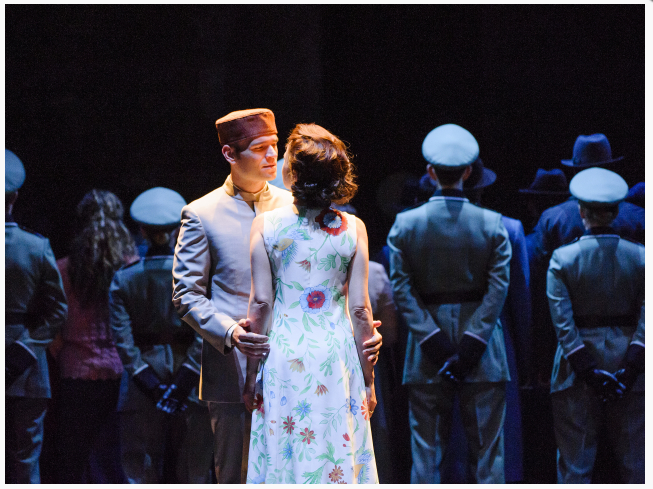
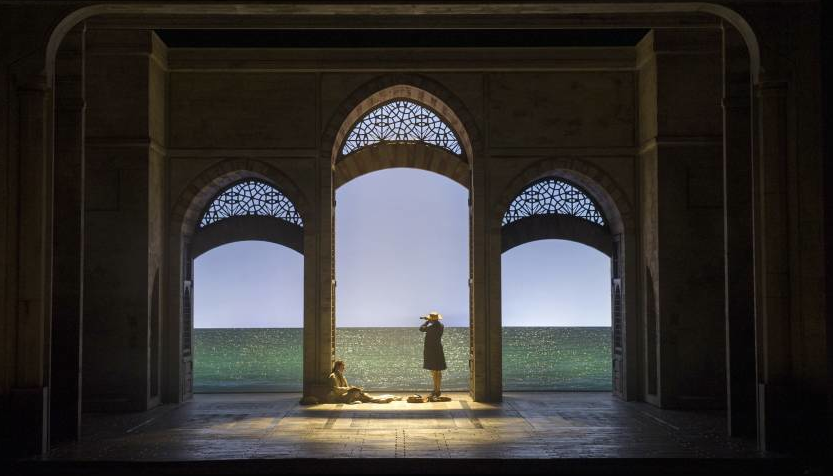
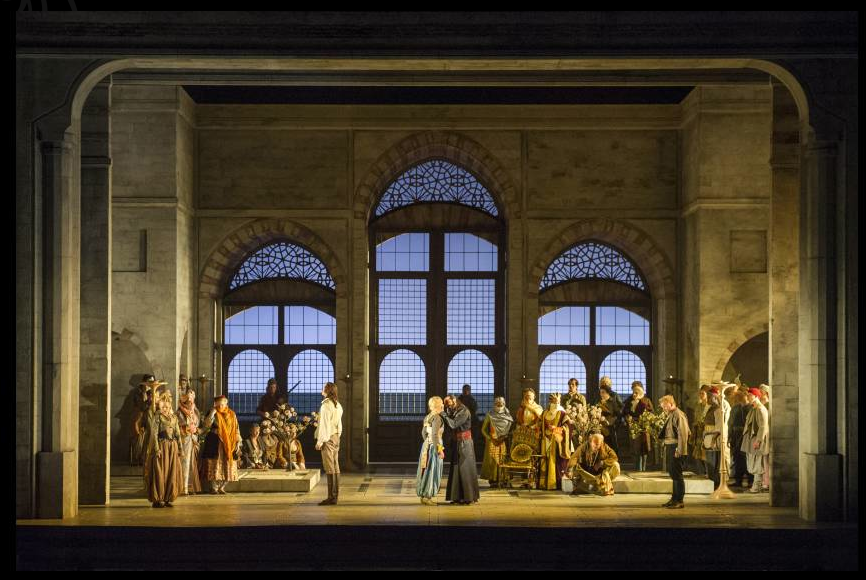
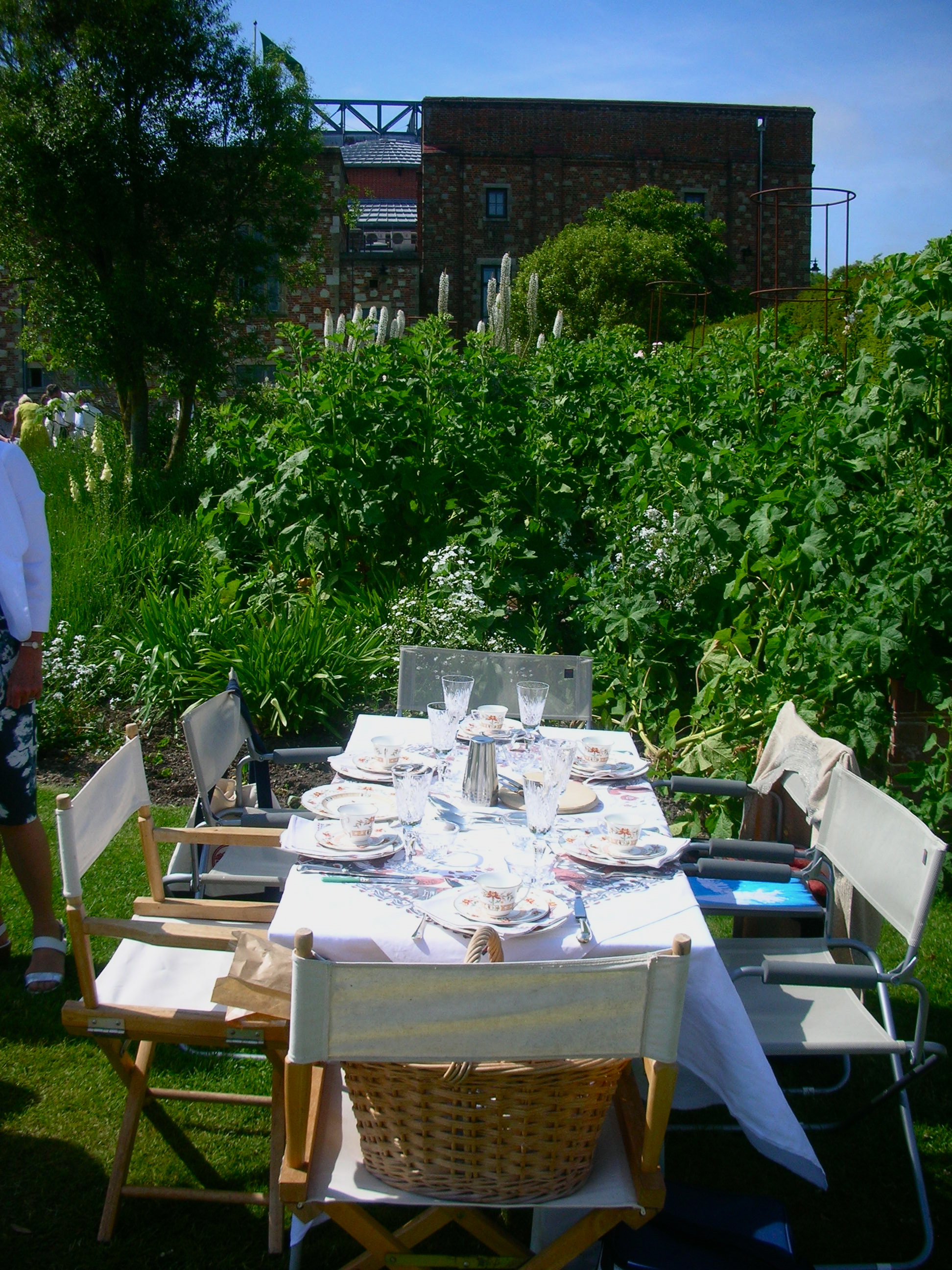
I’m still out breath. We saw Flight by Jonathan Dove at Opera Holland Park, including a delightful interview with Dove beforehand. This opera is a rare thing, a modern, English, comic opera. We saw it once, more than ten years ago, and it was so funny we bought the libretto. It is set in an airport, with a cast of very real types that you might meet in such a place. Each of these has a story, and, in spite of many laughs and farcical lift/elevator passages, their stories are very touching with an element of tragedy thrown in – the music’s good too! (Screenshot from Opera Holland Park website).Screen Shot 2015-06-18 at 22.26.09 For opera two we were guests at Glyndebourne for Donizetti’s Poliuto – so obscure an opera that it is unlisted in our edition of Kobbé. This is about early Christian martyrs (set in Sarajevo in the 1990s (??)), but actually it is a classical tragedy with love, honour and duty fighting it out. The music is stunning and it is clear that Verdi rifled through it at some stage. This is my kind of opera, moving, full of dramatic emotional music, beautifully sung and acted. I loved every minute of this performance and I have never (over many years) heard such wild enthusiasm from a Glyndebourne audience. (Screenshot from Glyndebourne website).Screen Shot 2015-06-19 at 23.07.53 Opera three, also at Glydebourne, was all about the event. We were guests of my youngest brother and wife to celebrate, with my oldest brother and wife (middle brother and wife not able to join us), what would have been our father’s 100th birthday. Oh yes, the opera! This was Mozart’s Die Entführung aus dem Serail. Mozart (shame on me) is a bit repetitive and, um, tinkly (?) for me, but this was a very lively and funny performance, beautifully sung, and I loved the sets. (Screenshots from the Glyndebourne website). EDIT I meant to mention that the highlight of the story was that the ‘bad’ guy, the Turkish Pasha, turned into the magnanimous hero at the end. Screen Shot 2015-06-19 at 23.14.31 Screen Shot 2015-06-19 at 22.07.44 Screen Shot 2015-06-19 at 22.06.52And finally the bonus interview. When we were standing around our picnic table BBC Radio 4 appeared and asked to interview the person who had created the table and the picnic. We happily pushed forward my sister-in-law, Susie, who answered their unexpected questions clearly and coherently. Our menu included lobster tart, lamb cutlets on couscous and peach and raspberry trifle (not to mention olives, salmon sandwiches, cold meats and cheese). We couldn’t wait.  DSCN7802 DSCN7810DSCN7819 A wonderful time was had by all and we raised glasses to our father and mother.

Surviving Far East Captivity

Dear friends, I have missed many of  your posts, and I have no hope of catching up, so I will have to skip many of them – my loss.

I have just returned from a conference titled:

Screen Shot 2015-06-07 at 23.16.43

This was convened by the group of dedicated researchers at Researching FEPOW History, held at, and sponsored by, the Liverpool school of Tropical Medicine (LSTM). For two and a half days I have listened to surviving Far East prisoners (FEPOWs) and interned civilians, military historians, doctors, museum curators, family researchers and the children of Far East Prisoners.

The hairs on the back of my neck rose many times on every day. I laughed, and cried in almost every talk. Every delegate had stories to tell and the venues buzzed as we tried to exchange these stories with each other. I have come back loaded with books, but here is the star of the show. Screen Shot 2015-06-07 at 22.23.43

Meg Parkes

Meg Parkes

Meg Parkes, One of the authors of Captive Memories, was also the lynchpin of the whole conference, taking in radio and TV interviews as well as keeping the whole show on the running.

Of the speakers and attendees, the three surviving FEPOWs, provided some brilliant insights, and much laughter. An interview and discussion session with Eric Lomax’s daughter Charmaine McMeekin and Frank Cottrell-Boyce, the scriptwriter of the film The Railway Man had most of us sobbing. This was the first time Charmaine had been among people who, like her, had been brought up by a father so badly damaged by his war experience.

There is much more to say, but I must sleep…

Melon-art, slugs and publishers

These are not necessarily connected, but reflect my divergent states of mind. We have been in Prague for (my husband’s) conference and were royally entertained. The food was actually ‘awesome’, both the meals and the continuous supply of irresistible nibbles, DSCN7656 and even works of art. DSCN7655 DSCN7654 For the past thirty plus years I have airily dismissed the ‘slug’ problem. Others had slugs; I rarely saw one. All change. They have eaten all the tulip leaves and shredded and decapitated many of the irises, they have munched the lilies to oblivion before I could see them. They have demolished my precious seedlings – the first from the greenhouse that I planted out two weeks ago. So, I now collect handfuls of slugs every time I leave the house and heave them into the green bin – a variation on squishing blackly and lily beetles. I have purchased a copper collar for my chocolate cosmos  and the latest organic control – wool pellets for the veg plot. These are not beautiful and smell somewhat of goat, but I am hoping to save the runner beans.DSCN7695 For the last three years I have been looking for a non-fiction publisher for my manuscript Writing to a Ghost: Letters to the River Kwai 1941 to 1945. One of my 2013 emails has just been answered! Am still looking? Indeed I am, and they sound fine … in their field (mostly sport). I never thought I would be able to resist an invitation to submit to a publisher, but sadly I feel that my book will not fit with their other titles (and I suspect their team will not have design and editorial expertise in titles about WWII and women’s roles) and they definitely do not have appropriate trade supply connections. Am I mad?

‘Farmers fear unkindly May, frost by night and hail by day.’ (Flanders and Swann)DSCN7693 However the rhododendrons are emerging and the tree peony and guelder rose are in flower. DSCN7692STOP PRESS

Beer works! Thanks to everyone who suggested it.

The Bush Devil Ate Sam and 84 Charing Cross Road

Let’s hear it for non-fiction! I have just had the most entertaining and informative week (and I get to write a seriously disconnected title for a post).

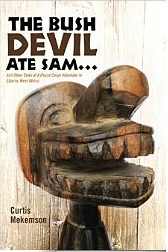
Curt Mekemson‘s book, The Bush Devil Ate Sam…And Other Tales of A Peace Corps Volunteer in Liberia, West Africa, is an important record and a serious story, yet told easily, and with delightful humour. This is one of the most satisfying books I have ever read, because it entertained me thoroughly AND made me feel better informed.

Screen Shot 2015-04-15 at 20.35.09In America in the 1960s, Berkeley was one of the cradles of independent thinking. Here, youth, hope and idealism produced (for a while) creative, open-minded solutions to world problems. Curt was there and tells us how it really was.

From there we go with Curt and his wife, as raw Peace Corps recruits, to Liberia. Curt never fails to spot the funny elements of his varied adventures and he writes with an pleasing straightforwardness. Their lives as told are crammed with, hair-raising, deadly serious and laugh-out-loud details.

The story is brought up to date with a resumé of the events of the breakdown of the country in the 1980s and the current fragile peace including the testing events due to the appearance of the Ebola virus.

In spite of Liberia’s  difficult and often tragic past, reading Curt’s memoirs in The Bush Devil Ate Sam gave me a sense of hope for the country and the wider continent.

My other book, 84 Charing Cross Road, is a smidgeon of a story – 96 pages of short letters   from 1949 to 1969 between Helene Hanff, a New Yorker, and Frank Doel, who works in an antiquarian bookshop in Charing Cross Road. The contrasts between Britain, book-rich and food-poor, and America, the reverse, shape the correspondence. DSCN7236 - Version 2 Helene’s voice  is totally original and utterly beguiles not only Frank, but all the staff at Marks and Co Booksellers as does her generosity during the rigours of rationing.  This book was an instant hit on publication and there is also a film (with Anthony Hopkins and Anne Bancroft), which I am aching to see.

The edition I bought (secondhand) includes the sequel, The Duchess of Bloomsbury Street, which I also highly recommend. This is another very short book, all taking place in 1971 in London, as a consequence of the publication of 84 Charing Cross Road and provides a satisfying coda to it. These two records reveal the wonder of England and English literature through post-war American eyes.

Prisoner on the Kwai

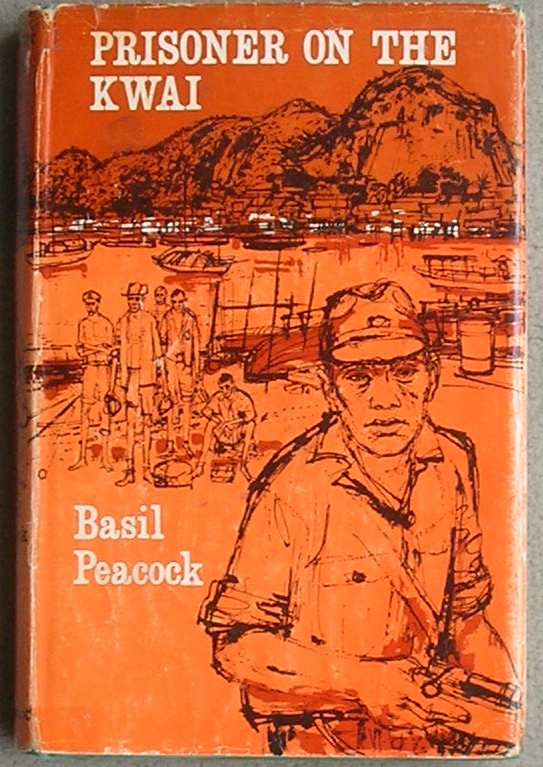
In the early 1960’s Basil Peacock found himself unexpectedly in Bangkok, some twenty years after his last visit to that city. He hired a car and with his wife and American friends and drove up to the river Kwai. The hire car manager charged little, exclaiming:

“You work on railroad! Not dead yet! You must have iron bones — I make special price.”

His companions listening to him talking about his time as a Far East Prisoner of War (FEEPOW) persuaded him to write up his story. It was published in 1966 and is, as he says, mainly about the:

“bizarre rather than the tragic. My memories of unusual, odd and even crazy incidents were vivid and detailed, but those of horror curiously blurred.”

DSCN7136_2

 Basil Peacock was a veteran of the First World War, he joined under-age in 1916, received the Military Cross in 1917 and was wounded and captured in 1918. This gives him a perspective on his later captivity that few other writers possess. Prisoner on the Kwai is an excellent, extremely readable account of the FEPOW experience under the Japanese. [It includes some non-PC language.]

In the last five years I have read more than fifty books by or about FEPOWs, some published, others as private accounts or diaries in museums. Contemporary diaries are rare; they contain truth that is of the moment, but the contents can be restricted by the fear of discovery. The early post-war accounts vary and were often rejected by publishers as too brutal, particularly those by ordinary soldiers. Many who felt the need to record the three and a half years taken out of their lives were not natural writers, and their accounts lack balance and structure; sometimes bitterness, sensationalism or vainglory overwhelm the story. Others are brilliant, painful, heartbreaking and heartwarming.

The basic truths that always emerge are the desperation of hunger, the dependence on mates and the extraordinary endurance of the human will under every conceivable insult to the body. Reading these accounts, will confirm that altruism is a real human quality and so, sadly, is sadism, and that luck plays a very big role in survival.

Another thing that also emerges is that each man’s experience is unique. It is almost unheard of for even two men to spend the whole of their captivity together. Prisoners were sent hither and yon with no predictability throughout the war.

Some entries from the diary of Edward (Ted) Hammond who served as an ordinary enlisted soldier in the 5th Battalion of the Suffolk Regiment:

April 28th [1942]   Been at work on road making. Bullied about and beaten up by the Japs with sticks and iron bars. Kept at work until 6.15p.m.

April 29th [1942]   No work today. Emperor of Japan’s birthday. Usual breakfast, plain boiled rice and watery milk. Fine day after rain all night.

Sun. Dec 27th [1942] Work on the railway. I’m very weak indeed. Two more funerals today.
Wed. Dec 30th [1942] Work on malarial drains. Another funeral.

Sun.Feb 14th [1943] Work as usual. Pte Jarvis died last night.

Mon. Feb 15th [1943] Work again. One year ago today since the fateful day of Singapore’s capitulation and one year of hard work, chiefly on rice. Now we must hope for the best.

This is Ted’s last entry. He was marching up to the higher reaches of the railway, he was very cold at night, starving and his two particular friends were very sick. Work on the  railway was lasting all day from dark until dark. He died on October 16th 1943 of bacillary dysentery and beri-beri.

See also pacific paratrooper on this subject.

Rossini, I take it all back

WARNING: If you are not an opera fan, I’m going to let rip, so jump to the pictures at the end.

See also Nina Mishkin’s post BEL CANTO AT THE MET.

On Tuesday we saw the encore of the Live from the MET performance of Rossini’s Donna del Lago in the cinema. Now Rossini in a problem for me. Fabulous music and delicious arias, but it is all about the vocal gymnastics and not the passions of the humans, except in an absurd and comic way. I tend to end Rossini performances feeling aurally battered and emotionally underfed.

The METs production of Donna del Lago has made me eat my words. It satisfies in every respect. With a faultless cast, who invest every phrase, every note, with the emotion it deserves and no (well, no intentional) comic interludes. This success is in major part due to the director, Paul Curran. He was working with peach of a cast, but he ensured that they acted out their emotions to the full and my god this makes a difference. The voices and all their fireworks serve the drama instead of the other way round. (Flores admits that the same cast did not achieve this emotional cohesion in the La Scala production – see youtube excerpts).

This was in maddening contrast to the production we saw in the cinema a week ago of the English National Opera production of La Traviata – Verdi is my favourite opera composer and Traviata nearly top of my list. I am up for experimental productions and this one, in an attempt to appeal to a new, young audience, had made deep cuts, reduced it to a two-act opera and set it in modern dress. I could live with that. The soloists had fine voices and plenty of acting ability and I will happily go and see them again. Two things irritated the hell out of me. One was the endless pinching/plagiarism of other directors ideas (or as my companions more charitably suggested paying tribute to others’ ideas). The other was the endless dramatic misses. these are the moments when the characters intend to express love, pain, hate, envy, anger TO EACH OTHER. Time after time, it is the conductor on the receiving end of these passions. This does not work for me and a decent director could surely avoid this (though again, my companions had a wonderful evening).

Back to Donna. Joyce di Donato (listen to the 1.35 min audio clip here) and Juan Diego Flores in the two major roles, are unsurpassed and unsurpassable in their field. I can listen and watch both with endless pleasure. For me the novelty was in the mezzo Daneila Barcellona playing Malcolm, the love interest. She had, in addition to a wonderful voice, a commanding presence and confidence, which is so often missing in trouser roles. The villain Rodrigo, sung by baritone/tenor John Osborn was another new voice to me, different in timbre and colour from Flores, but with fabulous high, as well as low, notes. All of this held together so flawlessly by the conducting go Michele Mariotti.

I’ll stop there. Ah… a picture or two:

IMG_0962 - Version 2DSCN7114 And what we saw of the eclipse…DSCN7125