February 15 1942 – Singapore – POWs 4

On the 8th December 1941 [Pearl Harbour] Barry wrote to his wife Phyllis:

Darling Wife, very darling wife just now. War declared this am. You will have read all      about it in the papers. Bombs on S’pore, landing in Kelantan. All safe so far…

27 Line Section continued to put up communications lines in Malaya for anyone who asked, but found themselves slowly retreating down to the Island of Singapore and eventually, in February 1942, to the city itself. The bombing was continuous but, as signalmen, they worked on through it. While most of them received only minor injuries, one unlucky man, installing a field cable on an airfield, was wounded and died in Singapore. The oil stores and dumps of raw latex were on fire, the reservoir pipeline had been breached, and over a million unarmed civilians were being bombed daily. Singapore fell.

Barry remembers:

Fighting actually stopped on the 15th February 1942. I remember it very clearly as I was up the top of a telephone pole trying to regulate and terminate a new section of open wire, while meantime a brief air raid was going on at ground level. This consisted of the usual small high explosive fragmentation bombs, which killed people and broke shop windows but did little heavy damage except for holes in the road. The bombing and shelling suddenly stopped and one of my NCOs [Non-Comissioned Officers] on the ground shouted, “I think the war is over”. And so it was.

Tolstoy versus Sacks

I am disconcerted, by my lack of discipline when it comes to reading. I cannot think of a time when I only had one book on the go and though my ‘to read’ pile is enormous, I happily add to it on an almost weekly basis.

Our next book for discussion is Anna Karenina, given its length (and the fact that I requested it), nothing else should intervene. However, I am unable to resist The Mind’s Eye by Oliver Sacks, which I am finding riveting as it has case studies that are connected to the work I used to do. I popped in Smith by Leon Garfield, a Folio Society book which a friend wanted to know whether to bother with. A fast-paced, Dickensian story from the back streets of London in the early nineteenth (?) century. A little soppy perhaps, but very enjoyable. I picked up and started 22 Britannia road by Amanda Hodgkinson and I have been lent WordPress for Dummies which I keep dipping into.

It will, as it always does, sort itself out. I can’t make up my mind whether reading several strands simultaneously is productive or foolish.

The June illusion

DSCN3983 DSCN3985

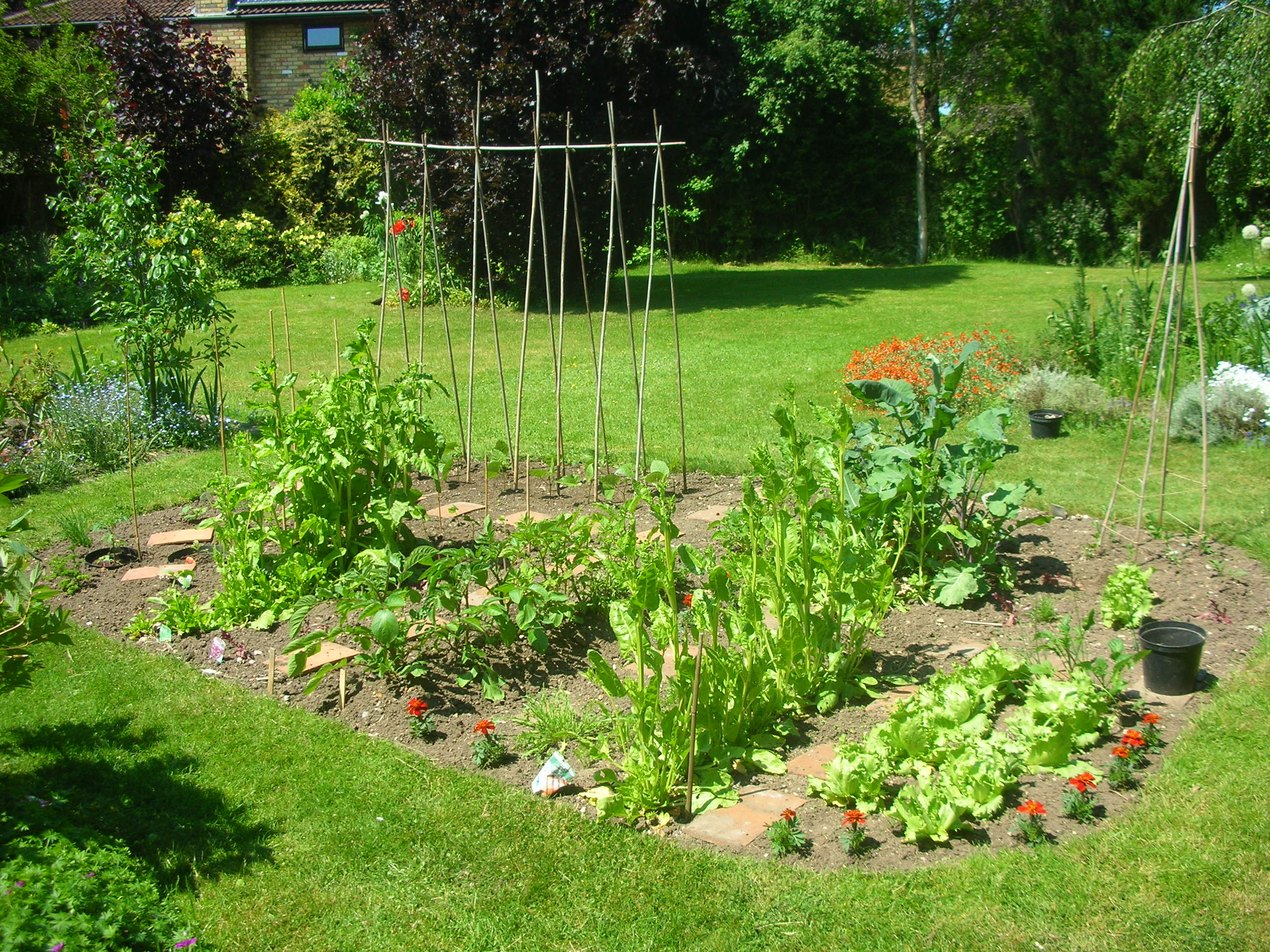
Every year there is a moment when I look at my (miniature) vegetable plot and think – I’ve got it right this year. Last year’s debris and weeds have been cleared, this year’s runner and french beans, courgettes and tomatoes are planted. There are lettuces in various stages and some wild rocket and although the spinach is bolting, there are plenty of edible leaves.

Every year I somehow manage to forget that the beans and tomatoes will topple over or fail to set fruit, or totally outgrow the small space they have been allocated. Every year I forget that there are one or two others waiting for the feast. The mice and pigeons, the slugs and caterpillars, an endless succession of small flies/hoppers and bugs are waiting for the darkness to get munching. My moment of smugness is likely to be short-lived, so I shall enjoy it.

In the Jungle – POWs 3

Barry and the men of 27 Line Section, arrived in Singapore in the Autumn of 1941. They spent very little time in that teeming, multicultural city, before being posted into mainland Malaya as an independent unit.

This picture shows some of the men in a very relaxed state in Kota Tinggi. Barry and his Lieutenant were familiar with life in Malaya and unfussy about uniforms and the men adapted quickly to the climate and the work.

27LineS1941_1

They did encounter occasional problems. Barry remembers:

So in late 1941, based at Kota Tinggi in Johore, No. 27 Line Section went on with their job of building telephone lines between the many small headquarters, unmanned but established, “Just in Case”, and the small air strips in Johore and Pahang. I don’t remember much in detail of this period just before the invasion but one incident vividly comes to mind. I was with a small party building a two-pair route in fairly heavy jungle, using trees instead of telephone poles. I had surveyed the route in advance and marked the trees which were to be used for the route. We had a light van to carry our ladders and all the other kit and of course, our packed lunches and drinks. Two members of the working party went ahead with a ladder and a hand augur to bore the four holes required, in the marked trees. The next group climbed up and screwed the L shaped bolts into the holes and fitted the insulators on to them.

Everything went on smoothly except for the odd leech. We were used to them and a touch from the hot end of a cigarette caused them to drop off quite easily. Then one of the forward party came rushing back to the van waving his arms and shouting “hornets”. He was followed by a cloud of very angry hornets eagerly seeking targets. We had no shelter except for the van which fortunately had an enclosed cab into which we all scrambled, about eight of us, a very tight fit but this discomfort was much preferable to being stung by a jungle hornet. They are much bigger than bees or wasps and have a reputation for very aggressive behaviour, and deliver a sting several times as powerful as a wasp. […]

So we sat or stood in the cab on top of one another for an hour or more with the hornets buzzing around looking for a way to get at us, but the windscreen and the windows were a good fit and a thoughtful Signalman had stuffed bits of paper or rags around the holes in the floor of the cab where the pedals came in. When the hornets eventually gave up we drove a circular course around their tree and continued our route building on the next section, taking great care to avoid any hollow trees. A day or two later we returned to the area and built a wide curve around the hornet tree. We had been lucky as three or four stings from jungle hornets could be fatal.

A writer’s responsibilities?

This is a post that has been sitting in the draft folder for a (long) while. Ever since a rejection for Border Line in April. I guess I should face it now. How much responsibility does the writer have towards the reader when dealing with tricky subject matter?

Border Line is essentially and upbeat novel, yet it has suicide at its core and touches on assisted dying. It is fiction, it is written as a ‘good read’, is upbeat and life affirming and is essentially a love story – but the eleven characters’ main intention is to quit life.

I’m not daft. Suicide is only ever the least worst option for the person who chooses to go. For the people who are left behind it is misery in varying degrees. That does not mean it is never the right choice. The crucial word in this is choice. If I publish this novel, perhaps more particularly, if I self-publish, and if it is read by anyone vulnerable, could I be said to be encouraging them to take that route out?

Some friends, pointing out the range and gruesome subject matter available in print, think my scruples are absurd. I could certainly thin the story out to a ‘will-they-won’t-they’ thriller by taking out all the personality and debate, and it would become a harmless guessing game – I think this is what one agent had in mind. But I am curious about real people, how they deal with internal guilt or the random acts of life. My previous books have tended to deal with real issues and that seems to be what interests the kind of readers who enjoy them.

Drafts of the MS have been requested several times, and revised after each rejection. When do I stop submitting to agents and use those spare ISBNs?

Not an amusing post, but I started this with the aim of using the space as a notepad for writing-related thoughts and dilemmas.