Butterfly in Venice

Since EG had three day’s work in Venice, he naturally needed my support. I learnt more than I probably needed to know about managing digital archives (though a session on appraising records was very helpful. I will now write a plan of what needs keeping, set a timetable, then select and delete accordingly. The loft will lose some of it boxes-of-paper insulation, but there will be less to deal with in the long run.)

I love Venice.

Canaletto lives.

DSCN4049

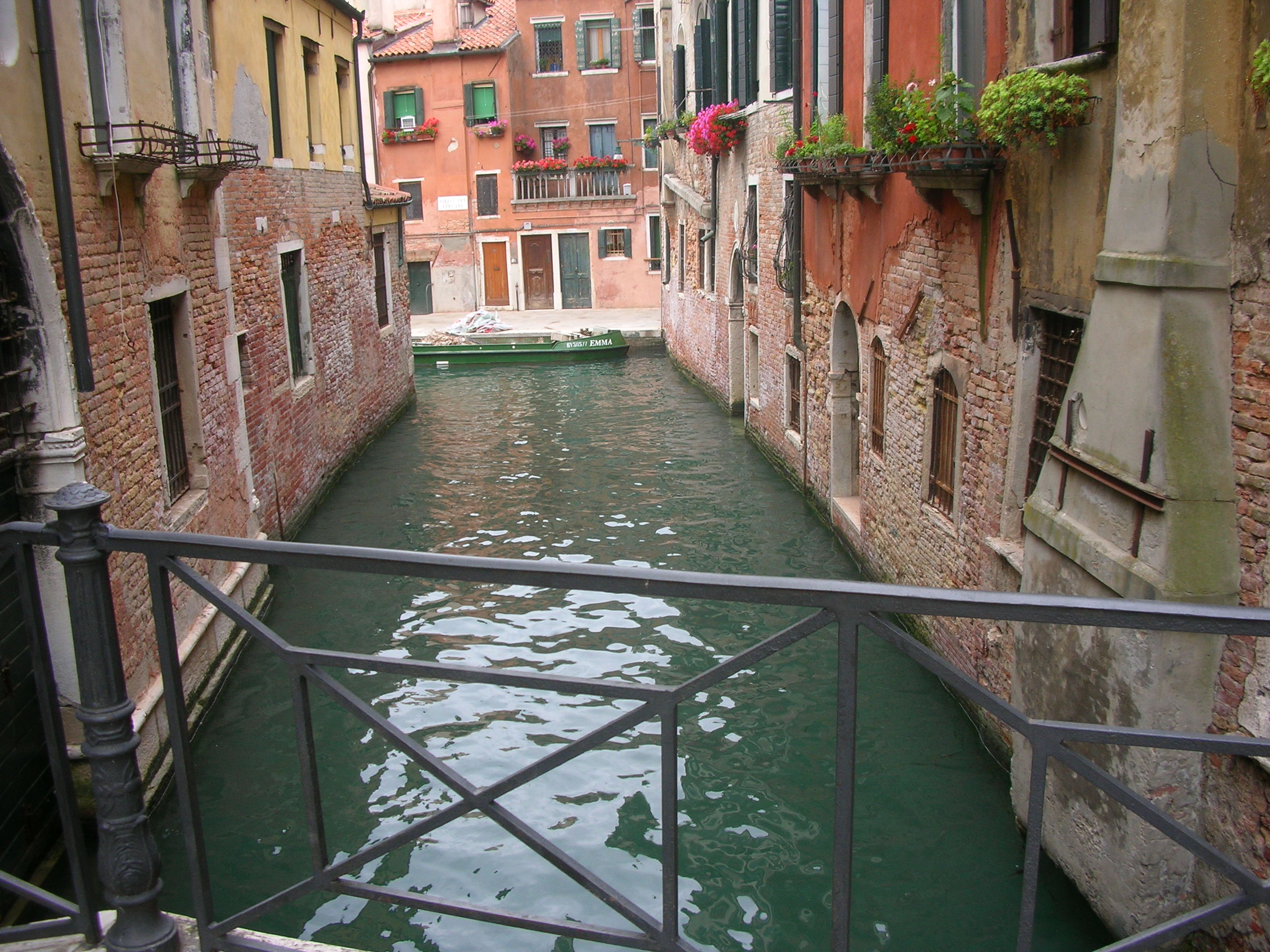
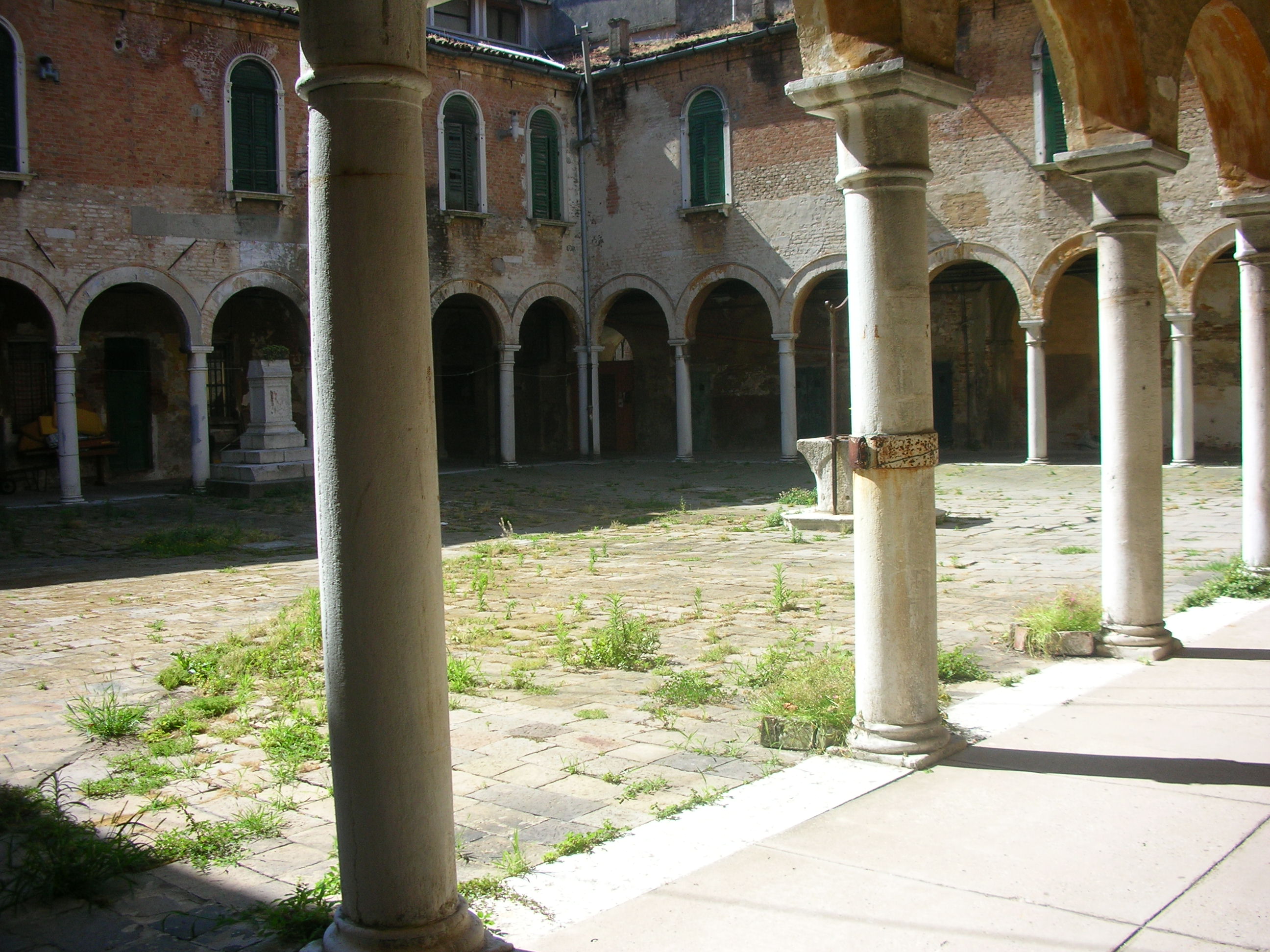
Walk one minute in any direction off the main drags and you find a cool, empty, grey-green world.

DSCN4106 DSCN4070

DSCN4025

DSCN4032

We got lost in one empty quarter and were rescued by a cheerful elderly lady with a trolley who marched us to the vaporetto stop. She explained that she was a little deaf, yet she chatted, coping well with my stumbling Italian, and at the same time guiding my footsteps round every small obstacle (polythene bag, dog mess, loose flagstone).

And then there is La Fenice opera house. We were able to buy (restricted view) tickets for Madame Butterfly and spent a happy evening peering over people’s shoulders and listening to a terrific production. The humming chorus was sung from the back of the auditorium and during Butterfly’s long night of waiting, after she had left the stage, a backdrop came down leaving Suzuki and the boy asleep in view. Then vast and incredible cosmic fireworks were shown while they orchestra played to match. We knew none of the singers, but all were good.

A city you could visit over an over again and still find something new.

Bee bath and stupid garden bargains

We moved a funny old home-made brick urn into a flower bed and filled it with water, to match a similar one that we use as a bird bath. We’ve not seen many birds, but it is in full use.

DSCN4118

In January 2009 I succumbed to an offer – a so-called Garden Bargain mini Orchard. I received three bare-rooted named fruit trees: a Moorpark apricot, a Victoria plum and a Sunburst cherry – all guaranteed to flower and fruit in the first year. I planted all three, but was concerned about the resin oozing from a wound on the apricot – I was told to report back again later in the year. Neither the cherry nor the apricot flowered in year one. The plum flowered; it looked remarkably like an apple, but as a late frost wiped out the blooms, I couldn’t prove it. The apricot continued to weep, but I had to agree that it was still alive.

DSCN1607

Year two, still no flowers on the cherry or the apricot. The plum was definitely an apple, but the fruit fell in a late frost before I had photographed it. The apricot was still alive and its wound beginning to heal. I stopped making any attempt to contact the vendors.

Year three – nothing. We moved the apple and bought a Victoria plum.

Year four – March 2012. The not-plum apple flowered well and set fruit, the new real plum flowered, but did not set fruit. The cherry had a couple of blooms, but no fruit. The apricot flowered, looked stunning, and set some fruit. Late frosts again wiped out all fruit.

OLYMPUS DIGITAL CAMERA OLYMPUS DIGITAL CAMERA

Year five – three blooms on the apricot and no fruit. The new plum, the not-plum apple, and the cherry flowered and have growing fruit. I can’t wait. I have no idea what kind of apple the ‘plum’ will turn out to be.

Lesson learned.

Vision in one eye?

Oliver Sacks did end up with vision in only one eye and in his book (http://www.oliversacks.com/books/the-minds-eye/) he describes this experience and its effect on him. How any one individual would experience vision with only one eye, would vary depending on the age at which that vision was lost, and how the brain adapted to monocular vision.

I mention this as there seems to be a question on my dashboard, though it has not appeared elsewhere in the blog. If you are interested, do visit Oliver Sack’s website and The Mind’s Eye is a great read.

Spinach marathon

There will be a few days quiet on the blog as we will be travelling. I find that I have a great inclination to tidy up if I am leaving the house so I finally decided to cut all the bolting spinach and found that there were masses of edible leaves. So hours later after washing, de-stalking and blanching half of them I have some for the freezer, some for the fridge and some for supper.

I do find heucheras the prettiest and most versatile of plantsDSCN4017DSCN4019

Silence in England – POWs 7

After the Fall of Singapore in February 1942, Phyllis and the other wives and mothers of 27 Line Section wait anxiously to hear what has happened to their men. The silence is absolute. No one in authority can tell them anything, The men of 27 Line Section could be dead, evacuated or prisoners of war. Phyllis has addresses for many of the wives and mothers. She sends out a circular and several write to thank her for: “…your kind letter which has given me new heart at a time when I have nearly made myself ill with anxiety.”

Phyllis starts writing to Barry: “Dear Love, I haven’t written a letter for a fortnight hoping each day may bring me good news  from you…”

Nine months later she is still writing and waiting. So are almost all the other relatives, though there is now a presumption, unless they died in the battle for Singapore, they are now prisoners of the Japanese. The War Office finally thrash out an agreement with Japan to exchange information and send post using the Swiss Red Cross and a complex route across Russia. Relatives can now write – though it is into the blue and they still have no idea where the men are. For the Japanese, overwhelmed by the numbers of prisoners they have captured, the gathering and release of names is very low priority.

Finally, on the 12 December 1942, Phyllis hears that Barry is a prisoner. She writes :

My own dear husband, At last that blessed news has come to me – the assurance that you are a prisoner of war. I am awaiting the letter from the war office now with further details. The relief has left me a little lightheaded, I think. Dear darling, I fear my letters have been dreadful lately – but it was like holding a telephone conversation with a deaf & dumb person. Things have become real again now, & worth while.

Phyllis is lucky and she knows it, because she keeps in touch with the other wives and mothers. Some have to wait several more months for that news. Others hear nothing at all for another two and a half years.

Death and Churchill – POWs 6

In the Changi POW camps epidemic diseases took hold. In the space of eight days three men of 27 Line Section died, two of dysentery, one of Cerebral Malaria. They were three of Barry’s highly regarded Sergeants.

By summer all the senior officers had been sent away to Japan – supposedly to foil any attempts at an uprising – and the Kempi Tei (special police) cracked down on any whiff of escape plans. The little news the POWs received on secret radios was dire. As Barry remembers:

The general spirit of the POWs was in fact very sad and pessimistic with no serious thoughts of revolt or even of escaping. In a European War once out of the prison camp one may well pass for a native of the country, but in Asia any European is immediately recognisable.

[On the radio] We heard much of the false propaganda, which even then seemed untrue, but once quite unexpectedly, I heard the very recognisable voice of the Prime Minister, Winston Churchill. It made a lasting impression as he was quoting a poem by Arthur Hugh Clough. The war was going very badly for the Brits. We were out of Europe with not much prospect of getting back again. Rommel was winning all his battles in the desert against Wavell, the Russians were falling back on Moscow overpowered by the Nazi armour, our Fortress Singapore had fallen, our two biggest battleships had been sunk and the US Pacific Fleet almost destroyed at Pearl Harbor. Churchill quoted:

Say not the struggle naught availeth
The labour and the wounds are vain.
The enemy faints not nor faileth
And as the things have been they remain.

If hopes were dupes fears may be liars
It may be, in yon smoke concealed
Your comrades chase e’en now the flyers
And but for you possess the Field.

For while the tired waves vainly breaking
Seem here no painful inch to gain
Far back through creek and inlet making
Comes silent, flooding in, the Main.

And not by Eastern windows only
When daylight comes, comes in the light
In front the sun climbs slow, how slowly,
But westward look! The land is bright.

This was obvious reference to the fact that the USA was now at war and on our side.

Hungary to Japan in a weekend

Wonderful couple of days. Small but international poetry meeting with the theme ‘dwelling’ very freely interpreted. Poems ranged from the romantic to the starkly tragic, with English, Hungarian, Czech, Polish and Bengali contributions, most read in both English and the original. For bonus we had two singers – one operatically trained (who indulged me and delighted us all with the Handel aria Did You Not Hear My Lady unaccompanied), the other a charming cabaret/folk story-teller singing in (?) Turkish. We all regretted that these meetings are so very rare.

Yesterday we went to the Holland Park Opera for Madame Butterfly. The best interpretation and staging of this that I have ever seen. A story of its period, but no longer silly. Anne Sophie Duprels made us believe in Butterfly’s moral outlook, her dilemma and her ultimate choice. She brought out a strangely modern problem – that of the cultural immigrant who accepts a country’s hype at face value, and is fatally damaged as a consequence. Strong stuff, cleanly and simply staged.

Changi prisoners – making boreholes – POWs 5

After capture, British and Australian soldiers marched across the island of Singapore and joined many thousands of other prisoners in the complex of camps around Changi barracks. Over the next few months they learned to eat rice for breakfast and lunch and supper. Disease, particularly malaria and dysentery, became a serious problem. 27 Line Section turned their expertise in boring post holes to the more urgent need of making latrines. They found some large auger bits and constructed a tall set of sheer legs fitted with a block and tackle.

Barry remembers:

The first hole went well, about fifteen feet deep, say 4 metres. One of our carpenter-and-joiners built a seat with a cover, very civilized. Then we then collected the other big auger bit from the Post Office stores and set up a second team of bore hole makers. We made several holes within our Unit’s area and a few for other regiments, until one day when we were at work the sergeant in charge of the other party came to me to announce a disaster.

The drill head had fallen off and stuck in the shaft. The team had tried everything then decided someone would have to be lowered head first into the hole. Since I was the officer I would, according to the sergeant, naturally volunteer for the job, especially as I was probably the thinnest and lightest man in the section. So I volunteered.

My ankles were tied onto the rope and I was heaved up and then lowered into the hole with my arms stretched out like a diver. I just fitted, but only just. When I reached the bit I found that there was luckily only a little earth in it and I was able to loosen it and get a good grip on it. At my word the team pulled me gently up again and swung me aside onto the spoil heap, untied me and then untied the bit. We found that the fastening bolt was too thin and had sheered under the strain, so we fitted a stouter bolt and restarted the work. I warned them that if it happened again someone else would have to go down. It is not an adventure that I recall with any pleasure.

The Mind’s Eye – Oliver Sacks

I have just finished this book and it addresses so many of the areas that interest me that I struggle to know where to begin. It also highlights the foolishness of my attempt to give my blog six categories. Two major elements in my life and work (as a sculptor and research psychologist) have no assigned category.

Before I become boringly introspective, I should say that The Mind’s Eye is a fascinating book for both layman and those interested in brain function. There are case studies of real people, full of human detail, telling what happens when parts of the brain cease to work as they should. It also contains a thrilling chapter about the discovery of a brain capacity – stereoscopic vision – in a person who had never had it before. The wonder and delight this brings makes you appreciate the world we live in even more. In addition, Dr Sacks uses his personal diaries to talk us through the complex and alarming experience of his own loss of vision in one eye. One of the revelations to me, is the variation in how much people have, or are able to use, visual imagination. Some people have none to speak of, others have continuous, 3D Technicolor images (as I do), simply by reading a description.

The final chapter, titled The Mind’s Eye, looks at the current state of research into vision and imagery. There are multiple examples from individuals who were born or became blind, as well as input from experts on the brain function behind visual imagery. The whole field of imagination, and its visual substrates, is discussed in an accessible way. A great read.

Now for the introspection:

For many years I was a sculptor and for many years a research psychologist and now I write. Yet the roles are not as separate as they appear in my life. From childhood I have performed thought experiments in the hope of deciphering the actions inside my head, and even now, twenty years since I last made a three-dimensional object, my inner imagination is undoubtedly 3D – very handy for writing. And of course I have a penchant for building brick paths and suchlike.

While I have no synesthesia (cross firing of the senses, e.g. Monday is seen as blue, or the number three smells of vanilla), I have long been convinced that beneath the conscious separation of the senses the brain is more promiscuous. I have been aware (just) of the brain touting problems around at another level. So an engineering problem, which starts life as, perhaps, a set of calculations, with some visual aspects (trying to get, say, a pole to stay upright without a hole or visible means of support) is taken on a tour of unlikely brains areas – hearing, sensory, motor, olfactory, emotional etc – in case these can contribute to the solution – which they sometimes do.

Certainly I belong among the people for whom vivid visual imagery is normal, so from childhood, I can sometimes be confused about whether an image in my head is from a book or a film. I am also baffled and irritated by people who assume that to write about something, you must have lived it. In my experience there are no limits to what you can create inside your own head.

How ‘visual’ is inner imagery? Any activity in the brain is made up of cells firing together. In this sense all imagery is the outcome of sets of switches being on or off – cells a,d,f are on, cells g to z are off etc. Yet if you imagine a complex 3D item in your mind’s eye and turn it round, timing and fMRI scans, show that this actions takes place over natural time as would in the physical world. This suggests there is a spatial element in the brain’s instantiation of inner images…

I’d better stop there.