Invisible DIY, finding heroes, writing and autumn outside

It been a busy week!

Today I relaxed by covering another two wall areas with thin woollen jackets. Our house has a mere nine solid inches of brick between us and the winter storms, so each year we add another layer here or there or another piece of secondary glazing. Some panes arrived with the new magnetic attachment system which works brilliantly (though to my embarrassment I had the dimensions of one of them wrong).

I needed to relax from the excitement of two days of Internet connections. Pierre Lagacé, of Lest We Forget, found a website for me with the story of my airman uncle’s Commanding Officer (http://www.marcusbicknell.co.uk/nigel/). I have been in touch with his son, Marcus, and had a a wonderful and productive email exchange and the blog (http://johncustancebaker.wordpress.com) has now become a rich repository of Mosquito and meteorological lore of WWII.

Signalman William Dawson

Signalman William Dawson

Both these activities have been punctuations in my all out blitz on the manuscript of Writing to a Ghost: Letters to the River Kwai 1941-45. A few weeks ago we visited the museum where some of the materials – letters to my mother from the wives and mothers of my father’s Unit, all Far East POWs – are housed. This time we photographed all the photos my mother had collected. I have been able to put faces to nearly half the men in the story. They are brilliant, but some of them make me weep.  I have also been following a friend’s advice as I worked over the manuscript.

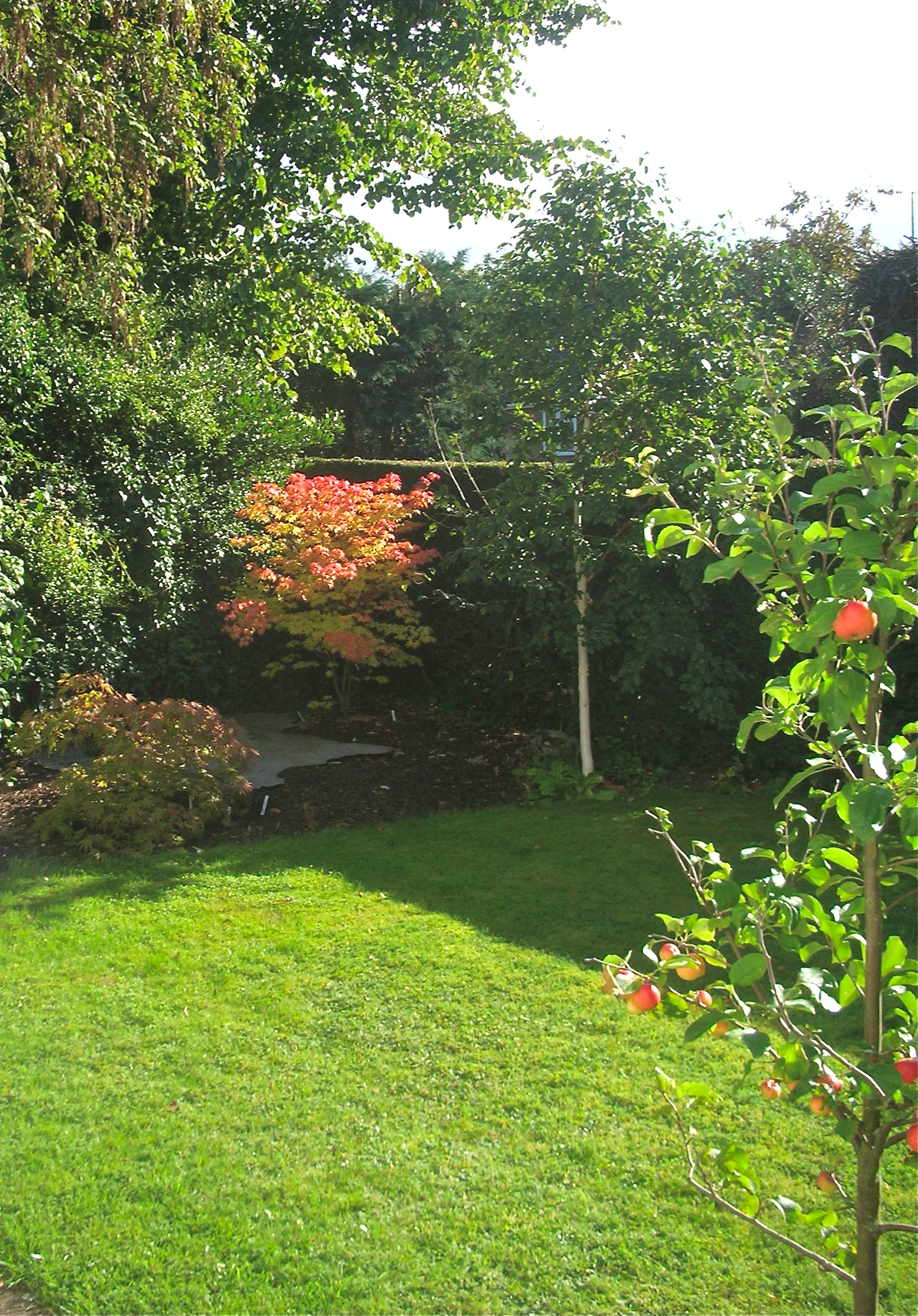
Meanwhile, the sun has come out again and the air is warm, and autumn is raging outside. I want to be in the garden. (We did have lunch in the garden.)

Rosa Mary Rose

Rosa Mary Rose

DSCN4320

Acer palmatum Sengokaku

Acer palmatum Sengokaku

DSCN4321

Beyond the call of duty – POWs 15

As the cholera epidemic raged, the POWs including Barry and the remnants of 27 Line Section were still working long hours on the railway. He remembers:

Towards the end of June 1943 several of us found it increasingly difficult to swallow and digest even the small ration of watery rice porridge that was our daily portion. We rapidly became so thin and weak that we were no longer able to get out to the working site. I carried on for a few days trying to do something useful in the camp or cookhouse, but eventually gave up.

The Japanese commander decided to make up a party of thin useless men and send them south in barges. We were a group of about twenty, I believe, unable to walk and barely able to stand, it was assumed that we would soon die, which most of us eventually did.

The day chosen for the evacuation was a Sunday, one of our rare ‘yasme’ (rest) days. We had about 7km to walk to reach the barges. Two of my men helped me, one carried my pack and I was supported between the two of them. After a short distance we found that we were making poor progress and one of them took me on his back and carried me the rest of the way. The two names of Gibby Douglas and Corporal McWhirter are in my mind but I cannot be at all sure that this is a true recollection.

The first proper camp the sick men reached was Tha Khanun (Tarkanoon). One of the POWs there was Dr Robert Hardie. His diary describes: “a lot of very sick men are coming down from 211 camp in a shocking condition – gaunt spectres of men, riddled with malaria and food deficiencies. One can do very little for these people. They can’t assimilate the sort of food we have except eggs, of which we have very few”.

Barry, and the men who reached this camp alive, were welcomed by:

 a proper reception committee of doctors and orderlies who first examined us very thoroughly to make sure that none of us was carrying a cholera infection and then did whatever they could to restore our strength. After we had been thoroughly tested we were all weighed on a beam balance, built in the camp and calibrated against a 50kg rice sack. My weight, about average for the group, was noted as 5 stone 12lbs, or 37kg.

Spoiled for choice – writer’s support network

My writing has been stalled because I had finished one project and was in desperate need of feedback on the other two.

The project, an article on my airman uncle (A Very Unlikely Hero) had been sent to a specialist blogger. My non-fiction (Writing to a Ghost: Letter to the River Kwai) was being read, as a favour, by a wonderfully meticulous friend and my re-re-re revised fiction book (Border Line) was in a queue to a busy writing friend.Two days ago my writing frustration peaked and I also felt a need of independent professional advice for some tricky chapters. So I sent them off to Sally Jenkins, who had done such a swift and helpful job on the synopsis, agent letter and first chapter of Border Line.

Later that same day the blogger, Pierre Lagacé, of Lest we Forget, http://athabaskang07.wordpress.com came up trumps and starting posting a new blog using parts of my article on my Mosquito Navigator uncle at http://johncustancebaker.wordpress.com/2013/09/10/and-if-by-chance/ I am thrilled with this.

Yesterday my friend, Lesley, came round with a wonderfully annotated manuscript of my non-fiction book and some very good advice.

Today, to my amazement, Sally Jenkins came through with the critique of my tricky chapters in Border Line. Her speed of turnaround only equalled by the seriously helpful advice on my chapters. http://www.sallyjenkins.wordpress.com/

Writing is something of a game of snakes and ladders. Today I am on a ladder. Back at my desk, I feel like a bee in clover – totally happy and busy though spoiled for choice about which manuscript to tackle first. It is this wonderful network of support from people we know and, in this new age, those we have never met that make writing possible.

This state of affairs has been very good for the house. DIY flourished, I have insulated a tricky section of bay wall with thermal lining, put up a pane of secondary glazing and ordered more lining, glazing panels etc.

(And my L reg. Nissan passed its MOT!)

Hungrier, thinner, speedo and then cholera – POWs 14

Barry and the remaining men of 27 Line Section reached a big well-run camp, Tha Khanun, more than 200 km up the river Kwai Noi. To their disappointment they had to march on up-river and then inland:

When we reached the site of (the misnamed) 211kilo camp it was as usual raining and there were no preparations at all, in particular there were no huts or latrines or cookhouses. Our Jap O.C. pointed out a heap of green tents… There were not nearly enough to accommodate the whole group but fortunately these tents were supplied with separate fly sheets, and these extra sheets could be pitched on improvised bamboo poles to provide extra cover although without ends.

On our first morning at 211 we were roused out very early, in the rain and in darkness for a full scale Tenko [parade headcount]. Through the medium of a Japanese interpreter who spoke very little English, our Jap commander told us that the progress of the railway building had fallen far behind schedule and that this was caused by the idleness and incompetence of the British workers and their officers… This speech was recognized as a “speedo”, which meant longer working hours and more harrying, shouting and beating by the guards.

There was no barge traffic up to 211 camp and our rice ration came up through the jungle paths on a hand cart or carried on our backs by ourselves. A 50kg bag (one hundredweight) is not an impossible burden for a fit man, but by now most of us were far from fit and were anyhow already fully occupied building the new section of railway, so that the rice ration was small and became steadily smaller.

…the rice ration, now down to a very few ounces, would be calculated strictly according to the number of men who went out to work. This put us in the unhappy position of being forced to detail for work men who were too weak to stand. It was quite usual to see a man actually suffering from a malaria rigor being supported between two others on the march out to the railway site. Such men were, of course, no use for actual work.

One day a few dysentery cases started violent vomiting as well as producing sudden dehydration and death within a day or two. Men who had served in India recognised the symptoms of cholera… The cholera spread rapidly and it soon became impossible to bury the dead so, on the advice of those who had experience of such epidemics in India, we started to burn the bodies… The fire was kept burning continuously by a small duty party. We never ran short of fuel.

Walking, Walking, Long Time Walking – POWs 13

After constructing the Wampo Viaduct, Barry and the remaining men of 27 Line Section started a very long march up the river Kwai during the rainy season (early summer) of 1943. Barry had been born in Malaya and before he became a prisoner had been studying the language. This led, as he remembers, to a random encounter:

During the march after Wang Po, on the way up river towards 211 kilo, the weather became gradually worse and we were slogging through rain and mud with no comfort at the end of the day’s journey. I often passed the time by talking to myself in Malay and repeating some of the pantuns that I could remember. On this particular occasion I was marching beside a stranger whom I recognised as probably a Dutchman as his dress was different from ours, but he had no rank badges or any other recognition signs. I started to say aloud a particularly apposite pantun, which goes:

“Jalan, Jalan, sa-panjang jalan,
Singa menyunga di pagar orang,
(Walking, walking, long time walking
Looking over neighbours’ fences)

At this moment, half way through the pantun, the man beside me joined in and recited the last two lines,

“Pura pura men-chari ayam,
Ekor mata di-anak orang.”
(Is he perhaps searching for a lost chicken?
But the corner of his eye is looking at his neighbour’s daughters)

At the same time he put a finger to the outer corner of his eye, which was exactly what my munshi had told me that a Malay would do.

Most real Malays know hundreds of these pantuns and by saying a key word from them can indicate a meaning to another Malay, which might not be apparent to someone else. That “ekor mata”, the corner of the eye, is a hint that some one is on the prowl and that girls, and wives too, should be on the look out. This episode cheered me up very much during a wet and miserable period of our long march northwards, and we spent the rest of the day talking Malay to one another; mine very stumbling and uncertain, his accurate and fluent. I lost touch with him and found no other Malay speakers in our group.

Mother of the regiment – POWs 12

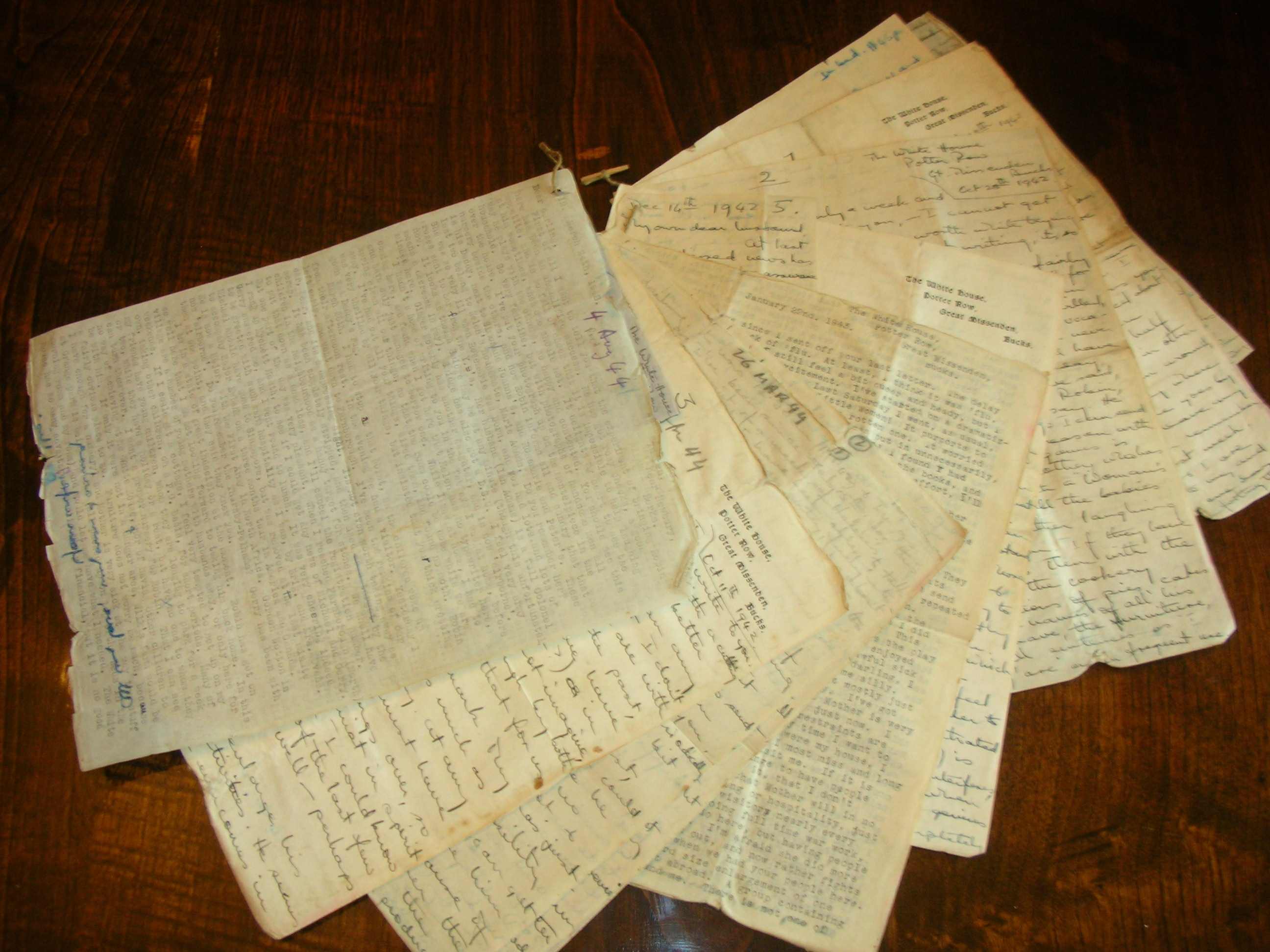
String of letters from Phyllis

String of letters from Phyllis

In 1943 while Barry and the men of 27 Line Section are sweating and starving on the Thailand Burma railway, Barry’s wife Phyllis is juggling her responsibilities. She is living at home with her parents, she has two-year old Robin and her mother (demanding and increasingly an invalid) to look after. She wants to move out of her parents home, but can’t unless she finds a job, and she needs one in which she can continue to look after Robin. She has heard nothing from Barry for over a year:

Dear darling, if I didn’t have to type this, which makes one stop to think what one is saying, and was not therefore very conscious of the censor, I could write you a real letter tonight. It is 11p.m. and I have been re-reading all the letters you have sent me since you left England. It has somehow brought you much nearer to me for a while…

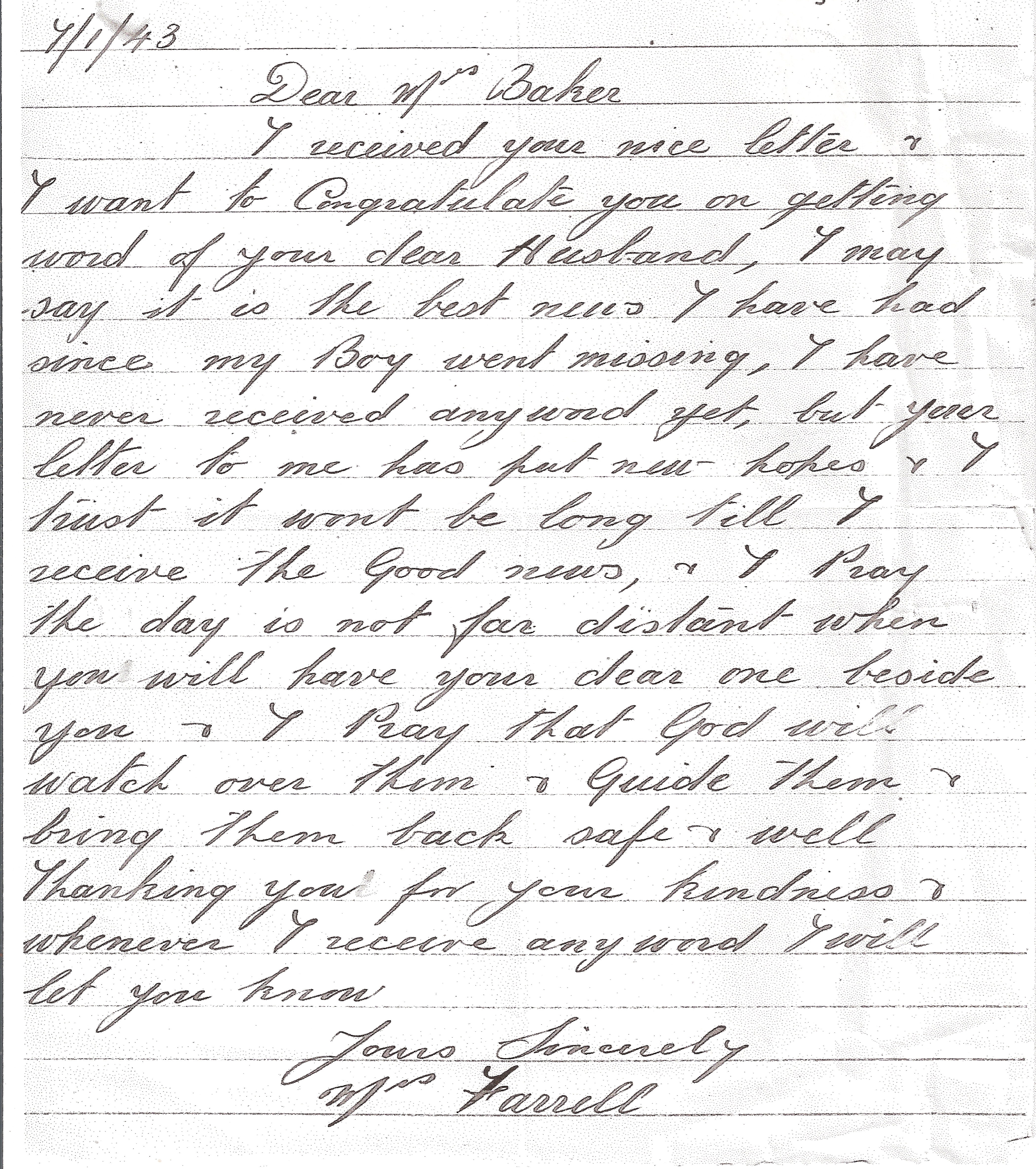
Then there is her correspondence with the wives, mothers, fiancées and grandparents of Barry’s men. Phyllis heard that Barry was a prisoner in October 1942, 8 months after he disappeared. She wrote to the relatives over Christmas, replies like this came back:

A mother writes to Phyllis

A mother writes to Phyllis

By June 1943 some more relatives hear, more than a year after silence fell, that their men are prisoners.

Dear Mrs Baker, I am now able to tell you that my husband Dvr. E. Parker 2587178 has been reported a Prisoner of War in “Tai Camps”. I received notification of this from Army Records Office on 6.5.43.

 I am very thrilled, but sorry to say that none of the other Glossop Girls have heard any news as yet, but there are great hopes.

I will take this opportunity of thanking you with all my heart Mrs Baker for your unceasing comfort through those long weary hours of suspense.

My very kindest regards & wishes for your husband’s speedy return. Yours Sincerely. Marjorie Parker.

Phyllis writes to them and then to Barry:

Darling, I’m probably going to get a wigging from Mother, but I just must sit down and finish this letter to you. I have had letters from four more next-of-kin of the men in your section to say their men are POWs… I can’t type up in my room, as they can hear me, and it’s not worth having a row with Mother… (They get so worried at the time I get into bed as it is. With lots of sympathy for me, they can’t fully appreciate how much I dislike going to bed). But all day and every day I am thinking of you, either all the many many happy memories we have, or hopes for the future…

The news of bad treatment of Far Eastern POWs is beginning to trickle through. All the relatives are worrying, Phyllis writes:

Always now I think of the past, and only realise with my mind, not with my emotions, that you must inevitably have changed a lot. Only my darling please don’t let anything you have or are suffering take away that light touch that was so essentially part of you. It was that which comes back to me almost more than anything else when thinking of that mad summer, and our two years engagement… This letter is going all wrong. Partly I know that Mother and Daddy are waiting for me to come upstairs, and though my heart and mind are just full of you…

There is no way for relatives to know, but some of their letters do eventually arrive, a year or so after they are written. Barry keeps them on a piece of string held with a bamboo toggle. All except one are still readable today. The one below is from Barry’s mother, Barbara.

String of letters from Barbara & Alan

String of letters from Barbara & Alan

Remembering Far East POWs

The Researching FEPOW History website have published my article on the discovery of documents about the Far Eastern POW experience for both the prisoners and those left in their latest Newsletter. It contains several articles of interest to Relatives and Researchers in the field.

Click to access RFHG_newsletter_10.pdf

I still hope to make contact with some of the relatives of the men in the story.

Wang Po (Wampo), a handmade viaduct – POWs 11

Barry and the men of 27 Line Section, much reduced in numbers but still a coherent body, continued to work their way up the Kwai Noi building the Thailand-Burma Railway. In April 1943 they reached Wang Po (Wampo) Camp.  Barry remembers:

This was to be quite a different “one off” job, unlike the usual jungle clearance and embankment. Wang Po is at the 113 km mark, and when we reached it in early 1943, was quite a new camp, the rains had not started and the camp was quite dry and fairly clean. We were by now dying off quite frequently but not more than one or two each day and we were still on two bowls of rice per day, not one.
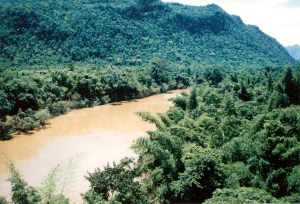
Wang Po area 1980s

Wang Po area 1980s

… near the village of Wang Po the river makes a sudden eastward loop into a rocky gorge that cuts into the line of the railway and here it was necessary to build a viaduct about half a mile long to carry the rails over the gorge beside the river.

Wampo Davies book

Our camp was set up on the west bank, opposite the working site as the gorge made it impossible to build a camp on the east bank. The camp was located on the edge of a forest of teak trees, which were to be the source of timber for the construction. We were a big group, a thousand or more I think… . One half of the group worked on the trees preparing the beams, the rest, of which I was one, worked in the gorge.
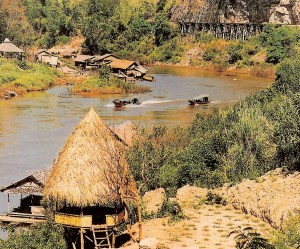
Wampo pc3

Our first job was to clear rocks and boulders from the planned route of the viaduct, which we did by drilling and blasting. The holes were made with a rock drill. One brave man holds the drill while two others smite the head of it with sledgehammers. We Linemen were used to sledgehammer work and did not often damage the hands of the drill holder but some of the other parties suffered several damaged or broken wrists. There was no power machinery of any sort in the whole construction, just hand tools.

By the time of the midday tea break our holes had generally gone in deep enough, and while we rested and drank our tea (no midday rice now), the Japanese engineers packed the holes with plastic gelignite and set detonators and lengths of safety fuse in them. There might have been as many as fifty blasts set off at once and it was important, both for us and for the Japs, to make sure they all went off. In the afternoon we shifted all the broken rocks and carried them down towards the riverbank.

When all the boulders had been cleared we set about making the concrete foundation piers, all built by hand with hand mixed concrete. …  which had to be carried to the site on the usual rice sack stretchers. Wet concrete makes a very heavy load. The Japanese engineers had already set up wooden shuttering for the piers… .

I should have mentioned that we had to cross the river from the camp to the site, morning and evening, but as it was in the dry season the water was quite shallow and you could walk on the bottom most of the way and only had to swim in the middle.

While we were clearing the rocks and building the piers, the other half of the group were felling teak trees. Very tiring work, as fresh teak is extremely hard. The trunks when felled were cut to length and then squared up by Japanese engineers using an adze. I have seen one of their engineers square up a log fifteen foot long and around two foot thick in one morning’s work.

When the concrete piers were nearly finished, 27 Line Section and others rejoined the timber party and started the very heavy task of carrying the squared timbers down to the riverbank. The intention had been to float them across the river but some of the POWs who had worked in the Burma teak forests insisted that green teak is so dense it will not float. The Japanese were unconvinced but the first trial proved the point. From then on we swam the beams across the river fastened to bundles of bamboo to keep them afloat.
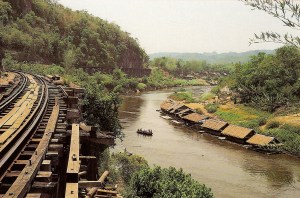
Wampo pc1

A few elephants with their Burmese mahouts helped in this work of shifting the beams down to the river but they were the only powered machinery on the job. They seemed extraordinarily precise, even fussy, in their handling of these heavy loads seemingly without any orders from the mahouts. There were not enough of them, of course, and we had to do much of the carrying ourselves. I reckon these beams must have weighed around 3/4 of a ton (or tonne) each, more or less, depending on their length. At first we tried to get them up on to our shoulders like undertaker’s men with a coffin. But the edges were too rough and sharp, so instead we used the ever-present bamboo poles. Eight or ten stout poles pushed under the beam and then lifted with one or two men at each end and the beam could then be carried down to the river looking like a giant caterpillar.

There were no cranes, simply intricate bamboo scaffolding fastened onto the rocky cliffs above the site and multi sheave pulley blocks fastened to it. A long rope over the pulleys with 50 POWs tailing on to it served to raise each of these beams into its proper position, where they were then all fastened together with dog spikes.

When the trestles were in place, held up by more bamboo props, then the even heavier horizontal beams which connected them together had to be heaved up into place by the same method and then spiked together. With the crudest estimate there must be between 500 and 1000 beams in the viaduct. While we were doing this other groups of POWs had laid sleepers and rails on the prepared embankment and were ready to go on over our viaduct as soon as each section was completed.

[The next section of the Railway had already been completed, so] we POWs who had built it were actually carried forward for a short section of our next march in railway trucks over the viaduct. I remember it as a very scary proceeding. The train went at a walking pace and at each rail joint, with its sudden change of direction, we felt that the wheels might easily jump the track and tumble us all down into the River. We got over without incident but I heard that the engineers kept a working party permanently on the viaduct with crowbars to lever bogey wheels back on to the rails if they came off.
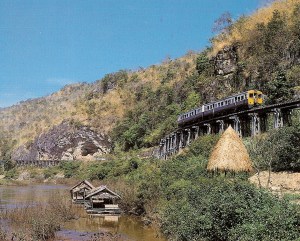
Wampo pc4

I have to admit that when this job at Wang Po was finished we POWs felt a certain mixed up pride in the work. We could see the completed viaduct and it worked and we had built it ourselves without mechanical aids of any sort beyond hand tools and a few elephants. I was left with a great admiration for the skill and planning ability of the Japanese engineers and an ever-growing bitter hatred for our guards.

[The b/w photo is from Peter Davies, The Man Behind the Bridge. The others are postcards from the 1980s/90s]

Heat wave good; heat wave bad

The lilies are opening and the air is heady. The lawn is brown and crisp underfoot and the lettuces are a withered heap every evening, no matter how much water I give them.DSCN4171DSCN4175DSCN4176

The rhododendrons, that I am foolish enough to grow, are limp in their pots and the underground rainwater harvester has run out.

DSCN4169

On the other hand we have finally tackled the failed seal round the bottom of the big shed/garage. We raked out all the rotten wood and there has been enough serious heat to really dry out the timbers. I have started to refill with fresh sealant (including, I notice, my shirt). This sealant, once dry, is proof against sun, rain, rot, mice, cats, goats and probably acts of god. We shall see.

DSCN4177

It has been so hot in the middle of the day, that I have stayed in the cool and finished the revised draft of my book of Far East POW memoirs and letters. Tackling the index has left me cross-eyed and may require a week’s repose.

They are prisoners; they are safe – POWs 10

For Phyllis, and the other relatives in England of the men who vanished in Singapore on 15 February 1942, their greatest fear was that their men had died or been wounded in the fighting. The best news they could hope to hear was that they were prisoners. They might be bored or hungry, but they would be safe from death until the end of the war. In addition they could be sent comforts, they would be able to communicate (when the authorities had sorted a route out) and all would eventually be well. So Barry’s father wrote to him:

“I know that you will understand how important it is in spite of the many difficulties of being a prisoner to try and keep fit in mind and body. I hope you will try and find some special interest. You have a real gift for languages try if possible to keep up your French and Malay to learn to write in Arabic characters, and if possible also to learn to speak Japanese. Also learning good verse will be a help and writing and composing yourself. Also if possible work with your hands. I’m afraid that as yet we cannot send you any parcels but perhaps you can get some books in Singapore.”

Relatives have no information about those who have already died. Relatives of these men would go on writing into the blue, waiting and hoping, sometimes as long as three years. The War Office struggled to get reliable data, from any source. Sometimes relatives heard before they did. One wife wrote to Phyllis on 5 January 1943:

“I have had no official news of my husband, but a friend of his, serving in the Middle East, sent me an airgraph, telling me my husband was a prisoner, he wrote as though I had already heard the news, so each day I hope the good news will arrive, and as soon as it does I will let you know.”

The situation never improved. On the 5th of November 1945 nearly three months after the end of the war in the Far East, one of the mothers wrote to Phyllis:

“I am sorry to trouble you, but I wonder if you could try & find out any information about my son, we have not heard a word about him, & as they are nearly all home, makes us wonder if anything has happened to him.”