Mad blackbird

This morning we saw a blackbird with a leaf as large as itself (ivy?) disappear into the holly tree outside our front door. This tree is only about twelve-foot high and brutally pruned each year to a ball shape to stop it taking the light out of the front windows. It’s pretty dense, but I have just looked and there is a nest there on eye level for the post man, or anyone else approaching the front door. This is no doubt the same blackbird (female) that does not bother to move if I cross her path while gardening.

DSCN3552

The heap of earth and turfs growing on the front lawn (ready to fill in the new bank after the drive is remade next week) is probably regarded by the blackbird as a permanent meal table. The state of my back may mean she is right as it will be a while before I can move, shovel and barrow it all into place.

I should be writing while the back recovers. I am – sort of, but without any sense of making progress. With two books in full draft all I can do is tinker, make submissions and try to decide when to make the break and self-publish – and check the clock to see if it is time to put on the kettle.

age and procrastination

I have noticed an interesting effect of age. I no longer put off doing a major job properly. So in the garden, finding the protective mortar flaking off the lowest level of bricks in one area – which was in the same state four years ago when I was laying paving slabs there – I know that I must deal with it. I have this feeling with all heavy work in the garden; best to do it now, I may not feel like it in a year or so’s time, and best make a good lasting job of it.

This feeling spreads to other areas not necessarily involving physical strength. There is no longer anything to be gained by waiting for a better/quieter/more mature period in my life. While the tendency to cook up long term schemes and projects has not left me, perhaps I am finally learning to live in the moment.

I read that you should only touch a piece of paper once – meaning that when you open a letter you should answer and file it in one go. Looking at the pile of paper in the box that masquerades as my in-tray, I still have a way to go on that front.

Of course it may not be age at all. I have just finished reading an unpublished memoir of a WWII Far Eastern Prisoner of War (Dishonourable Guest, by W G Riley). Riley is a young Signalman who starts POW life in Changi, works on the Thailand-Burma Railroad, gets transported on the doomed Hokofu Maru troopship, and is one of the 23 Britons rescued in the dramatic Cabanatuan Raid at Luzon. I have read many POW memoirs in the course of the last three year’s research. Elements are the same, but each man’s story is unique. You would have to be very obtuse to reach the end of even one of these memoirs and not learn to appreciate the moment.

Riley made, in his son’s words, ‘anguished attempts to get the work published’. His whole life was affected, not only by his experience as a prisoner, but also by his need to get his  story written and known. It was never published as a book, but his son, Steve, had the second version of the text (the first was lost) typeset and printed 1988. This certainly puts the odd rejection by agents or publishers into perspective.

displacement activities and rejection

Over Easter I decided to rearrange my writing room. I have that dream – a room of my own in which to write. It is almost perfect, but, as always, there are compromises. I need to fit into it my desk, which is a large old Victorian pine table, with flaps and a pitted, stained surface, and my mother’s piano – a hundred year old upright, on which I dream of achieving something better than my current Grade II skills – and the double piano stool my father made. There is also a large modern filing cabinet that I share with my husband, a wide bookcase full of poetry, a floor-to-almost-ceiling set of deep shelves (Sally Army) full of files, dictionaries etc. a cabinet, a working chair, a reading chair and an assortment of box files, document wallets etc without a home and a large wastepaper basket. Plus the photos and paintings (all by, or of, friends and family) on the walls.

There is no way all this will fit elegantly into a room 13 x 10 foot square. I don’t attempt elegance, but I am fanatic about practicality. I need to reach or see everything important. I am also keen on a sense of space. I might not have done anything about the urge to move the furniture, if I had not had another rejection for Border Line from an agent. It was very warm and friendly – though clearly a standard email – and they no longer surprise of hurt, but a little displacement activity often ensues.

So now I am sitting sideways on to the wide, low window, looking out onto the new paths and bed I have been working on and yesterday I cleared my desk and continued working on one of Border Line’s less satisfactory characters.

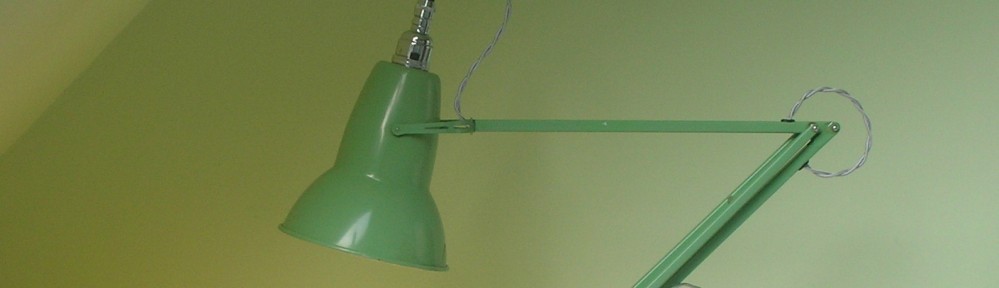
Since drafting this I have moved the piano. This required a certain amount of weightlifting attack, guile and a lot of leverage with undignified positions sitting with my back to most solid object, the filing cabinet. It was only when the piano was finally in position that I realised that I had switched off the socket (now behind the piano) for the much needed lamp. After some pointless fishing with torch and bamboo, waited for EG to come home and help.

All working now and miraculously my back is still OK. Not much work on Border Line, but an important correction in Writing to a Ghost achieved. Unless the weather makes path work possible tomorrow, I will surely WRITE.
The Reluctant Fundamentalist – part 2

We had a group discussion of Hamid’s The Reluctant Fundamentalist last night and I left feeling faintly troubled. Most people wanted to talk about the subject matter – leading off into all sorts of world views and favourite gripes. I had been knocked out by the use of language and the writer’s skills. One of the consequences of writing, which has both an upside and a downside, is that your perspective changes. You can’t help, even in the most absorbing of stories, becoming aware of the writer’s craft skills. I used to regret that total loss of self as I read, now I relish it.

That wasn’t the only disquiet I felt. I thought Hamid had taken us, very skilfully, by the hand and led us from a world perspective we shared into one that we mostly fail to understand and yet are worried by/curious about. The curiosity and worry were certainly shared by my fellow readers, but I am not sure they had all come on the same journey. Part of this is the assumption that the writer is the protagonist – an almost unshakeable belief held by so many readers – and this led them to mull over who Hamid is, and where his allegiances lie.

Having said that, the story is so concentrated – while appearing to be deceptively straightforward – that each person had noticed (or read about) aspects of the story that the rest of us had missed. I will certainly need to read it again. Perhaps I should lay aside my concern as there was a general vote to read another book by him.

writing – never give up hope

A writing friend has, after years of persistence, found a publisher for her third very interesting non-fiction book. This is a lesson in hanging in there. Her writing on historical subjects, that might otherwise lie untold, is lively, readable and scholarly and she continued to research, knock on doors, send in submissions, give talks and hang on, however often she had her manuscript turned down. It is truly and example to us all.

I have a small green shoot too. An agent (whose submissions are closed) has kindly agreed to look at the opening of my Far Eastern POW letters book.

Arandora Star

Finished the Arandora Star (Maria Serena Balestracci) at last. A very moving account of the less than glorious rounding up of enemy aliens in WWII, sending them to camps in or around England or even to Australia or for the most unlucky to Canada on the Arandora Star. The ship was torpedoed. It was unmarked, had too few lifeboats and rolls of barbed wire impeding escape. A large proportion of the enemy aliens were Italians, they had emigrated and settled in Great Britain, many had children born in England, Wales or Scotland, some of them serving in the British Armed Forces. They were often middle-aged or even elderly. Some of the other aliens were Germans and Austrians, many of them elderly, many of them refugees. No attempt was made by the British authorities to determine if any of these men posed a national security threat. 446 Italians lost their lives leaving widows and children behind who never had an explanation, or apology, or a body to bury. Balestracci has researched the whole subject over many years and bought some comfort to the still grieving relatives.

One of the strongest consequences of such a catastrophic piece of mismanagement and injustice, especially for relatives left without explanations, is the lasting pain and knock on effect on communities. It is now 70 years since the event, yet it is clear that people are still suffering. It is difficult not to feel depressed about the new resentments and years of suffering being created under the umbrella of war on a daily basis.

Sad post, but I am glad I read the book and for those relatives Balestracci contacted, there have been great benefits in making sure the Arandora Star and its victims are not forgotten

Dealing with writing criticism

I love the randomness of existence; so Monday morning there was a knock on the door and a great lorry craned a large bag of sand onto our driveway. The snow cover and the icicles everywhere make laying brick paths unwise. Instead I managed to send an email to an agent, who felt like the right person for my Prisoner of War non-fiction book – though the firm is closed for submissions, so I have probably just annoyed him. I also finally posted a submission to an agent for my fiction book Border Line.

An interesting post on How I Handle Rejection on Shannon’s blog http://shannonathompson.com made me reflect on how I handle both rejection and praise. I went to a recent email from a friend who had read Border Line critically for me and realised that I had lapped up the praise and not paid enough attention to the criticism. I had dealt with the post-it notes on the manuscript, but not really listened to a more fundamental worry in the covering email. So I spent a happy few hours – and I mean happy – addressing the problem. It is so much easier when someone has kindly identified the sticky patch or the unreal person. When you are writing you tend to have your nose up against the leaves and the shape of the trees get lost.

My mood underwent some yo-yo transformations as I tried to alter the picture for the (imaginary) cover of Border Line on my website. I learnt, as I always do on these occasions, a lot about how not to work in iWeb, but finally I got it sorted. Then, having published the new version, I was maddened to find that one page uploaded the new version, but another stuck to the old. Much trial and error later, I could get the new pages correct only of I used the www. before my address. Today it works properly. There are some gnomes working hard behind the scenes and I just don’t quite speak their language.

The Agent Dilemma

Made myself concentrate on submissions today. It it just laziness that makes me go on looking for an agent instead of self-publishing? I broke even with Unseen Unsung, so I can do it and I have learned so much on that road… and yet… I feel an agent will do well all those things I just scrape through inefficiently. In the meantime another year has passed. Border Line is a much improved book over that year, so I cannot regret the time and effort, but I ache to get on with the new project.

If I were a brilliant writer, I would be writing poetry. This has, in my view to be perfect or nothing. However in the world of fiction, writing across a vast spectrum of quality can be enjoyed. There are happy readers for works from Byatt or Attwood all the way to Mills & Boon’s prescribed plots. So, assuming an interesting enough story, and writing skills somewhere between the two ends of the spectrum, there should be no bar to attempting a novel. However, even with the story in the bag, and enough skills to gain several hundred readers  (for two novels) on a shoestring, finding and agent – let alone a publisher – is like playing a bad game of Snap.

Agents have full books and enough friends (and friends of friends) who write, never to need to trek further afield for new material. They don’t mind being sent new material, but for all their claims about looking for a ‘good read’, they give off a clear vibe of hoping to spot the next Harry Potter or nothing. They have jaded palates when it come to subject matter – and who shall blame them, given the writing they must wade through. They have to predict the reading public’s next year’s flavour. They have to squeeze any author they take on into a pre-recognised genre. Ideally they want a personality to sell as well as a book. Oh, and they don’t much like subject matter (such as assisted dying) that will frighten the horses/publishers.

I could go on. I can see the problem. I’m just too bloody-minded to give in. Even knowing that, should I find an agent via this crazy blind date system they then have to sell my story to a publisher, doesn’t stop me looking. Am I mad?

socks and bricks

The other day EG was baffled by an advert talking about the number of slices of toast made in a life time or noses wiped or… you get the picture. It made me think of socks. Am I the only woman to have sat down one day and calculated the number of socks I washed as the girls were growing up. Let’s say 4 pairs, 7 days a week, 52 weeks a year for 16 years… = 46,720 individual socks. That is not counting life before children or the 16 years since that calculation (or of course the rest of the garments we all wore in those years). So yes, I understood and felt at one with the woman in the advert – though I have no memory of what they were selling.

Happy moment today – a gift chosen purely by instinct, a garment with a label I had never heard of before – turned out to be a make known and worn by the recipient.

Much brickwork in the garden today, though when the sun vanished all that was left was a biting wind. EG and I started to chisel out the granite setts from the side of our 100-year-old drive. I rather enjoyed having both of us there in goggles bashing away at the old wall. We have relocated the setts. Heaven knows what the original owners of this house needed with the tons of pink granite brought into this garden. This project is definitely in the labour phase, but the delight of seeing a path emerging out of the designs never fails.

miscellaneous day

Yesterday was a weird day. We were expecting bad weather yet the sun was shining bright, so I scrambled into gardening clothes and went mad in the garden, mending the hose that takes water from one rain butt to another, clearing paths and finding the edges of them. EG had set a fine example a week ago clearing all the moss from the side path. I kept expecting the sun to disappear, but it was so warm I went coatless.

In the afternoon we went to the funeral of our 92 year-old neighbour. She was a feisty and determined lady. She lived alone in the house her father built, and insisted on maintaining standards as she thought fit. When we came to live next door – more than thirty years ago – I lived in dread of her. She went in for unparalleled frankness and had many things to say about our house and garden, but over the years we became friends and she was always kind and generous to the children. Latterly she became a great supporter of my writing and would lend her copies of my books to all her friends – insisting that they read them.  She was lucky in having devoted friends, on whom she made great demands, who made it possible for her to stay in her own home to the end of her life.

After the funeral, as the bad weather still held off, I rushed into the garden and started work on the brick paths and beds in the area near the new drive-to-be. I had forgotten how much I enjoy the exhaustion of labour. I positively relish moving earth around and realising designs that had started out as pencil on paper. I think the two maples will look great in their re-made beds.

Later in the day, a lovely email from the researcher of the magazine on Far Eastern Prisoners of War to say that my article was OK. Much relieved. Apart from corrections, I did no writing yesterday.

To finish off the day I took myself off to a Lindy Hop session. This was mad. It takes place in the basement of a pub with limited floor room. Tonight there were suddenly about 15 newcomers. A crazy, lively and very noisy session, but not much room to dance.