Melon-art, slugs and publishers

These are not necessarily connected, but reflect my divergent states of mind. We have been in Prague for (my husband’s) conference and were royally entertained. The food was actually ‘awesome’, both the meals and the continuous supply of irresistible nibbles, DSCN7656 and even works of art. DSCN7655 DSCN7654 For the past thirty plus years I have airily dismissed the ‘slug’ problem. Others had slugs; I rarely saw one. All change. They have eaten all the tulip leaves and shredded and decapitated many of the irises, they have munched the lilies to oblivion before I could see them. They have demolished my precious seedlings – the first from the greenhouse that I planted out two weeks ago. So, I now collect handfuls of slugs every time I leave the house and heave them into the green bin – a variation on squishing blackly and lily beetles. I have purchased a copper collar for my chocolate cosmos  and the latest organic control – wool pellets for the veg plot. These are not beautiful and smell somewhat of goat, but I am hoping to save the runner beans.DSCN7695 For the last three years I have been looking for a non-fiction publisher for my manuscript Writing to a Ghost: Letters to the River Kwai 1941 to 1945. One of my 2013 emails has just been answered! Am still looking? Indeed I am, and they sound fine … in their field (mostly sport). I never thought I would be able to resist an invitation to submit to a publisher, but sadly I feel that my book will not fit with their other titles (and I suspect their team will not have design and editorial expertise in titles about WWII and women’s roles) and they definitely do not have appropriate trade supply connections. Am I mad?

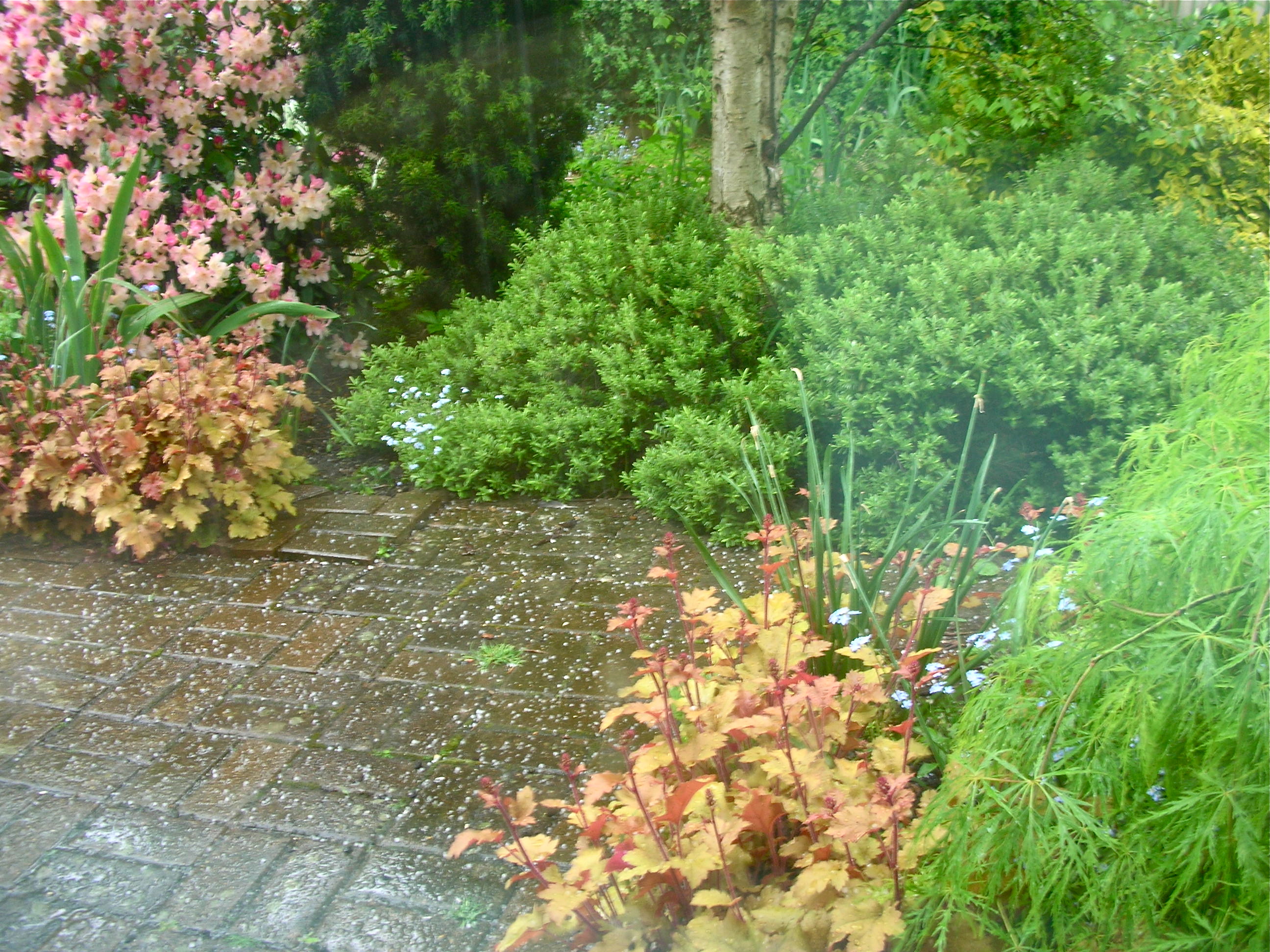
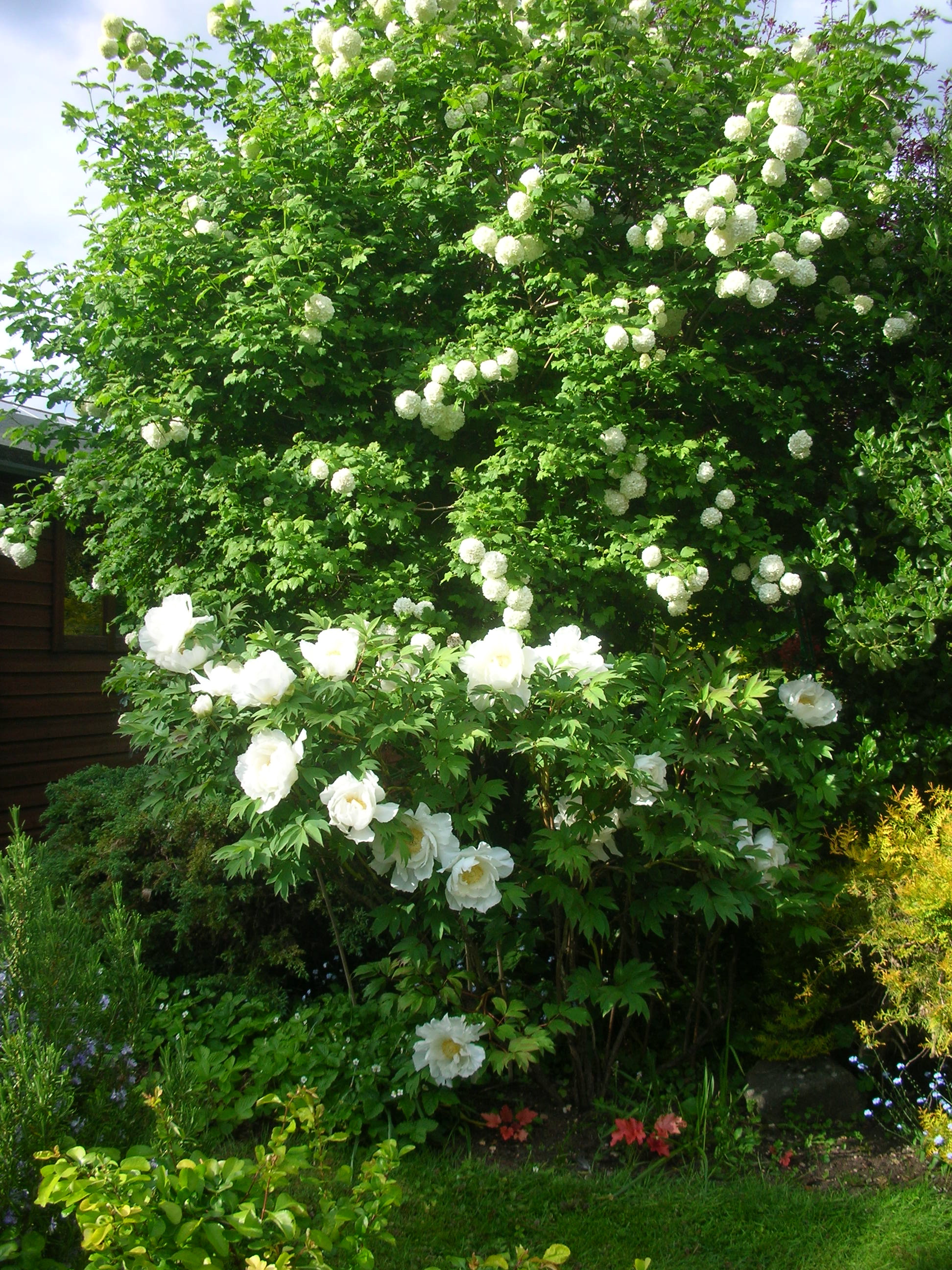
‘Farmers fear unkindly May, frost by night and hail by day.’ (Flanders and Swann)DSCN7693 However the rhododendrons are emerging and the tree peony and guelder rose are in flower. DSCN7692STOP PRESS
Beer works! Thanks to everyone who suggested it.

Maples, martins and some frogs

Acer palmatum Trompenberg

Acer palmatum Trompenberg

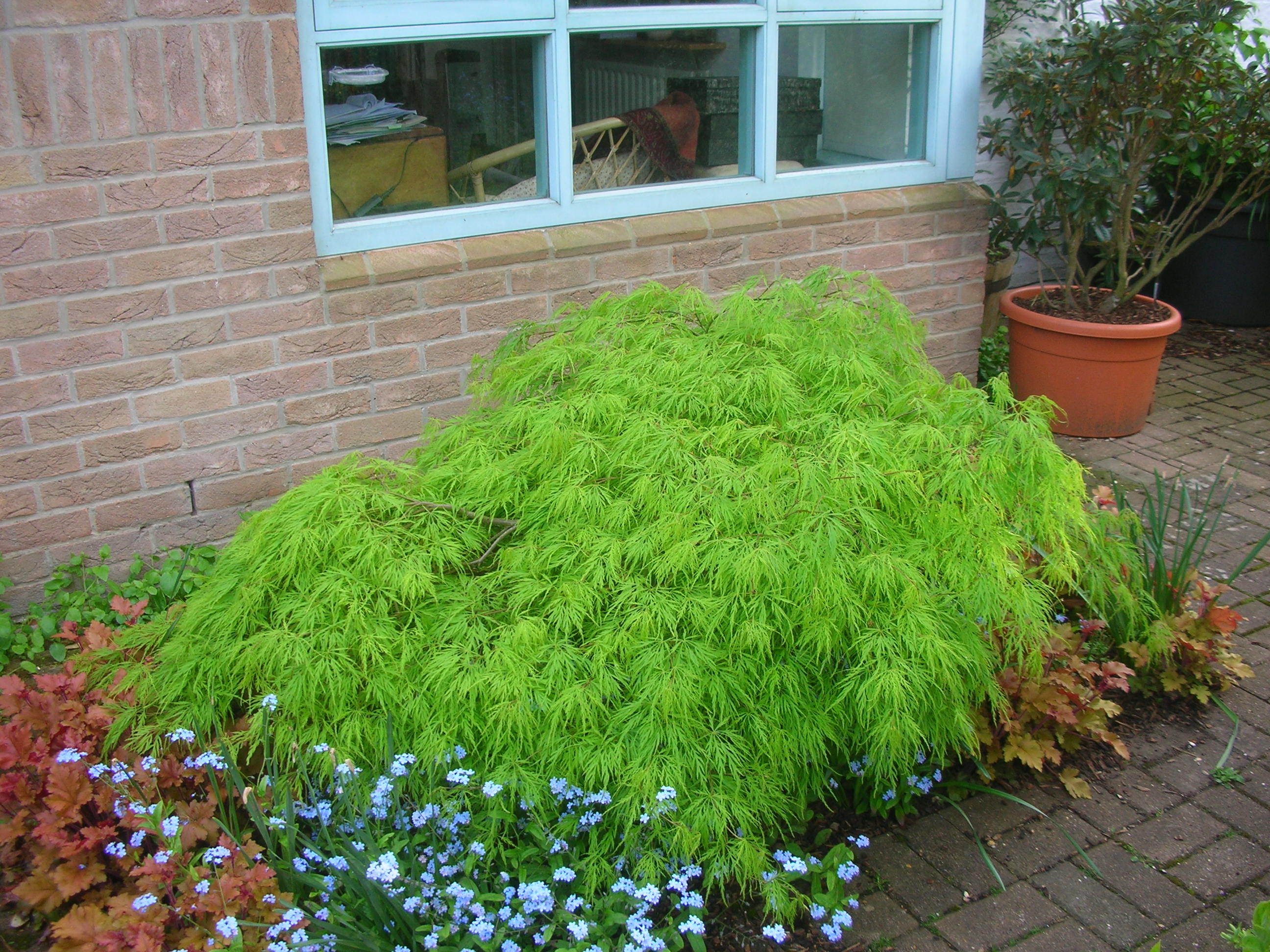
It seems I will never get used to the sight of the new leaves on Japanese maples. Lucky me. Going around and checking the young leaves for black-fly is one of my hopeless antidotes at the moment for my depression over the election results.DSCN7564

Acer palmatum Sango-kaku

Acer palmatum Sango-kaku

DSCN7592

Acer palmatum Matsukaze

Acer palmatum Matsukaze

DSCN7278 DSCN7593

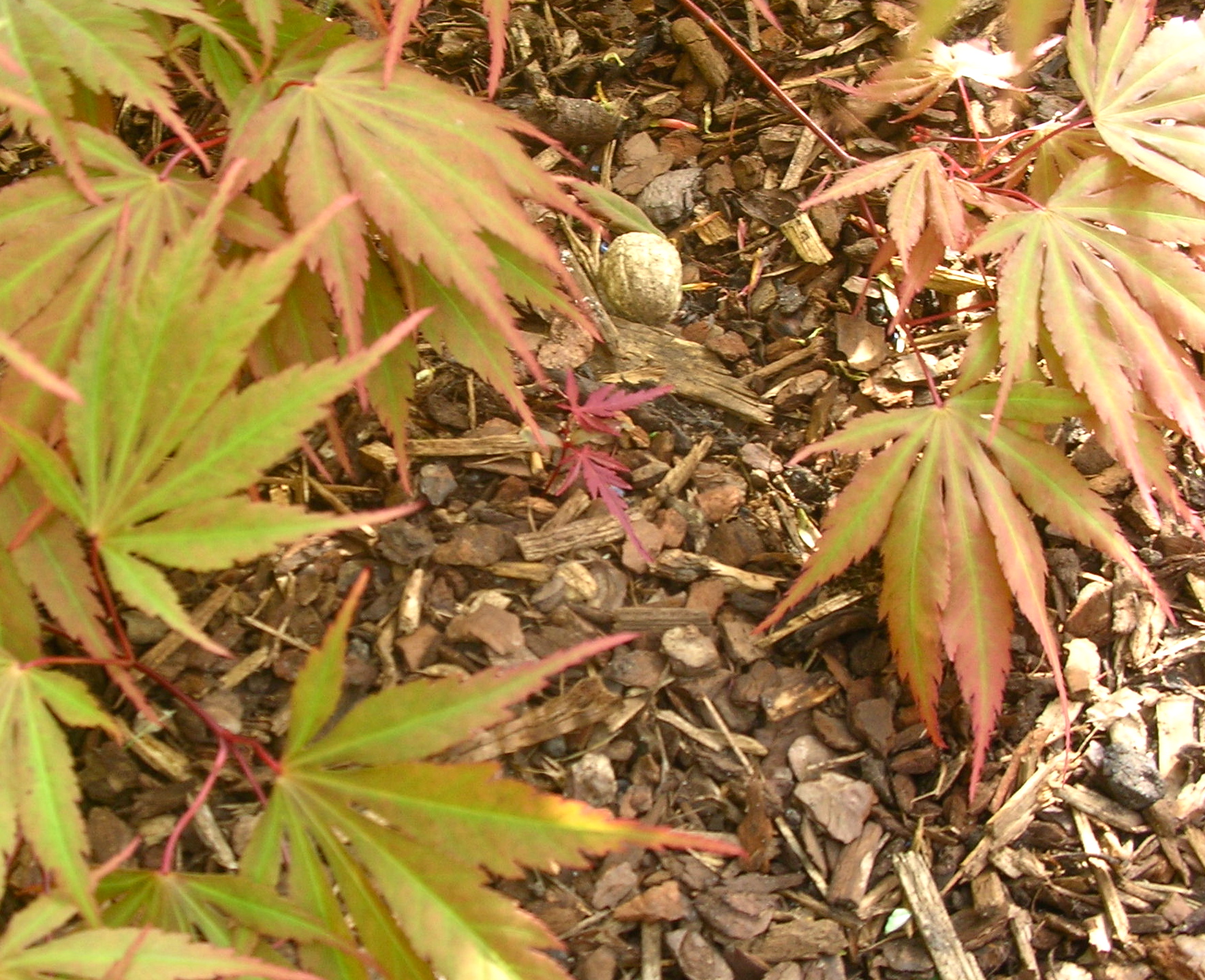
And biggest excitement of the maple year – a new baby.DSCN7602

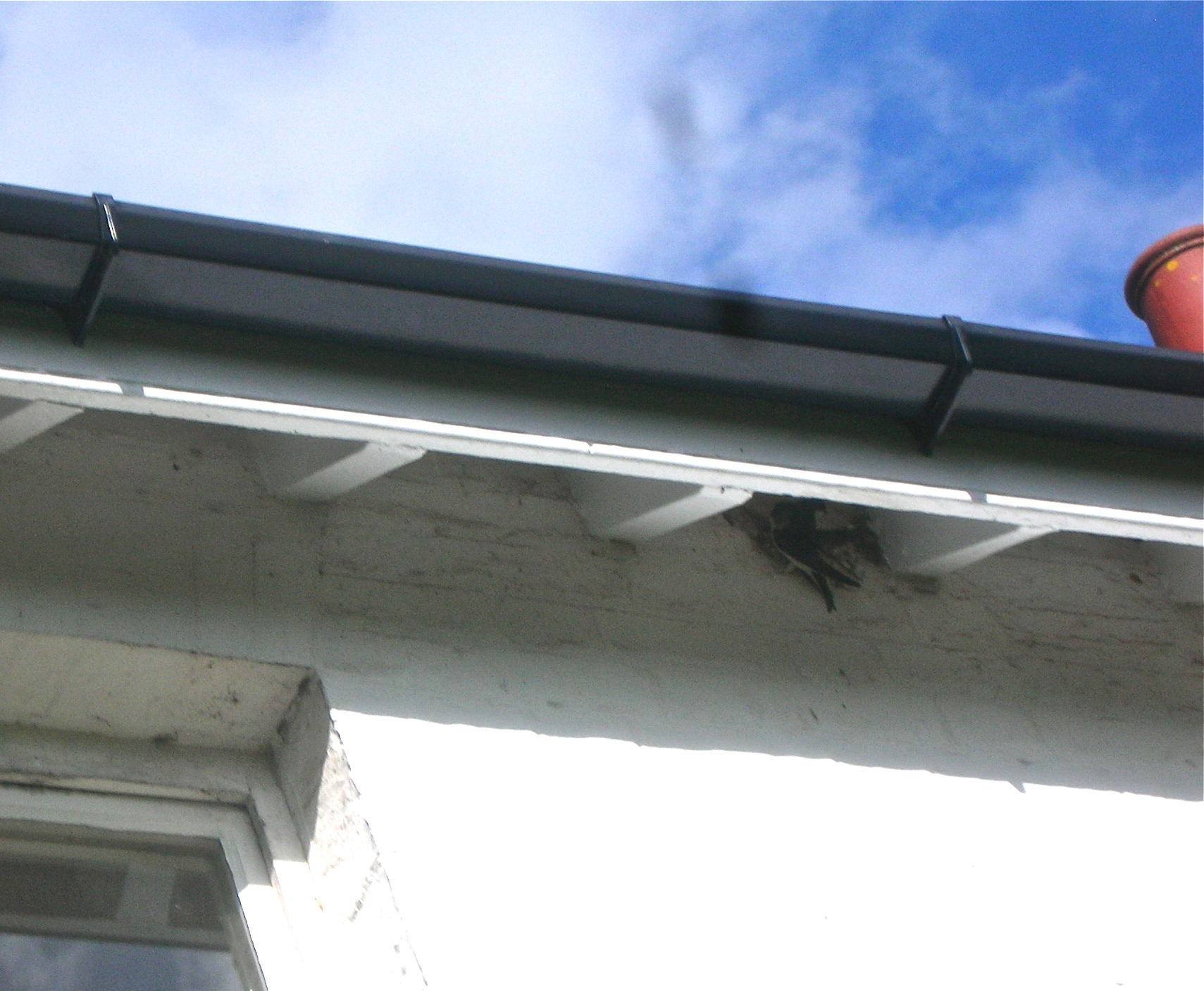
Every May there is another excitement – the return of the martins. We were a little apprehensive about their reactions, as we had knocked out two of their three regular nests in order to paint the bargeboards round the house. However they are backDSCN7591 DSCN7607 and seem to be sharing the one nest while building next door. This is a pair.

If you thought the photos of the martins were poor, try my ‘art house’ video of frogs. Actually, best shut your eyes and listen. It is only 9 seconds. It expresses some of my censored comments at the moment.

The books of Borgo Pignano

(A post mostly for bibliophiles)

Last Christmas we opened our present from our daughters to find this. DSCN7549On the back it explained that this was a long weekend (half-board) in Borgo Pignano in Tuscany. I am not about to post my 130 odd photos or describe our holiday, except to say that it was an uplifting experience. The ethos of owners of this beautiful 12th and 18th century cluster of buildings was of local, sustainable, organic living. We were happy, extremely well-fed (garden to table) guests, in the most stunning, spacious and peaceful of surroundings.

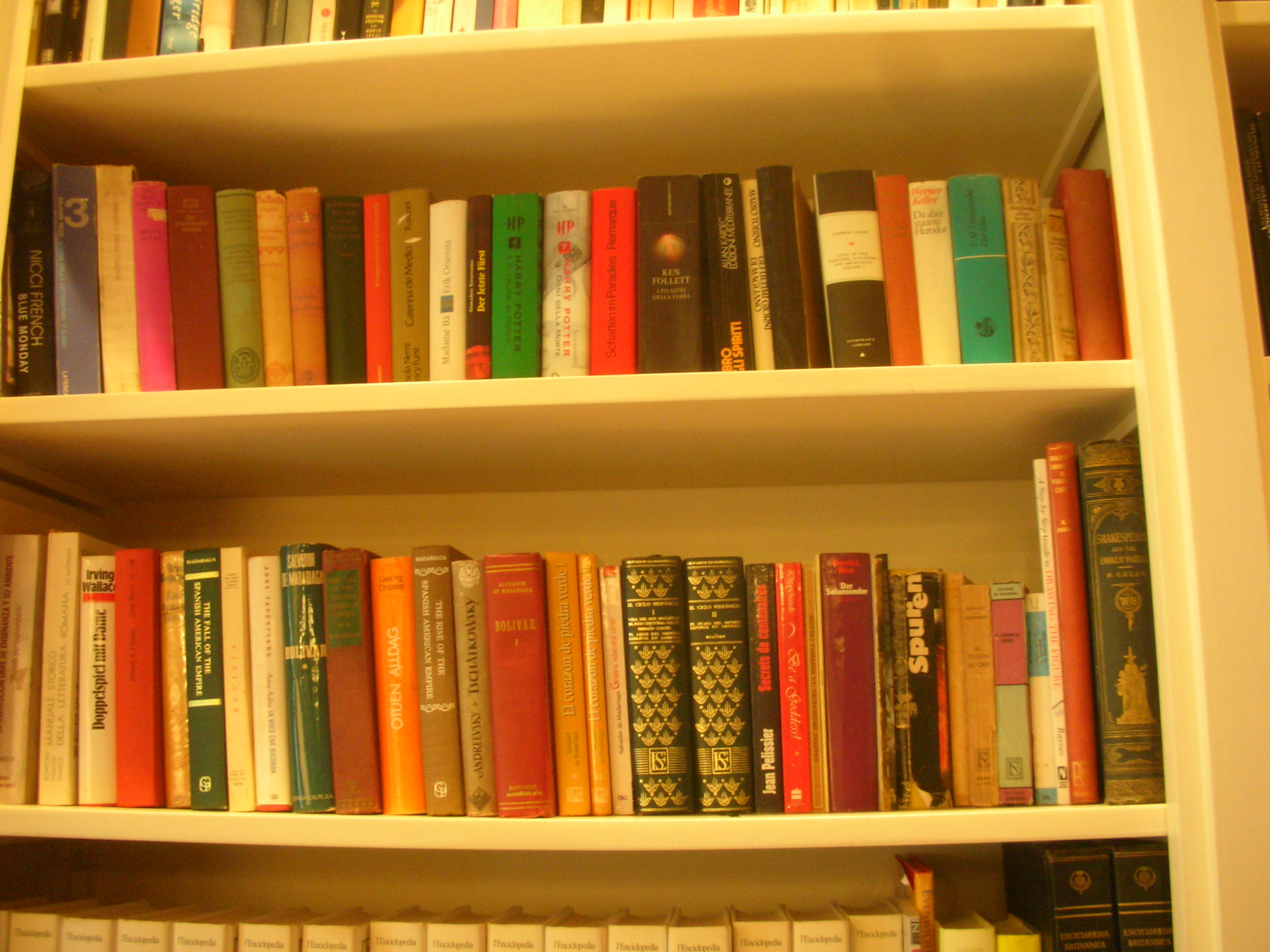
Among all the delights the one that enchanted me almost to delirium was the library. Never have I encountered such an eclectic mix of good books in such a wide selection of languages (original and translated) in my life before. I suspect it is unique.DSCN7373 DSCN7533

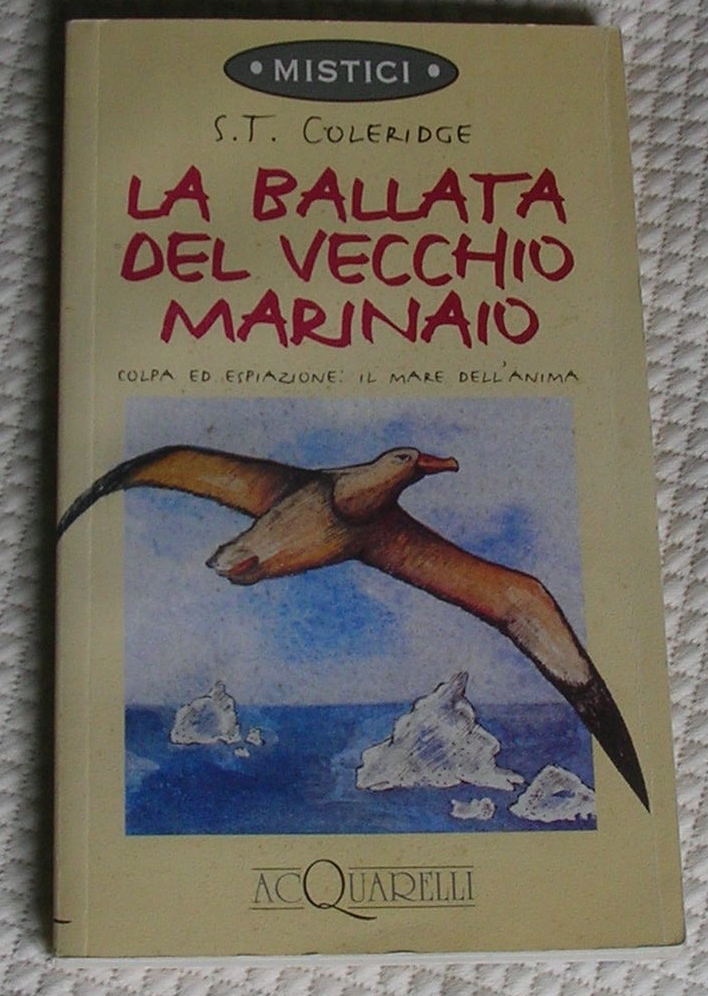
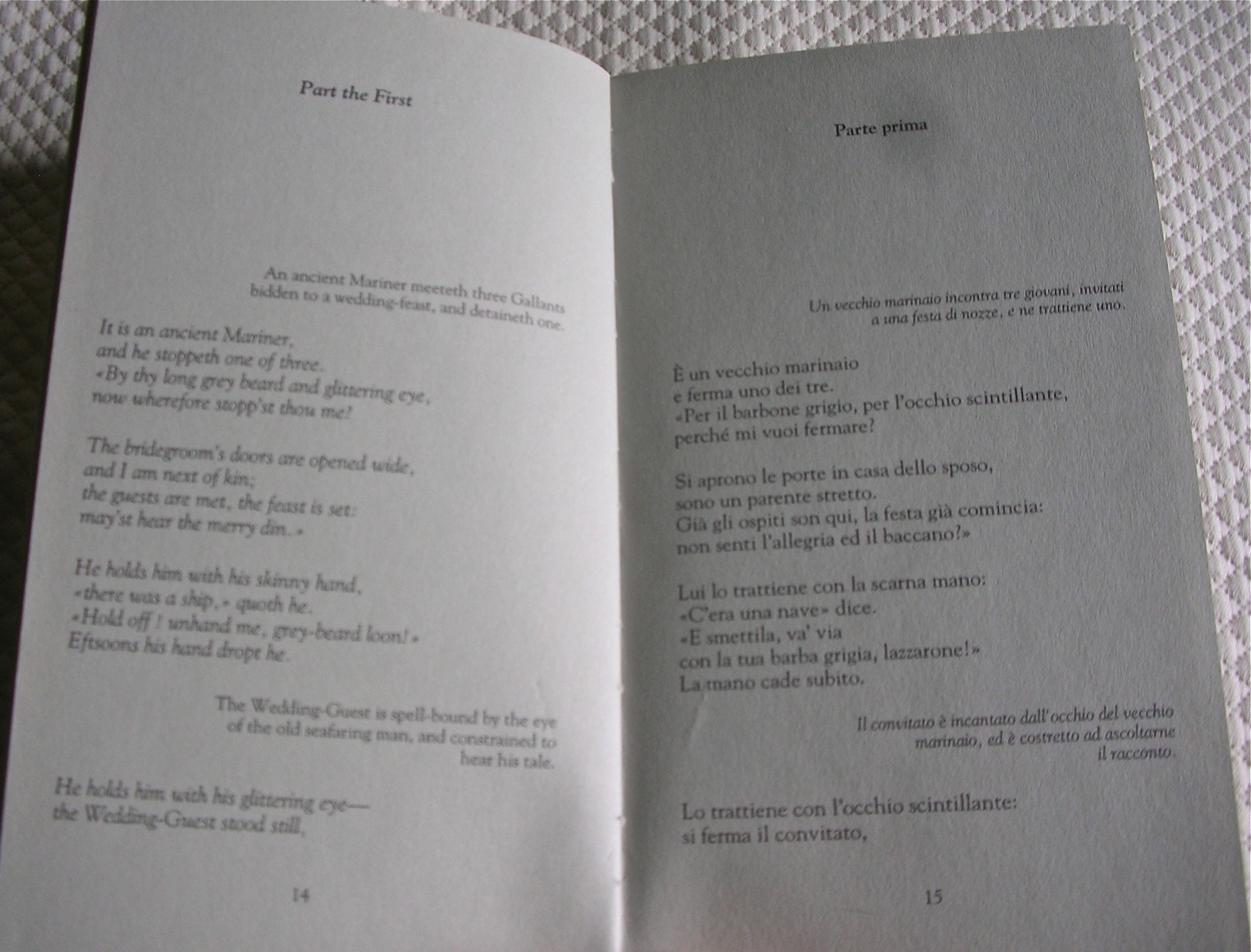
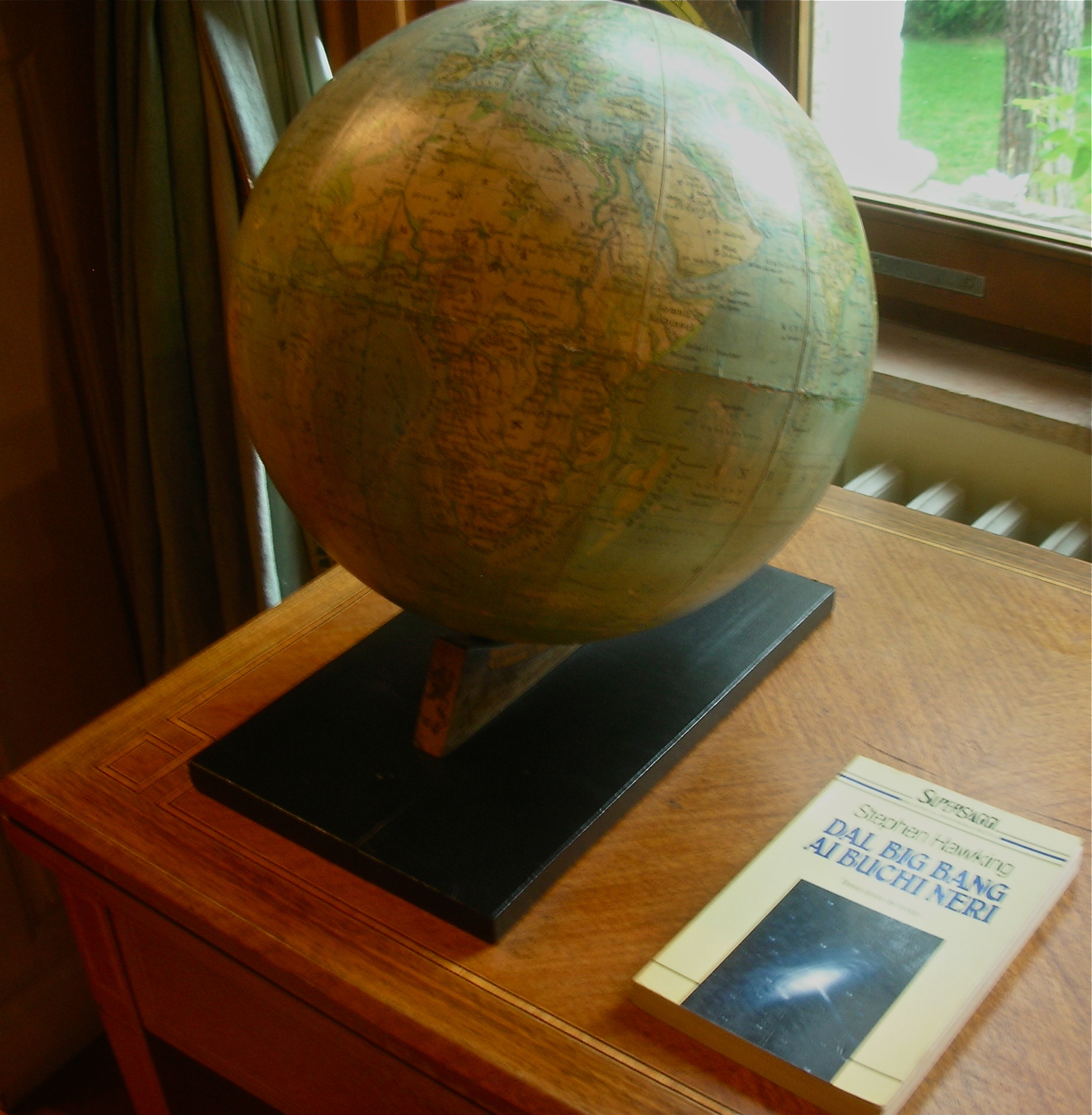
For tasters, here is a selection from just one shelf: Conosci L’Italia, il FolkloreQuarterly Review of Archaeology (1959), 4 vols; La Institución de Eserianza y su Ambiente, Antonio Jiménez; Manuale Storico della Letteratura Romana, Ranconi, Posani, Tandoi; Doppelspiel Mit Dame, Irving Wallace; Das Boot ist Voll…, Alfred A. Häsler; Kinder Brauchen Märchen, Bruno Bettelheim; The Fall of the Spanish American Empire, Salvador de Madriaga (many copies of this and other works by the same author in several languages); La Voce Che Ricorda, Ama Adhe (preface by the Dalai Lama); Ottjen Alldag, Georg Droste; Tschaikowsky, Alexander Andreavsky (in German); Secret de Centenaires, Jean Pelissier (Chinese medicine); Be a Goddess, Francesca de Grandis (Celtic spells); La Dottrina Celeste,  Emanuel Swedenborg; Mahā, Mudra (Mediation, French); The Twilight of Machines, John Zerzara; Spuren, Eric Ambler (German); Sesso, Antonella Biagioni; Fe Sin Blasfemia, Salvator de Madriaga; A Step by Step Guide to Drawing the Human Figure, John Raynes; Holbein’s Drawings at Windsor Castle, K. T. Parker; Shakespeare and the Emblem Writers, Henry Green. (Well, well, that really fixed spellcheck, it gave up completely.)DSCN7524I found little gems, such as a dual language school version of Coleridge’s, The Ancient Mariner. The text includes little resumés of the action written thus: ‘An Ancient Mariner meeteth three Gallants, bidden to a wedding-feast, and detaineth one.’DSCN7424_2 DSCN7425  Another cover that caught my fancy was Hawking’s Big Bang in Italian. DSCN7525

Then there was a music book of laments from the Highlands and Lowlands of Scotland.DSCN7532

I have never known such browsing delight, but I’d better stop. Well, maybe the view from our bedroom window first thing in the morning.  DSCN7383


The other day upon the stair…

…I met a man who wasn’t there. He (she) isn’t there again today…

This is me. I have been away for a few days, and in a couple more I am going away again.  I am brutally skipping most of your lovely posts. When I get back again at the end of next week, I will tune in again.

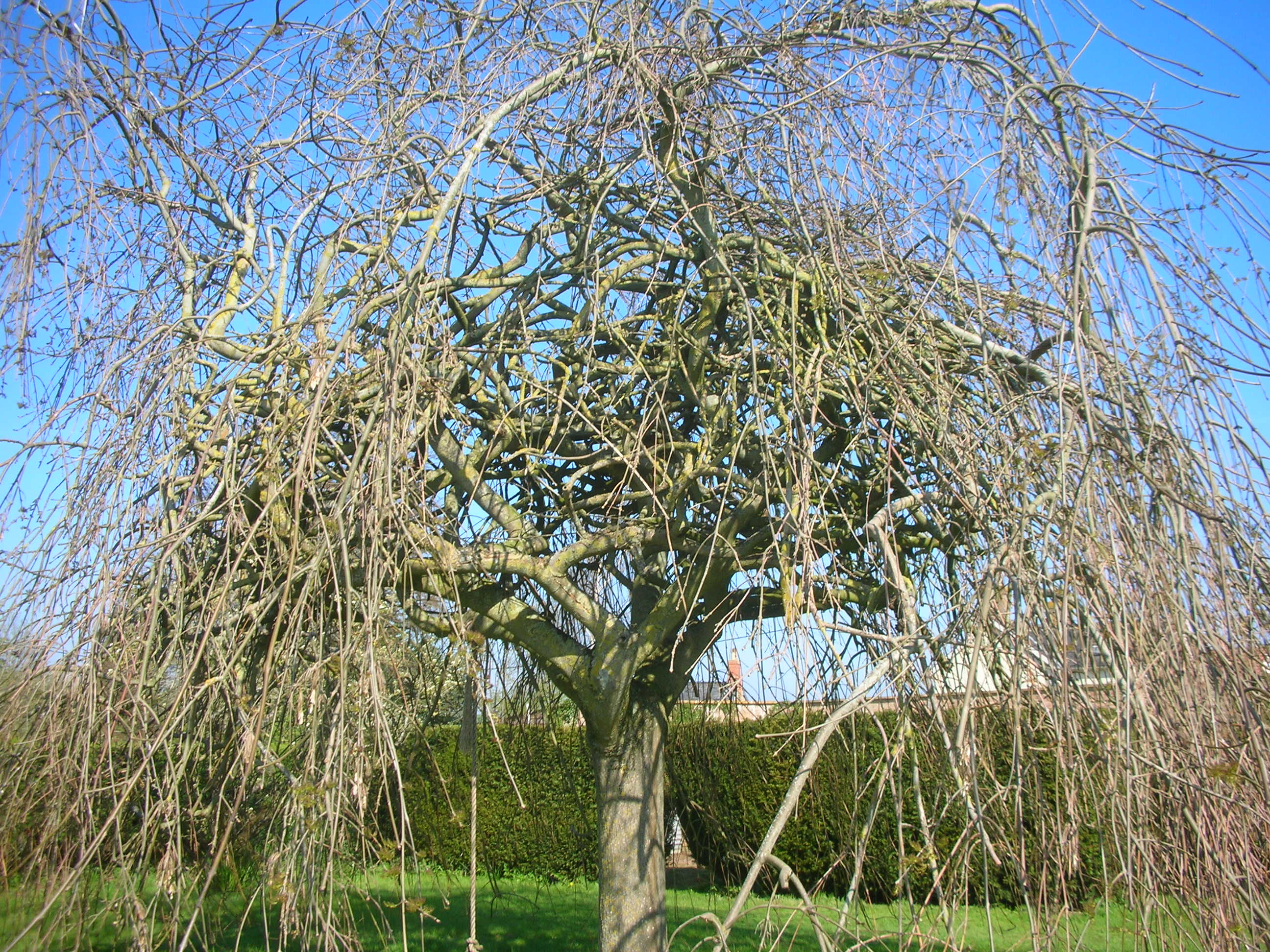
This is where I have been.DSCN7321This is the tree that was planted when got married – a weeping Ash.DSCN7308DSCN7309This is a cactus we visited at Cannington Walled GardensDSCN7342And some tulips back at home. DSCN7364

The Bush Devil Ate Sam and 84 Charing Cross Road

Let’s hear it for non-fiction! I have just had the most entertaining and informative week (and I get to write a seriously disconnected title for a post).

Curt Mekemson‘s book, The Bush Devil Ate Sam…And Other Tales of A Peace Corps Volunteer in Liberia, West Africa, is an important record and a serious story, yet told easily, and with delightful humour. This is one of the most satisfying books I have ever read, because it entertained me thoroughly AND made me feel better informed.

Screen Shot 2015-04-15 at 20.35.09In America in the 1960s, Berkeley was one of the cradles of independent thinking. Here, youth, hope and idealism produced (for a while) creative, open-minded solutions to world problems. Curt was there and tells us how it really was.

From there we go with Curt and his wife, as raw Peace Corps recruits, to Liberia. Curt never fails to spot the funny elements of his varied adventures and he writes with an pleasing straightforwardness. Their lives as told are crammed with, hair-raising, deadly serious and laugh-out-loud details.

The story is brought up to date with a resumé of the events of the breakdown of the country in the 1980s and the current fragile peace including the testing events due to the appearance of the Ebola virus.

In spite of Liberia’s  difficult and often tragic past, reading Curt’s memoirs in The Bush Devil Ate Sam gave me a sense of hope for the country and the wider continent.

My other book, 84 Charing Cross Road, is a smidgeon of a story – 96 pages of short letters   from 1949 to 1969 between Helene Hanff, a New Yorker, and Frank Doel, who works in an antiquarian bookshop in Charing Cross Road. The contrasts between Britain, book-rich and food-poor, and America, the reverse, shape the correspondence. DSCN7236 - Version 2 Helene’s voice  is totally original and utterly beguiles not only Frank, but all the staff at Marks and Co Booksellers as does her generosity during the rigours of rationing.  This book was an instant hit on publication and there is also a film (with Anthony Hopkins and Anne Bancroft), which I am aching to see.

The edition I bought (secondhand) includes the sequel, The Duchess of Bloomsbury Street, which I also highly recommend. This is another very short book, all taking place in 1971 in London, as a consequence of the publication of 84 Charing Cross Road and provides a satisfying coda to it. These two records reveal the wonder of England and English literature through post-war American eyes.

Goldcrests and hedgehogs – the eye of faith

A few days ago, something outside the window started bouncing and caught my eye. Two tiny birds were spirally jerkily. I think they were fighting since, after about ten minutes of playing hide and seek, the winner seemed to be in sole possession of the field. This fellow haunted the bushes and windows, peering in at me and darting off, he resembled nothing so much as a yo-yo, and he NEVER stayed still for a second. I am a point and shoot photographer with a simple camera. I tried, I really tried. Look carefully and you may spot one camera-testing Goldcrest.DSCN7215 DSCN7209

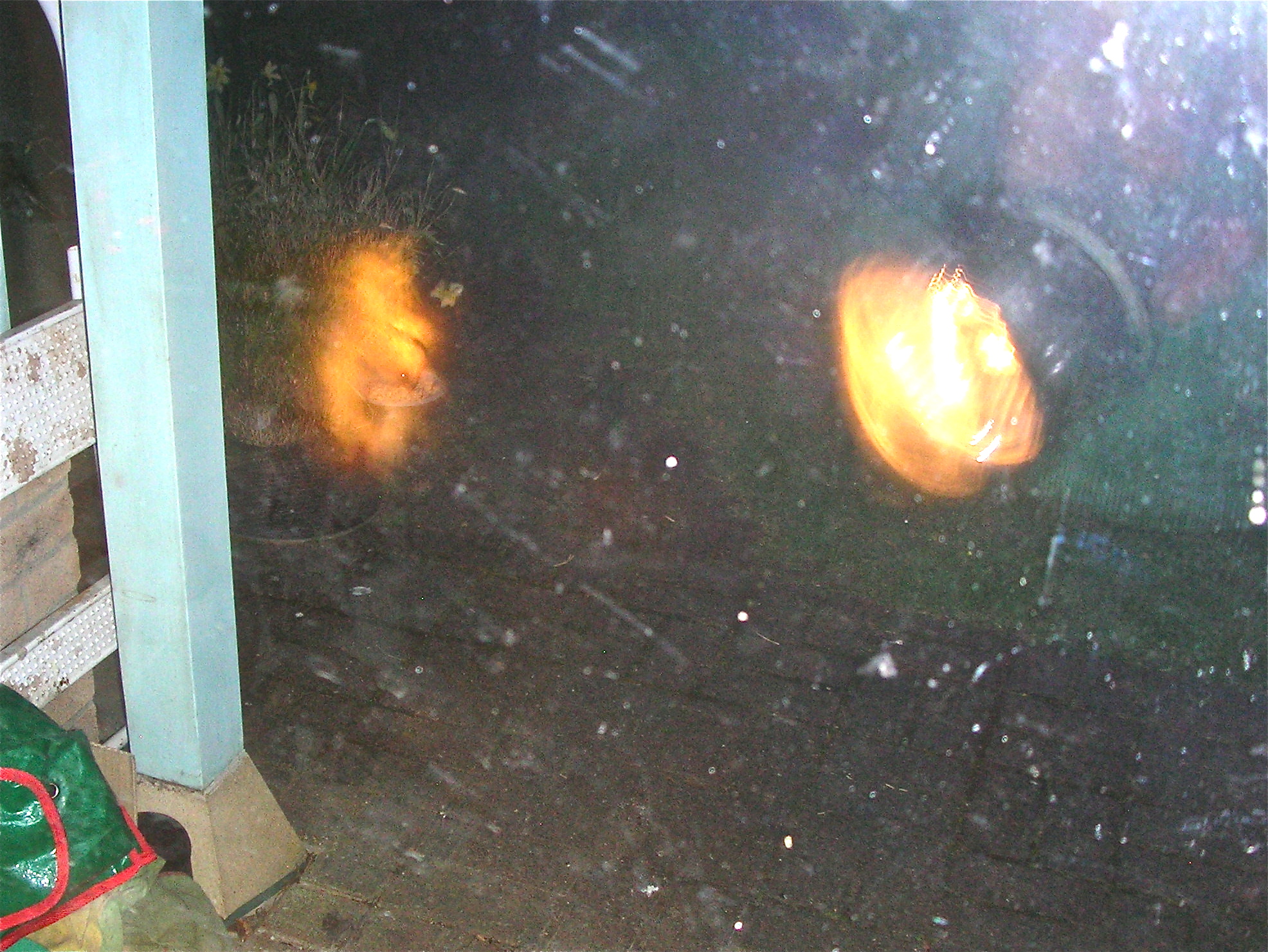
A week ago we began to put out some hedgehog food, though there had as yet been no signs of them. The plate was emptied on the second night and it looked like the kind of slightly muddy clearance that the hedgehog makes. On the second night there was a clearence around 10 pm, so on the third night I sat and watched from inside the house shining a torch at intervals through the glass back door. He came; I saw him/her. Night-time photography by the aid of torchlight through a glass door is not my forte either. Here is a picture of a very dirty back door with a reflected torch. If you look with the eye of faith you will see, in the middle of the patch of light on the left, the gleam of a hedgehog eye. In the enlargement below you can at least make out the plate of food. Believe me there is also a hedgehog eating it. DSCN7224 DSCN7224_2Spring is here. These primroses started flowering in November, this is surely their peak now. DSCN7234 - Version 2  Clematis macropetala a never-failing spring joy. DSCN7247


The innocent garden

Every year I am fooled into thinking I have a spacious garden. I mean, why on earth would a modest pot like this need all that space?* DSCN7139
The plants have plenty of elbow room.                                    DSCN7159

DSCN7149

Tiny scillas and modest hellebores are easily visible. DSCN7172DSCN7144
I get super excited about the first blossoms on the cherryDSCN7167
and the fattening buds on the camellias.

DSCN7164 - Version 2The bees and I become delirious on the scent of the skimmia which fills the air for yards around (you can’t see them because of my photography, but I gave up trying to count them). DSCN7151I have this temporary sense of control, I even add a plant or two… and every year nature teaches me a lesson before we reach midsummer.


*To see what happens to the tub click here.

Prisoner on the Kwai

In the early 1960’s Basil Peacock found himself unexpectedly in Bangkok, some twenty years after his last visit to that city. He hired a car and with his wife and American friends and drove up to the river Kwai. The hire car manager charged little, exclaiming:

“You work on railroad! Not dead yet! You must have iron bones — I make special price.”

His companions listening to him talking about his time as a Far East Prisoner of War (FEEPOW) persuaded him to write up his story. It was published in 1966 and is, as he says, mainly about the:

“bizarre rather than the tragic. My memories of unusual, odd and even crazy incidents were vivid and detailed, but those of horror curiously blurred.”

DSCN7136_2

 Basil Peacock was a veteran of the First World War, he joined under-age in 1916, received the Military Cross in 1917 and was wounded and captured in 1918. This gives him a perspective on his later captivity that few other writers possess. Prisoner on the Kwai is an excellent, extremely readable account of the FEPOW experience under the Japanese. [It includes some non-PC language.]

In the last five years I have read more than fifty books by or about FEPOWs, some published, others as private accounts or diaries in museums. Contemporary diaries are rare; they contain truth that is of the moment, but the contents can be restricted by the fear of discovery. The early post-war accounts vary and were often rejected by publishers as too brutal, particularly those by ordinary soldiers. Many who felt the need to record the three and a half years taken out of their lives were not natural writers, and their accounts lack balance and structure; sometimes bitterness, sensationalism or vainglory overwhelm the story. Others are brilliant, painful, heartbreaking and heartwarming.

The basic truths that always emerge are the desperation of hunger, the dependence on mates and the extraordinary endurance of the human will under every conceivable insult to the body. Reading these accounts, will confirm that altruism is a real human quality and so, sadly, is sadism, and that luck plays a very big role in survival.

Another thing that also emerges is that each man’s experience is unique. It is almost unheard of for even two men to spend the whole of their captivity together. Prisoners were sent hither and yon with no predictability throughout the war.

Some entries from the diary of Edward (Ted) Hammond who served as an ordinary enlisted soldier in the 5th Battalion of the Suffolk Regiment:

April 28th [1942]   Been at work on road making. Bullied about and beaten up by the Japs with sticks and iron bars. Kept at work until 6.15p.m.

April 29th [1942]   No work today. Emperor of Japan’s birthday. Usual breakfast, plain boiled rice and watery milk. Fine day after rain all night.

Sun. Dec 27th [1942] Work on the railway. I’m very weak indeed. Two more funerals today.
Wed. Dec 30th [1942] Work on malarial drains. Another funeral.

Sun.Feb 14th [1943] Work as usual. Pte Jarvis died last night.

Mon. Feb 15th [1943] Work again. One year ago today since the fateful day of Singapore’s capitulation and one year of hard work, chiefly on rice. Now we must hope for the best.

This is Ted’s last entry. He was marching up to the higher reaches of the railway, he was very cold at night, starving and his two particular friends were very sick. Work on the  railway was lasting all day from dark until dark. He died on October 16th 1943 of bacillary dysentery and beri-beri.

See also pacific paratrooper on this subject.

Rossini, I take it all back

WARNING: If you are not an opera fan, I’m going to let rip, so jump to the pictures at the end.

See also Nina Mishkin’s post BEL CANTO AT THE MET.

On Tuesday we saw the encore of the Live from the MET performance of Rossini’s Donna del Lago in the cinema. Now Rossini in a problem for me. Fabulous music and delicious arias, but it is all about the vocal gymnastics and not the passions of the humans, except in an absurd and comic way. I tend to end Rossini performances feeling aurally battered and emotionally underfed.

The METs production of Donna del Lago has made me eat my words. It satisfies in every respect. With a faultless cast, who invest every phrase, every note, with the emotion it deserves and no (well, no intentional) comic interludes. This success is in major part due to the director, Paul Curran. He was working with peach of a cast, but he ensured that they acted out their emotions to the full and my god this makes a difference. The voices and all their fireworks serve the drama instead of the other way round. (Flores admits that the same cast did not achieve this emotional cohesion in the La Scala production – see youtube excerpts).

This was in maddening contrast to the production we saw in the cinema a week ago of the English National Opera production of La Traviata – Verdi is my favourite opera composer and Traviata nearly top of my list. I am up for experimental productions and this one, in an attempt to appeal to a new, young audience, had made deep cuts, reduced it to a two-act opera and set it in modern dress. I could live with that. The soloists had fine voices and plenty of acting ability and I will happily go and see them again. Two things irritated the hell out of me. One was the endless pinching/plagiarism of other directors ideas (or as my companions more charitably suggested paying tribute to others’ ideas). The other was the endless dramatic misses. these are the moments when the characters intend to express love, pain, hate, envy, anger TO EACH OTHER. Time after time, it is the conductor on the receiving end of these passions. This does not work for me and a decent director could surely avoid this (though again, my companions had a wonderful evening).

Back to Donna. Joyce di Donato (listen to the 1.35 min audio clip here) and Juan Diego Flores in the two major roles, are unsurpassed and unsurpassable in their field. I can listen and watch both with endless pleasure. For me the novelty was in the mezzo Daneila Barcellona playing Malcolm, the love interest. She had, in addition to a wonderful voice, a commanding presence and confidence, which is so often missing in trouser roles. The villain Rodrigo, sung by baritone/tenor John Osborn was another new voice to me, different in timbre and colour from Flores, but with fabulous high, as well as low, notes. All of this held together so flawlessly by the conducting go Michele Mariotti.

I’ll stop there. Ah… a picture or two:

IMG_0962 - Version 2DSCN7114 And what we saw of the eclipse…DSCN7125