There is a really sane and perceptive article by Mohsin Hamid in last Saturday’s Guardian Review Section. He looks at the flickering moral compass in Pakistan, the USA and Britain. he has the experience and the right to speak for all these countries. Go look, even if you only read as far at the poem inscribed at the base of the Statue of Liberty.
Category Archives: Reading
Woman at Point Zero and a true story
I have just finished Nawal El Saadawi’s epic, short book. This was inspired by an encounter in 1974 with a female prisoner, Firdaus, condemned to death for murder in Egypt. She had indeed murdered her pimp. This is written as a novel, a monologue of a short life. But the woman existed and the encounter is true. The brutalisation of this woman by all the men in her life who she should have been able to trust, shocked her countrymen, because it was instantly recognisable. When years later it was published abroad, it shocked the wider world. The life Firdaus had led was the normal experience of an ordinary women in Egypt and in the wider Arab world. I am not sure how much it has changed since then.
On the other hand this is also a true story:
Way back in 1965 two girls, aged 17 and 20, went hitchhiking round Europe. They were very careful because they had promised their parents not to travel this way, but they ran out of money. In Basel they managed to get a job working in a what would now be called a burger bar. The 17 year old was just out of boarding school, absurdly trusting and naive to a fault. She took a liking to the handsome young Egyptian cook, and was happy to indulge in the odd kiss and cuddle in their time off.
After a week or so, the girls had to leave their youth hostel – these were meant for travellers and not for long-term stays. Struggling to find somewhere to stay, they accepted a temporary home in the cook’s apartment, where a single sofa was the only available spare bed. The 17-year-old found herself cuddling on the bed with cook, who after a little while sat up. He explained very gently that she should not have accepted his offer to stay and must never do such a thing again. Her presence in his bedroom, he continued, would be regarded by most men as consent to sex. He was probably no more than 20 years old.
This kind and honourable young Egyptian left me with a respect, not only for himself but also for his countrymen, that I have never forgotten.
Is this the way to sell books?
Saturday was wonderfully surreal. Although the Border Line pre-publication launch party was intended for local friends, very dear old friends and my daughter and partner came to stay, and a dear friend from Ireland and dear writing friends from Wiltshire also stayed nearby.
I was very grateful for messages of support from my blogging friends and also this wonderful card made by the multi-talented young singer Charlotte Hoather.
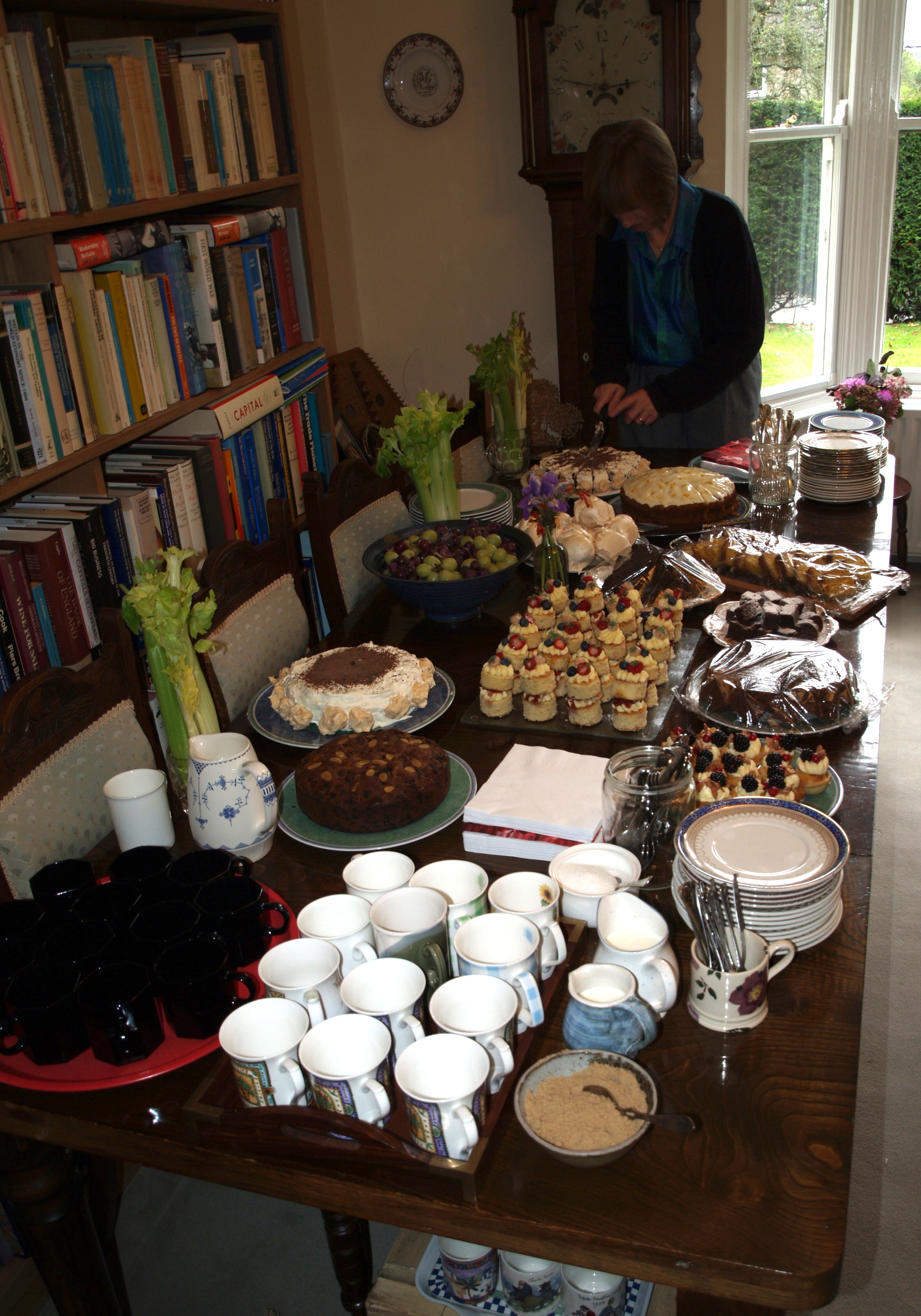
We had more than enough food. A tithe of it is visible in this photo.
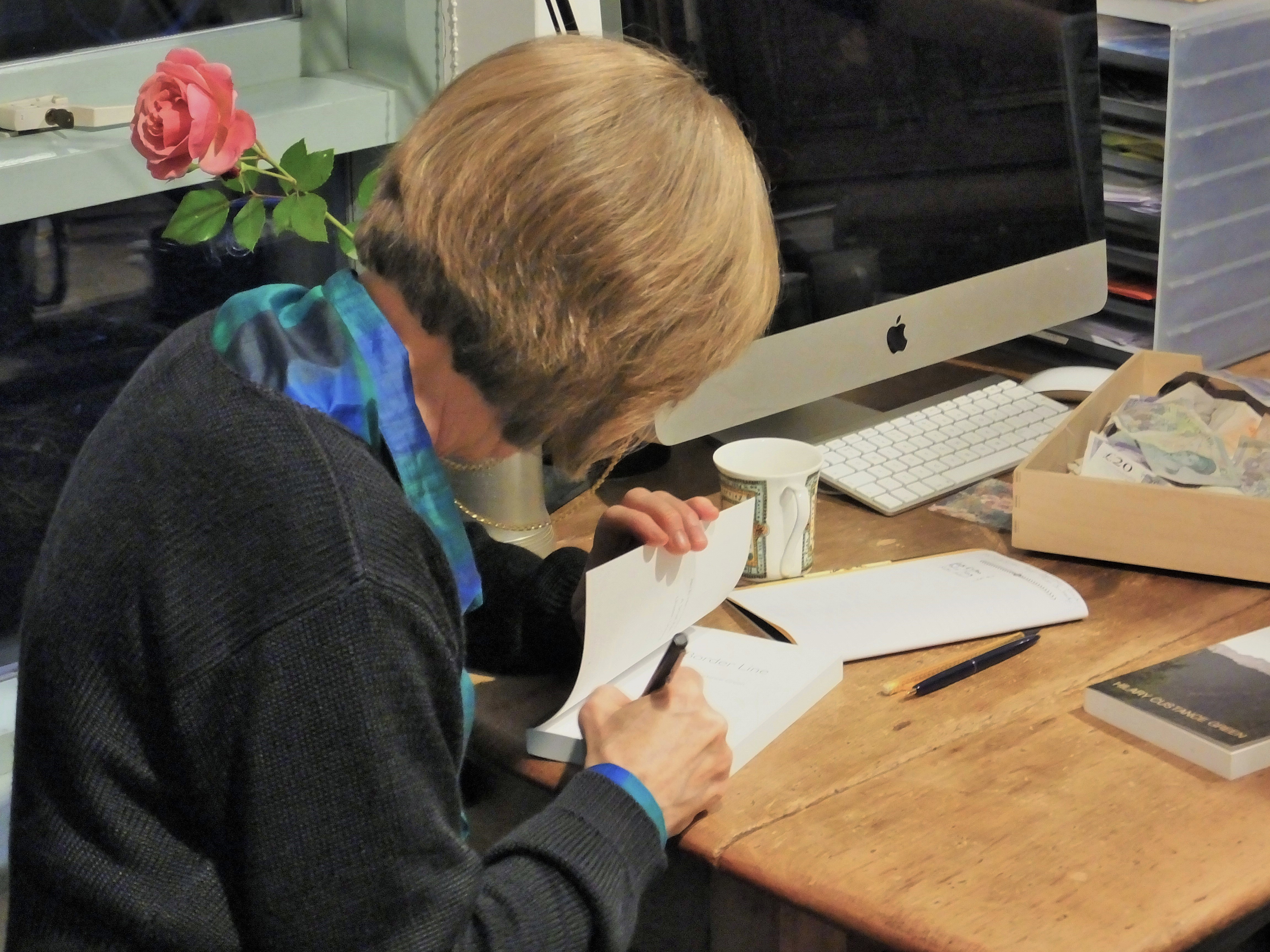
I saw little of the party, as I spent most of it in my working den signing copies (and taking the moulah). I was aware of my husband and everyone working very hard, looking after about sixty thirsty people. Note the lovely rose, a gloriously sweet-smelling flower, cut and brought round by my next door neighbour. 
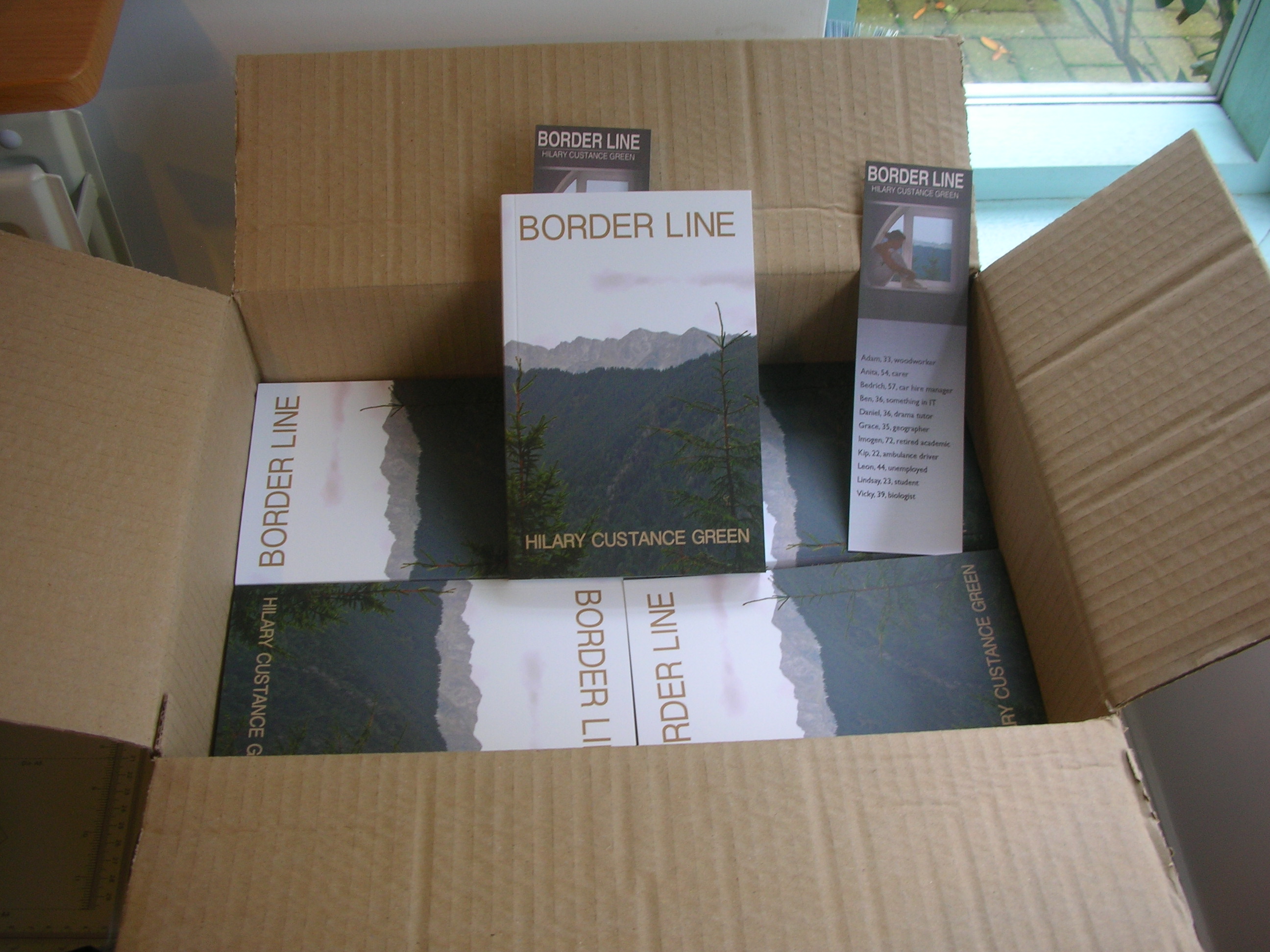
To a large extent this party was a thank you to friends, particularly this who have read, proof-read (free copies) and given feedback on the text and cover of Border Line. I’m not pretending that selling the book was not part of the aim, but you wouldn’t think that this is the recommended method for selling books. However I’m two boxes of Border Line down, six more to go. The bookmark I made, seems to have been a big hit too. Hooray for the old printer!
I brought the greenhouse pepper in after a frost scare last week, and left it as decoration for the party. I am absurdly proud of it and don’t know if I will be able to bear cutting and eating it. How absurd is that?
Short stories, small books
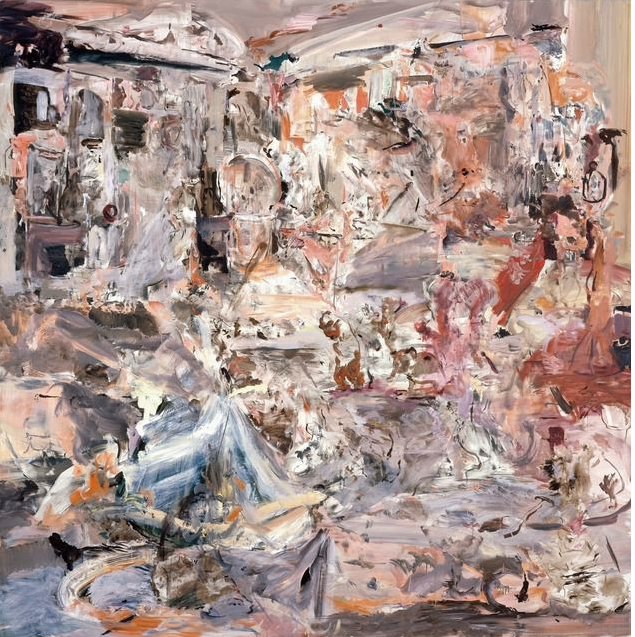
Our short story course at the Sainsbury Centre with Patricia Mullin is progressing nicely and everyone has the beginnings of a story inspired by one of the pictures in the exhibition Reality ( Modern and Contemporary British Painting). Being a fool, or simply greedy, I now have three stories on the go. The front runner at the moment is based on the intriguingly-titled Maid’s Day Off by Cecily Brown.
I am finding the different styles and story subjects very stimulating and looking forward to the results.
My other delight has been the arrival yesterday of another book from Hercules Editions. These tiny publications give equal weight to text and graphics. This one, by Hannah Lowe, is poetry, photos and information about the precursor ship to The Windrush, The Ormonde, which arrived in Britain in 1947 and brought desperately needed workers to our industries.
Finally, tomorrow is the day of the local launch for Border Line, a ship with an unknown fate. 
A vintage car, Middlemarch and hedgehogs
Not having blogged for a while, this post includes a somewhat random collection of subjects. There will be short stories and more paintings again next time.
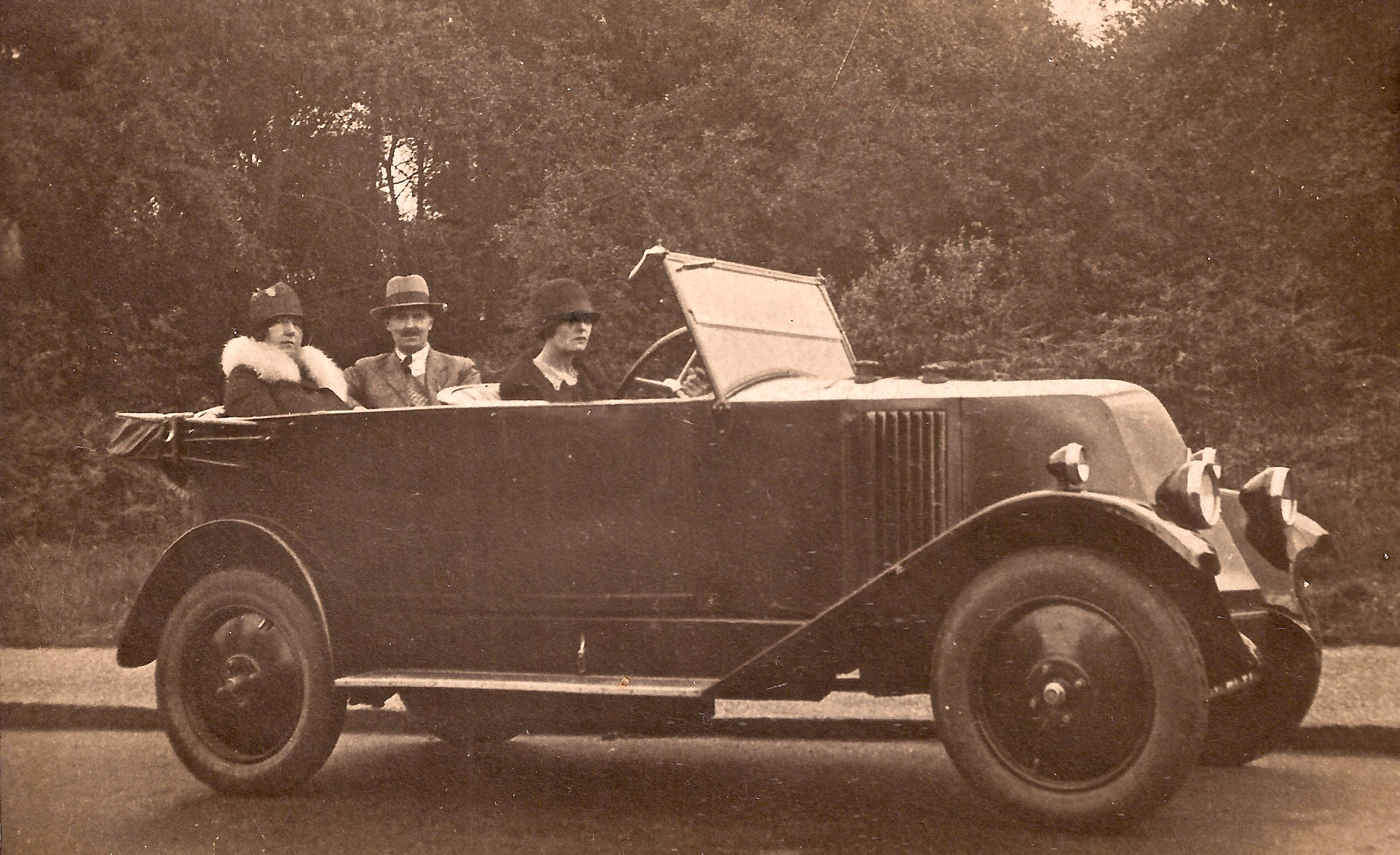
First, can anyone identify the make of this English car of the 1920s? 
Next, while I blush at the years that have passed before I got around to reading Middlemarch (George Eliot), I finally accomplished this. If I had read it as a schoolgirl, I might have been a better writer, but hopefully it is never too late to have an improving influence. Eliot has a way of lightly skewering a character onto the page, with the result that they are forever real in your mind. There are no saints or villains to be seen; every character has strengths and weaknesses, can fascinate or disgust.
A few words on Mr and Mr’s Vincy’s relationship with their daughter, Rosamund, tells so much about all their characters.
Vincy, blustering as he was, had as little of his own way, as if he had been prime minister,…
Rosamund… listened in silence, and at the end gave a certain graceful turn of the neck, of which only long experience could teach you that it meant perfect obstinacy.
And Bulstrode’s endless rationalisations are a total giveaway of sanctimonious hypocrisy.
… is it not one thing to set up a new gin-palace and another to accept an investment in an old one?
The fates treat everyone with impartial kindness or cruelty according to random whim. Yet the plot is tight, intricate, totally believable and immensely satisfying. This is exactly what the title implies, a novel woven round a community, and yet this is no old-fashioned pastoral, the individual stories still grab you today. People’s mistakes and aspirations are still recognisable today. I’d better stop. Basically, Eliot has all the skills I am striving to acquire and my envy of her is too blatant.
I started Middlemarch in high summer, but autumn has more than set in. The hedgehogs are still feeding; we almost tripped over one last night, snuffling just outside the back door. He scuttled off, but returned quickly when I put food out. They will not eat in the rain, so if it is wet we put the plate under the back porch. Finally, my favourite rose, Just Joey, has decided to have a final summer fling and the cosmos chocamocha is flowering madly. 
Reading pile-up and Reality exhibition
My reading has reached crisis proportions. Middlemarch, which I started months ago, has been cruelly and endlessly sidelined, though each time I pick it up, I am right back in there, the characters are old friends and I am in happy awe of Eliot’s every, exact word. Grabbing a volume slim enough for handbags and waiting rooms, I also started Goethe’s The Sorrows of Young Werther, the story source of an opera. For iPad reading on trains, I have Carol Balawyder’s Mourning has Broken, a very moving and fascinating set of essays. Also downloaded months ago, Chimamanda Ngozi Adichie’s Americanah, which I foolishly started… just to see what it was like. Sandwiched between these, but finished, have been a list of nine books both light and heavyweight and ahead are another five books to read ‘immediately’.
So, I made a resolution, NO NEW BOOKS until all the above are finished, and I MUST carve out some real writing time.
I have just started a ten-afternoon writing course at the wonderful Sainsbury Centre,
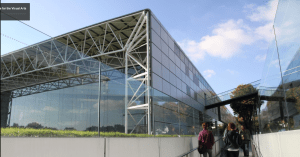
at the University of East Anglia (UEA). I signed up for this at a low moment when re-reading the final, supposedly fully edited, manuscript of Border Line, and having concluded that I still had everything to learn about writing.
The course tutor is Patricia Mullin, so I downloaded Patricia’s novel, Gene Genie, and have been reading that on the train.
The writing course is attached to the current exhibition of modern and contemporary British painting, Reality. This is a stunning exhibition (no photography allowed), but we have a free run of the exhibition for the ten days of the course. Many paintings have intrigued me, but one by John Keane (website screen grab), has set a story going in my head.
His other work is fascinating too and on his website he says:
I am interested in the process of painting, and I am interested in why human beings want to kill one another for political ends. These two apparently diverse preoccupations I attempt to reconcile by smearing pigment around on canvas in an effort to achieve a result whose success can be measured by how well it disguises the sheer absurdity of the attempt.
And what is the writing course homework? Trawling for great opening lines and writing our own story first lines. I spent a happy and feverish week reading old favourites: Kipling stories (The Maltese Cat, Without Benefit of Clergy, Little Tobrah, The Head of the District etc), and Salinger (For Esmé With Love and Squalor etc), Saint Exupéry (The Little Prince) etc, etc, etc I also opened all my most-loved books, only to find that the majority had nothing dramatic about the opening lines. They were often quite conversational. Though one of my favourites is Mary Renault’s The Last of the Wine which opens:
When I was a young boy, if I was sick or in trouble, or had been beaten at school, I used to remember that on the day I was born my father had wanted to kill me.
Is it just me, or are others caught in the same reading maelstrom? How does one extract oneself, brain intact, from such a reading pile-up? (sorry about mixed metaphors.)
I shall go and sweep some leaves and pretend that my list of tricky phone calls to promote Border Line can just as well be tackled next week… I read this and then made myself ring a local newspaper.
The Goldfinch – writer versus reader reviews
As a writer, I gasped in awe and groaned with envy; as a reader I was anxious, sickened and maddened.

As a writer: I acknowledge The Goldfinch as a masterpiece. The scope is vast, the subject matter complex and requiring much detailed research. The writing itself is a delight, bringing all the senses alive moment by moment. I can only envy the mastery that enables Donna Tartt to use every word in her vocabulary. She describes small events over several pages rarely boring the reader or (presumably) causing her editor to asked for a 20,000 word chop. Even the simplest description is luxurious:
The sun didn’t seem to rise until about nine in the morning and even then it was hazed and gloomy, casting a low, weak, purgatorial light like a stage effect in some German opera.
She has superb control of tempo and keeps the tension ratcheted up, even while taking long descriptive detours. This is, as reviewers have noted, a Dickensian novel. It is also, as a friend pointed out, a magnificent, classical tragedy – a single blow of fate that then tangles the protagonist, and all who come in contact with him, in a network of misfortune. The ending, however, varies from the classical pattern.
In the last 70 or so pages, the three main characters step out of role and the authorial voice whispers and then starts shouting. In fact the whole of the end, as my friend again pointed out, tells of it’s American origins and the American reader’s expectations. The ending is, in many ways, satisfying, but, as a writer, I would judge it to be unbelievable.
As a reader: The Goldfinch was the kind of book I most dislike. It cleverly and intentionally kept me in a state of mild panic through most of it’s 700 odd pages. I’m sorry to be a wuss, but I don’t like sustained anxiety, aggression, cruelty, aggravated stupidity and characters who persist in being their own worst enemies. I have an enduring fondness for classical tragedy, yet in such tragedies the reader usually occupies a seat next to the gods, looking down on the piddling struggles of the humans caught in the net of fate. You watch them, unable to help, yet able to learn, at the very least, the meaning of hubris. In the Goldfinch, we are asked to hold hands with the protagonist and share in every misguided decision he makes, to experience his loss, his fear, his persistent bad luck and his stupidity. To be moved by a character’s fate, I need to feel love or compassion. I did indeed feel compassion, but few of the characters inspired love and the compassion was drowned out by irritation and fear.
So The Goldfinch was, to me, a very grand, ambitious, literary thriller – but a thriller nonetheless and I sincerely dislike being ‘thrilled’. The essence of being thrilled is to induce fear in the reader. To some this is a form of bone-shivering delight; for me it is acute discomfort. I will accept acute discomfort when reading accounts of the sufferings of Far East POWs, but not in a piece of fiction.
If you get this far you may wonder why I persisted in reading this book. It was a present from a dear friend and both he, and others, have remarked that the opening to my novel Unseen Unsung (2008) has much in common with the opening, the section on the explosion, of The Goldfinch (though mine is just half the length).
eBook cover adventure
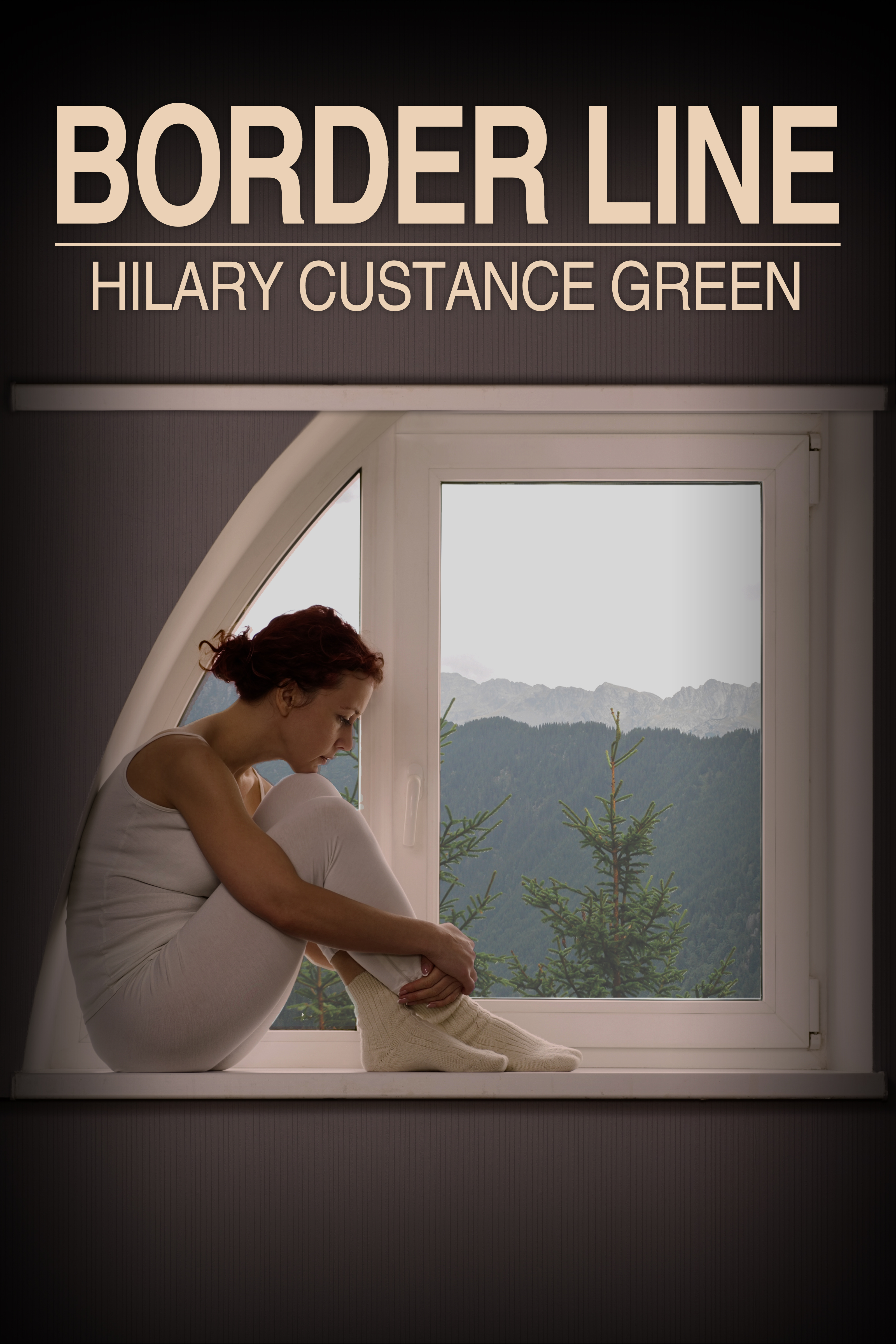
The last week or so has been too packed to blog. Happy family visit, soft proofs to check, print cover to approve and The Great eBook Cover Design Competition. I was the lucky winner of a free Book cover from the Writer’s Workshop. This came too late for the print version, but seemed like a good idea for the eBook. I was given £189 credit for a bronze cover design from 99Designs.
First, I had to fill in a Design Brief including images to give potential designers a direction. Being naive, my brief was misleading and my reduced heading read: ‘An upbeat story about suicide, love and Slovenia’. Then, the brief is opened up to designers worldwide online for 4 days. You select the best designers during that time and then go on to refine entries until you choose to award a winner (total 7 days for bronze).
To start with I didn’t have many entries (though there were things I could have done to increase this). The ones that did appear were often distressingly inappropriate. Prettily-coiffed girls with computers in meadows and mountains – sort of modern Heidi on Holiday style. I rated (stars) and commented on each entry, and updated my brief to explain that in my story a computer is only used at night in Devon and that the girl had unruly hair (difficult for designers with limited English). Some Wild Girl in Wild Landscape designs followed –teenage adventure style. I tried asking for something a bit more grown-up and got raunchy, steamy romance covers, then Airport Monumental, I asked for sad and got Noir (I wish I could show you). By this stage I was struggling between laughter and tears. One designer was particularly persistent and I worried that he was putting in so much work with only negative feedback from me. I assumed that he was on a different wavelength.
There are also ‘watchers’, that is designers who follow the competition, looking at the entries and the feedback. You can go and check their designs and invite them to join in. However, out of the blue, my persistent designer produced a perfect (stock) image for my story. With enormous patience, and feedback from me, he adapted it, tweak by tweak, until it was just what I had hoped for. Here is the winning entry from didiwahyudi.trend all the way from Indonesia. It links quietly to my print cover, while giving me the all-important figure I need for the eBook thumbnail. Hope you like it.
My proofs and the print cover went back to the printers last night and my new eBook cover arrived on my desktop 20 minutes ago.
Now I shall go and cultivate my garden.
A Serious Business – with a smile
In A Serious Business, Roderick Hart takes us on a privileged tour of the inner life of the retail world – specifically behind the scenes at Mowatts, a venerable family firm. If you have ever worked in this world you will find yourself, with delighted and sometimes groaning recognition, in familiar company. Even your average shopper will recognise most of the characters in this cast. A Serious Business it is – a perfectly chosen title for this subject.
For me the appeal of the book lay in the ordinariness and variety of the characters, people not only from the varied ranks that we see daily: behind a shop counter, in the security guard’s uniform, fixing the window display, serving in the café; but also those we don’t: the now-obligatory IT department, the top-floor management, the basement maintenance staff. All these people are getting on with their work, but always in the light of the events and concerns in their personal lives.
Behind this complex tapestry is a simpler coming of age story, we watch the most self-effacing and likeable of the characters slowly coming, or perhaps more accurately being dug, out of his shell. Meanwhile the single-minded artist leaves mayhem in his wake, the stay-at-home son fails to comprehend that the world does not run for his convenience and the firm’s remaining family members try to steer the ship through the choppy waters of modern big business.
As with Roderick Hart’s Time to Talk, there are many funny and charming byways to both characters and events. Encountering racoons in the stream of consciousness of our hero as he is dropping off had me chuckling, coming across a Precognition Officer for the first time in my life, and stopping short at ‘boilings’ (presumably boiled sweets to a Southerner like me), stick in my mind.
I finished the book with a smile on my face.
Self-publishing progress?
Another week of mayhem and progress – of sorts. Having made my proof-readers’ lives hell by pressing them to complete as much as possible against the clock (with the rather minimal bribe of runner beans) I entered all their brilliant catches into my final file in InDesign and… pressed the button to send the text to the printer.
I then got my head round the file requirements of the cover picture, recreated the file with the correct dimensions (then correcting that when I found I had misunderstood) and sent it for checking to a great designer (whose time I can only afford by the minute).
On Saturday I received an email:
Apologies for the s – l – o – w announcement of a competition winner, but the announcement (and my reasoning) can be found here:
http://www.writersworkshop.co.uk/blog/win-a-free-cover-design/#comment-101835
Well done, Hilary. Commiserations everyone else. [there were all of 6 entrants]
Umm… although I have reservations about my cover (because it has no figure in it), I have grown fond of the beautiful image my daughter put together and I want it to go to the printers as soon as possible. (NB you are never sufficiently ahead of the game in publishing), so I felt I had to turn down this opportunity – something I would have lain in the mud for a few weeks ago. However, we have a compromise. I will now have a design by Bronze Design for my eBook version of Border Line.
CORRECTION: I now have bronze level design by 99Designs for my eBook version of Border Line.
I have also been in touch with the travel company, Just Slovenia, who, way back in 2009, helped me set up an itinerary to research many of the places that feature in Border Line. They responded and I have now sent them a PDF of the novel.
I’m not accustomed to so much progress up the ladder, I’d better get ready for another snake.