Readers react in Great Malvern

The pendulum has taken another couple of swings over the weekend. I arrived in Great Malvern (UK) on Saturday and discovered that the book group there were expecting to discuss with me my first book (A Small Rain, 2002, out of print) and not the 2008 Unseen Unsung, which I had prepared. I borrowed my hosts’ tattered copy of A Small Rain for a frantic revision before setting off for the meeting.

We were made very welcome in a member’s home, fortified with a drink and the fourteen of us spread out in her lovely sitting room. Under admirable chairmanship, each member talked about their reactions to A Small Rain and Unseen Unsung, which many had also read. I was able to give explanations and answer individual questions as we went along. After a break for sustaining and delicious nibbles, there was a more open-ended question and answer session about writing and publishing.

For me, to sit among a group of perceptive, enquiring people who have read my two published books and to talk about what works (and what doesn’t) was both a luxury and an immensely helpful experience. I was encouraged to find that they positively relished the complexity of the plots and the variety of subject matter and wanted more stories like this. Several also made a plea (as most book groups do) for a character list because, like many people, they read before sleeping and want to pick up again quickly.

The male protagonist of my first novel came in for some justified criticism for his saintly demeanour and his grating use of endearments. Lesson learnt! On the other hand the child coping with upheavals in his life met universal approval. It gave me great lift that a reader who had never taken to poetry found the selections I used wholly accessible. The writing in my second novel was seen as better paced – a page-turner. They warmed to the main character, a rather spoilt young man, as he lived through the events in the story. Even my dark portrayal of a mother had come off.

I realised with gratitude as I listened and talked, that these intelligent, curious, caring men and women are my readers. This has left me with a glow that will carry my writing forward, and with encouragement such as this, I will get Border Line published knowing that I will have (at least) fourteen readers.

Writing – the swinging pendulum

I have been feeling flattered that a friend across the country asked me to come and be quizzed by her reading group about my book, Unseen Unsung. This was published in 2008, so last week I started re-reading it. I was quite shaken by some aspects of the prose; too dense in parts, too many scene changes. I think if I hadn’t written it myself, I might have had trouble following the plot. I became puzzled, people I don’t know (as well as family and friends) have told me how much they enjoyed this story. Apart from one moment, when I forgot I had written it and the story brought me close to tears, I felt that this was not a book I would recommend to friends.

One outcome of this re-reading was an increased confidence in my new book, Border Line, endlessly revised and now going out to agents. Then, last night, I received an email from another writer – an old and trusted friend. She had been reading my most recent draft and she felt that the majority of my revisions were a disappointment and that I had thrown out what was best and unique about my writing.

Tomorrow night I will travel across the country to find out what a group of strangers made of Unseen Unsung. On Monday I will look at Border Line again and see if I can distil and replace the missing spirit.

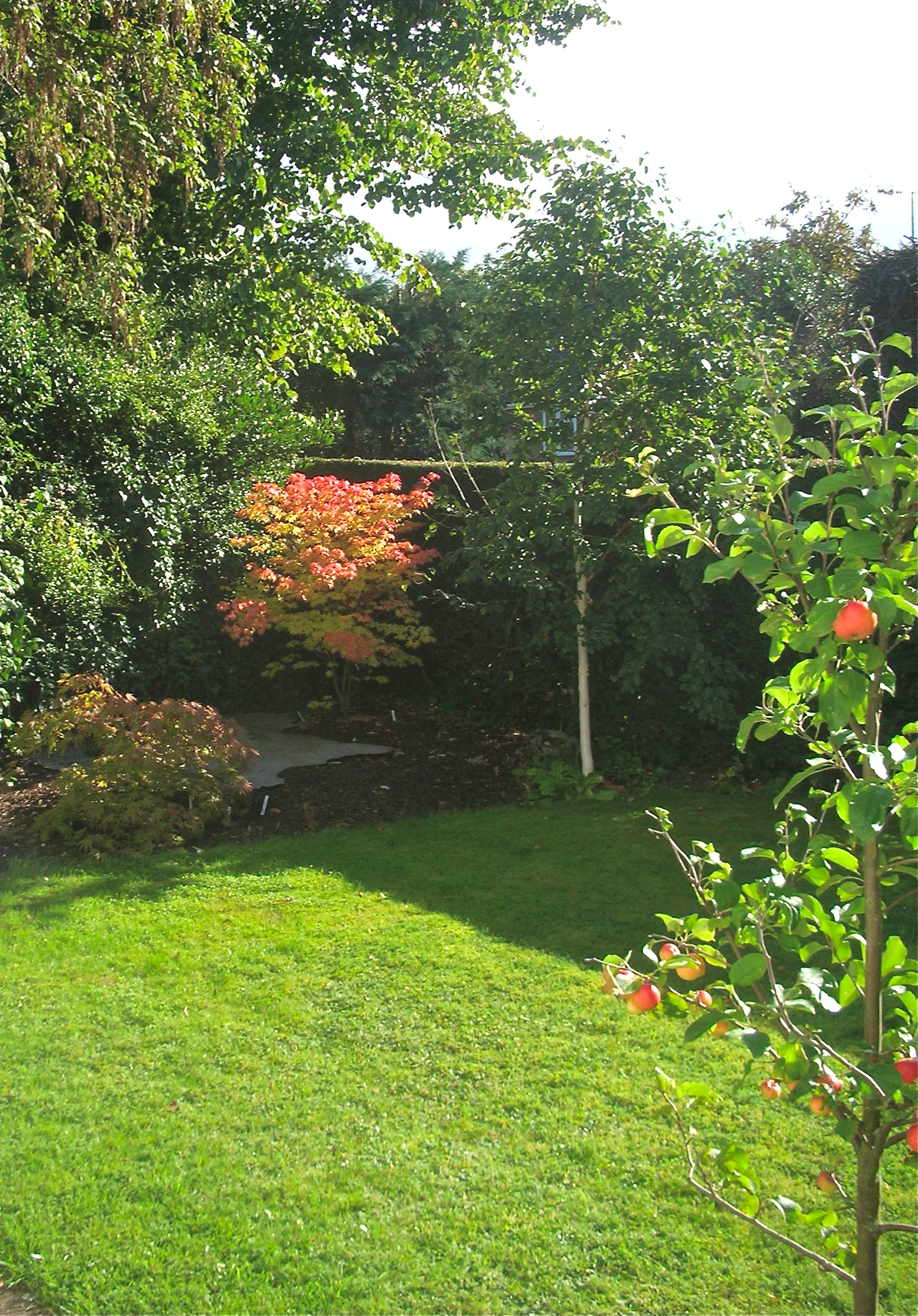
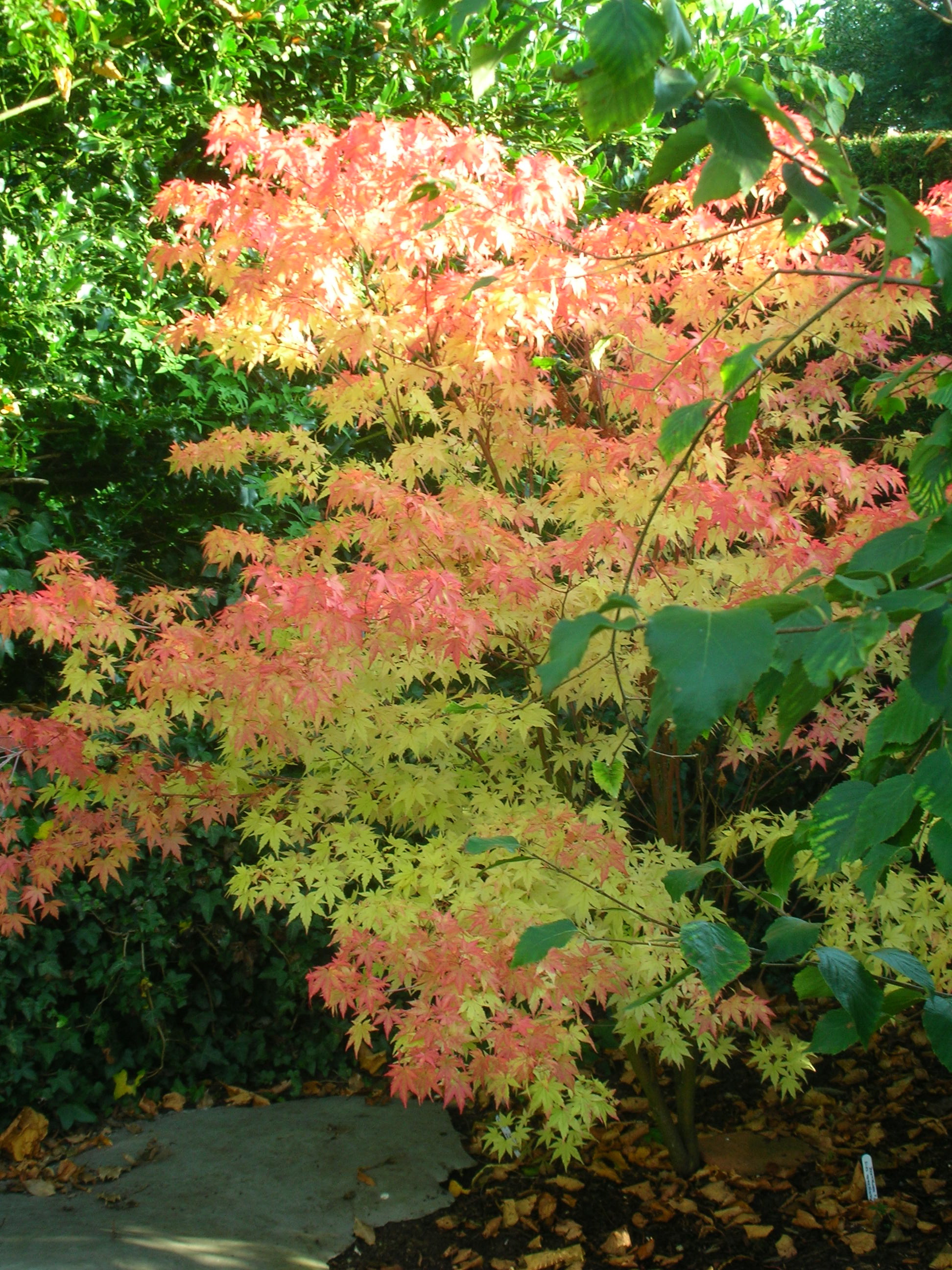
Meanwhile Autumn is quietly going about its inevitable and beautiful business.

Acer palmatum Sengukako

Acer palmatum Sango-kaku

From the New York MET to the Hackney Empire – opera for all

A great week for opera.

Last Saturday we went to the cinema to see the Eugene Onegin (Tchaikovsky) Live from the MET. A superb production set, wonder of wonders, in the period originally intended and with exquisite attention to the real character and feelings of the characters. So Tatiana, sung superbly by Anna Netrebko (one of opera’s most ebullient  personalities) came over as an introverted dreamer, easily embarrassed and desperately sensitive. The rest of the cast matched this too. No expense was spared to give authentic detail to this production and to hiring singers at the pinnacle of their careers. It was the best Onegin we have seen. On top of this, we could watch it in cinemas all around the world for a reasonable sum.

Last night we went to the Hackney Empire (recently and beautifully renovated) for a live production of an even grander opera, Verdi’s Aida. Set, as intended, in the glory days of Ancient Egypt, we were lucky enough to watch the Moldovan Chisinau National Opera & National Philharmonic Orchestra performing this challenging opera – for one night only. By tonight the cast, musicians, sets, costumes and equipment will have travelled to Buxton Opera House and performed with most of the same cast all over again. Their schedule is terrifying; they are touring from Eastbourne to Aberdeen, from Windsor to Belfast, mostly for one night only.

Their budget must be a tithe of the MET’s. Every part of the production has to be portable, and along the way they manage to involve the local communities as extras and dancers. So four enchanting small boys danced for us in the princess’s boudoir, valiant locals marched across the stage (several times) to supply the impression of returning armies and the Ethiopian prisoners were very youthful indeed.

This company, directed by Ellen Kent, will bring live opera right into local communities, small English, Scottish, Welsh and Irish towns often with only one small theatre. They gave us an evening of delight and for many a very first taste of opera.

The workshop in the dining room and a sunset

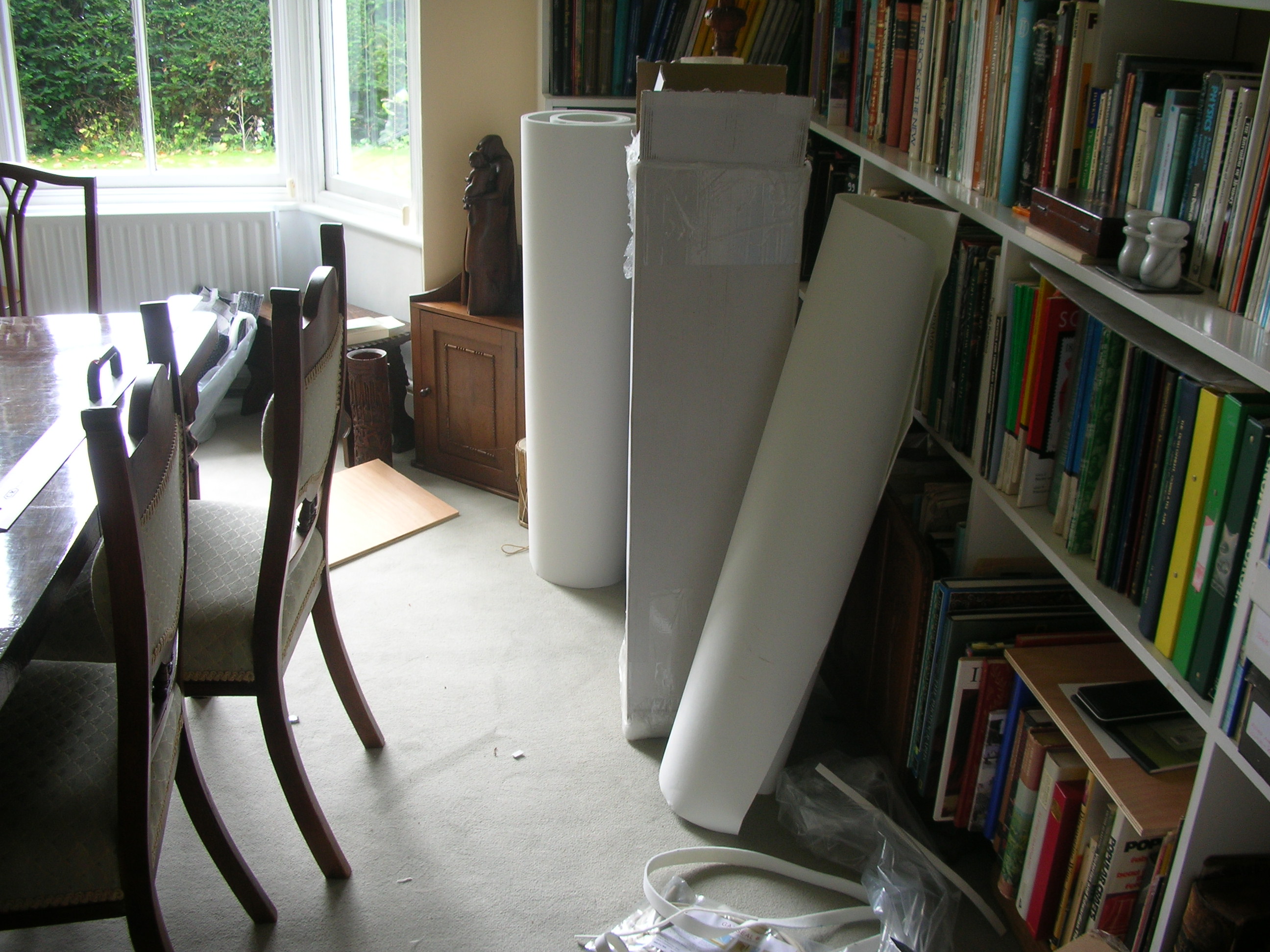
I’m not sure what law I’m invoking, but whatever DIY job I take on, tool by tool, the workshop slowly transfers itself to some unsuitable room in the house. This time it is the dining room.

DSCN4328I swear I only needed a ruler, a set square, some paste, a brush, a set of ladders and some cloths. Two weeks later the dining room has lost its identity under cardboard boxes full of the extra tools required.

DSCN4327

It will be worth all the effort when winter finally arrives. We have lined many of our thin outer walls with wool fibre thermal lining paper (you can just paint over the top).

DSCN4329 We have also added some incredibly simple magnetic secondary glazing, purchased online from the wonderful www.nigelsecostore.com There are real, helpful people who answer emails and the phone.

Yesterday after spending all day trying to finish off the walls, I went outside for a break and this is what I saw.

DSCN4342

DSCN4343

DSCN4346

DSCN4347

The Dark Lady of DNA

I have just finished reading Brenda Maddox’s autobiography of Rosalind Franklin. I have read it very slowly over several weeks, as it was my entertainment while I stood on a tilted platform for the supposed good of my Achilles tendons. Perhaps it was appropriate to read about her life while standing up. This story of a natural, dedicated, curious, passionate scientist working in a period and against a backdrop in which her sex, her religion, her family, her nationality all contributed to either hold her back, belittle or occasionally encourage her, is a story to stiffen the morale of any woman (and, I would hope, man).

This is not a hagiography; Rosalind could be abrupt, exacting and almost anti-social in some atmospheres, but when among people she respected and, more tellingly, who respected her, she was full of life and fun, much-loved and her company sought after. She was a passionate walker and climber, happily travelling in France (where she worked for several years after the war), Italy and America (where she attended conferences and toured the university labs).

She ended her life in charge of a devoted research team at Birkbeck. Dying of ovarian cancer at the age of 37 in 1958, she worked almost to the last moments, when most of us would have been curled up and nursing our pain. Although known now for her role in the discovery of DNA (not acknowledged in her lifetime), she published innumerable scientific papers, many on coal and graphite and on the tobacco mosaic virus. Obscure subjects but ones of great significance for all of us down the line.

The book is detailed, illustrated and brings this very complex and admirable woman vividly to life.

Writing to a Ghost – POWs 16

While Barry is slowly recovering his strength in the big base camp at Chungkai, Phyllis has managed to move out of her parents house. Like so many other relatives, she struggled to write again and again with absolutely nothing coming back. It was, as someone said, like writing to a ghost – which sadly many of them were.

In November 1943 Phyllis wrote:

DEAR DARLING I HAVE NOT WRITTEN FOR SOME TIME, BECAUSE THERE SEEMS TO HAVE BEEN SO MUCH DOUBT ABOUT WHETHER YOU WILL EVER RECEIVE THE LETTERS AND THE MUST BE TYPED [IN CAPITALS] NOW. I HAVE BEEN ABLE TO BORROW THIS TYPEWRITER FOR A SHORT WHILE THIS MORNING. ROBIN AND I MOVED UP HERE AT THE END OF SEPTEMBER AND ARE NOW REALLY GETTING SETTLED IN. I HAVE A VERY NICE SITTING ROOM OF MY OWN. … ROBIN HAS BEEN RATHER SEEDY SINCE WE CAME HERE … BUT IS NOW PICKING UP AGAIN.

Robin

Robin

HE IS, NEEDLESS TO SAY, A CONTINUAL SOURCE OF DELIGHT TO ME. HE IS DEVELOPING IN SOME WAYS VERY LIKE YOU, AND IS REALLY AN INTELLIGENT COMPANION TO GO ROUND WITH NOW, THOUGH THE CLARITY OF HIS VOICE IS MATCHED BY THE DIRECTNESS OF HIS QUESTIONS AND OFTEN EXERCISES ALL MY TACT AND PATIENCE WHEN IN COMPANY, BECAUSE HE NEVER MISSES A POINT OR ALLOWS ME TO EVADE A DIRECT ANSWER. … HE IS ALWAYS TALKING ABOUT WHEN DADDY COMES HOME. … AND WHEN HE COMES HOME AND WE ALL HAVE A …HOME, AND A LITTLE BABY SISTER (PLEASE I WOULD LIKE A LITTLE BABY SISTER) LIFE WILL BE PERFECT.

HOW AM I? QUITE WELL, VERY BUSY, AND GLAD TO BE SO. TRYING TO POSSESS MY SOUL IN PATIENCE, NOT TO THINK WHAT LIFE MAY BE LIKE FOR YOU NOW, AND TO CONCENTRATE ON DOING ALL I CAN FOR YOU NOW BY WHAT I CAN DO FOR YOUR SON. ALSO TO SAVE AS MUCH AS POSSIBLE TOWARDS OUR FUTURE, … TO ONE IDEA I HANG ON FIRMLY, NAMELY THAT YOU WILL NOT BE WASTING YOUR TIME MORE THAN CAN BE HELPED, AND WILL BE LEARNING ALL THAT YOU CAN FIND ANYBODY TO TEACH YOU. ALSO, IF I KNOW ANYTHING OF YOU, YOU WILL BE DOING A LOT OF HELPING OTHER PEOPLE, TOO. SO MANY PEOPLE HAVE SAID TO ME THAT IF ANYBODY COULD ‘TAKE IT’ YOU CERTAINLY COULD. AND THANK GOD I KNOW THEY ARE RIGHT, MY DARLING. NEVER FORGET THAT I LOVE YOU, WILL YOU? EVER YOUR OWN, Phyllis

Sadly, Phyllis has missed notices in the post office saying that correspondence to Far East POWs has been limited by the Japanese to 25 words. Her letter is returned by the  censor.

Her next communications look like this.

permitted Far East POW letters

permitted Far East POW letters

Mantel’s ghost – my fury

Hilary Mantel – Giving up the ghost, a memoir

This book has roused profound emotions in me. I should wait until we discuss it next week, but by then the iron will no longer be so hot.  Reading it has cured me – possibly only temporarily – of envy and prejudice; it has also aroused in me a retrospective anger on a vast scale for the treatment of women in the past as well as firing me to write better.

This memoir is very short. As I read, I ached with envy over Mantel’s delicious touch with words and her self-deprecating humour. After admitting that she hardly knows how to write about herself, and listing her usual recommendations to writers, she continues:

“Rise in the quiet hours of the night and prick your fingertips, and use the blood for ink; that will cure you of persiflage!

But do I take my own advice? Not a bit. Persiflage is my nom de guerre. (Don’t use foreign expressions; it’s élitist.)”

She takes us back with her to the smells, sensations, fears, confusions and delights of very early childhood. She captures that total sense of being the centre of the world, that we all once had. She hammers on about the family Catholicism that is an unavoidable, and mostly pernicious, influence in her upbringing. She enables us to follow, step by step, as her body is consumed by an ill-defined disease. Her ‘unwellness’ is alternately treated or dismissed by her relatives and doctors.

As a young married woman, taking her body and its persistent pains to doctors, she meets  breathtakingly patronising assumptions: that she will be fine once she starts breeding, that she is perhaps overestimating her intellectual capabilities (as a law student), that she really needs mental treatment – in that period that would be tranquilizers and antidepressants. When these fail to cure her pain, she is hospitalised on antipsychotics and then given the whole pharmacopeia. No one actually listens to her.

In her mid twenties she finally researches and correctly diagnoses her acute form of endometriosis. By the age of 27 she has had a total hysterectomy and a medically induced menopause. In the succeeding years the problem returns crippling her already stick-like body.

Treatment, including steroids, then turns her from a wraith into the substantial woman with which we are familiar. And yes, I tend to make assumptions about substantial people. I try not to, and reading this memoir will help me to greater compassion.

I still envy Mantel her writing skills, but I no longer wish to swap places with her. I think she would have developed her astonishing skills with or without the extreme trials in her life and the sadness induced by her loss of fertility. But I remain furious with the ignorant, presumptuous people who prolonged her pain and made her achievements such hard work.

I think this book should be compulsory reading for all doctors – not to teach them to diagnose better, but to LISTEN.

Sorry, far too long a post, but her courage in writing this tricky memoir should be celebrated.

Invisible DIY, finding heroes, writing and autumn outside

It been a busy week!

Today I relaxed by covering another two wall areas with thin woollen jackets. Our house has a mere nine solid inches of brick between us and the winter storms, so each year we add another layer here or there or another piece of secondary glazing. Some panes arrived with the new magnetic attachment system which works brilliantly (though to my embarrassment I had the dimensions of one of them wrong).

I needed to relax from the excitement of two days of Internet connections. Pierre Lagacé, of Lest We Forget, found a website for me with the story of my airman uncle’s Commanding Officer (http://www.marcusbicknell.co.uk/nigel/). I have been in touch with his son, Marcus, and had a a wonderful and productive email exchange and the blog (http://johncustancebaker.wordpress.com) has now become a rich repository of Mosquito and meteorological lore of WWII.

Signalman William Dawson

Signalman William Dawson

Both these activities have been punctuations in my all out blitz on the manuscript of Writing to a Ghost: Letters to the River Kwai 1941-45. A few weeks ago we visited the museum where some of the materials – letters to my mother from the wives and mothers of my father’s Unit, all Far East POWs – are housed. This time we photographed all the photos my mother had collected. I have been able to put faces to nearly half the men in the story. They are brilliant, but some of them make me weep.  I have also been following a friend’s advice as I worked over the manuscript.

Meanwhile, the sun has come out again and the air is warm, and autumn is raging outside. I want to be in the garden. (We did have lunch in the garden.)

Rosa Mary Rose

Rosa Mary Rose

DSCN4320

Acer palmatum Sengokaku

Acer palmatum Sengokaku

DSCN4321

Beyond the call of duty – POWs 15

As the cholera epidemic raged, the POWs including Barry and the remnants of 27 Line Section were still working long hours on the railway. He remembers:

Towards the end of June 1943 several of us found it increasingly difficult to swallow and digest even the small ration of watery rice porridge that was our daily portion. We rapidly became so thin and weak that we were no longer able to get out to the working site. I carried on for a few days trying to do something useful in the camp or cookhouse, but eventually gave up.

The Japanese commander decided to make up a party of thin useless men and send them south in barges. We were a group of about twenty, I believe, unable to walk and barely able to stand, it was assumed that we would soon die, which most of us eventually did.

The day chosen for the evacuation was a Sunday, one of our rare ‘yasme’ (rest) days. We had about 7km to walk to reach the barges. Two of my men helped me, one carried my pack and I was supported between the two of them. After a short distance we found that we were making poor progress and one of them took me on his back and carried me the rest of the way. The two names of Gibby Douglas and Corporal McWhirter are in my mind but I cannot be at all sure that this is a true recollection.

The first proper camp the sick men reached was Tha Khanun (Tarkanoon). One of the POWs there was Dr Robert Hardie. His diary describes: “a lot of very sick men are coming down from 211 camp in a shocking condition – gaunt spectres of men, riddled with malaria and food deficiencies. One can do very little for these people. They can’t assimilate the sort of food we have except eggs, of which we have very few”.

Barry, and the men who reached this camp alive, were welcomed by:

 a proper reception committee of doctors and orderlies who first examined us very thoroughly to make sure that none of us was carrying a cholera infection and then did whatever they could to restore our strength. After we had been thoroughly tested we were all weighed on a beam balance, built in the camp and calibrated against a 50kg rice sack. My weight, about average for the group, was noted as 5 stone 12lbs, or 37kg.

apples and plums

It’s a bonus year; the plum that turned out to be an apple fruited for the first time (see The approach of Autumn) and the plum that we planted to replace this also fruited. In fact it overdid it and I should have stripped half of the plums off in early summer. We have had several colander’s full already.

Victoria plum

Victoria plum

The weather has jumped from August straight into October, with gales, hailstorms and temperatures barely in double figures. The remaining tomatoes are very unhappy.

Last week while I was having a writing hiatus, it was too miserable to work outside, so I started ambitious insulating projects in the house. However a break in the clouds sent me out and I spent some spare energy taming an old Forsythia hedge. I may have overdone this a trifle, but it was completely covering the bed beneath. I have to admit it is looking very unsightly now. Never mind, it will get up and go again next spring.

Forsythia tamed

Forsythia tamed

The dwarf Blenheim Orange that we planted several years ago to replace another one (a giant 60-year-old hollow tree with mistletoe, but inclined to drop branches), is now really established. It’ll be another month before the fruit is truly ripe. I know because I ate them non-stop as I was waiting for Eleanor’s birth. Happy days!

Apple Blenheim Orange

Apple Blenheim Orange