Haunted by war

My research has meant reading around the subject of Far East POWs, but recently my recreational reading seems to have homed in on the subject of war too.

DSCN4544

Amand Hodgkinson’s 22 Britannia Road, is a touching and human portrait of a young Polish couple and their baby, split apart by war (WWII) and each living, for six years, through their own separate nightmares. The story tracks back and forth between their new home in Ipswich, and their war experiences – a difficult trick to pull off, but it worked for me. This is a very convincing portrayal; the almost feral small boy, the war-shattered woman and the lonely and determined young man struggle to find common ground and a way to move forward. There are complications and a past that has too many secrets. The period features were well handled and there was a wonderful level of atmospheric detail to all the descriptions.

The scope of this book is intensely, and intentionally, small. War is outside these people something that happens to them in which they have no active role. They simply survive. For this reason it would be inappropriate to talk about my second ‘war’ story (Chimamanda Ngozi Adichie – Half of a Yellow Sun) in the same post.

Two tricky reads

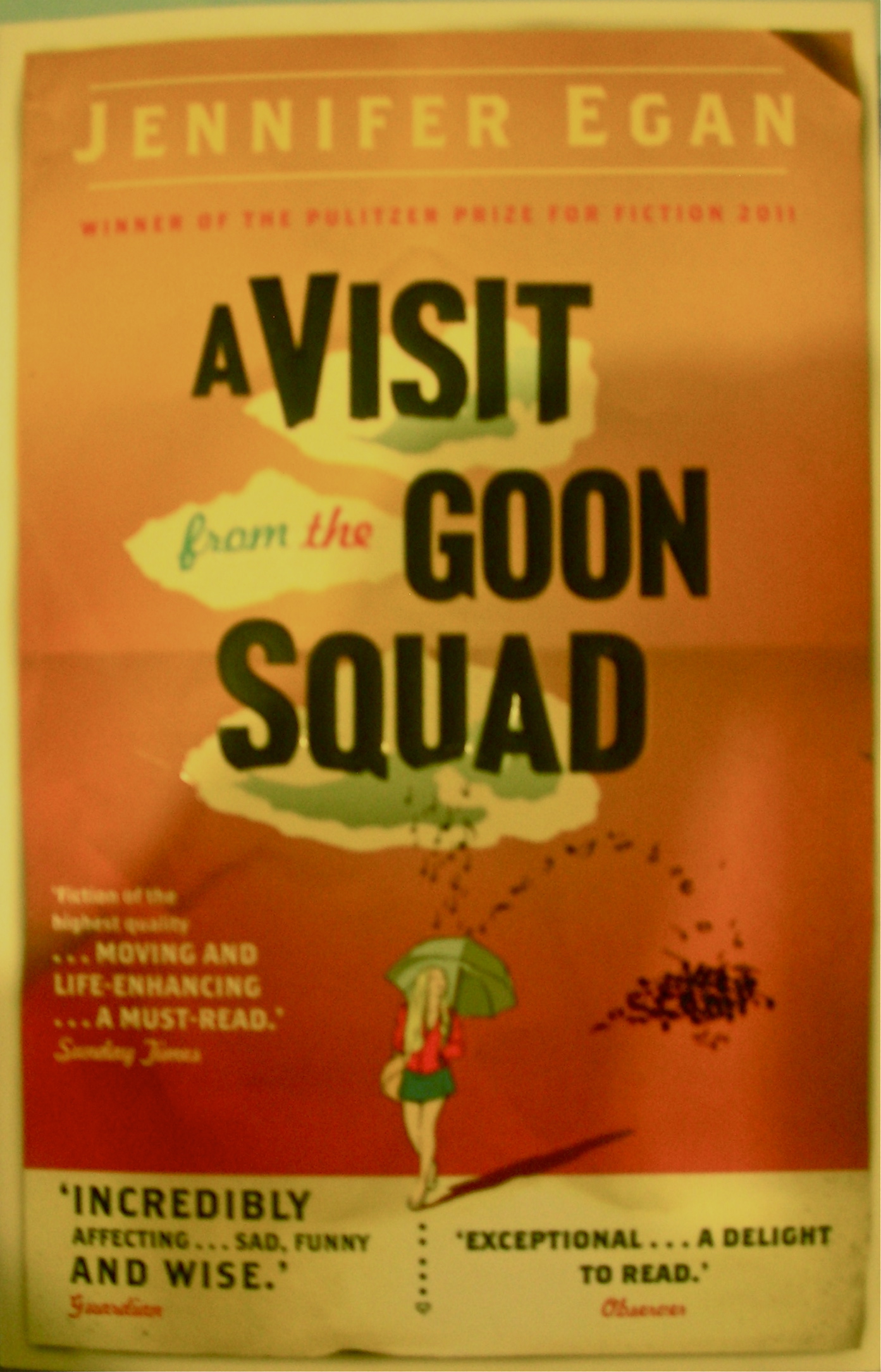
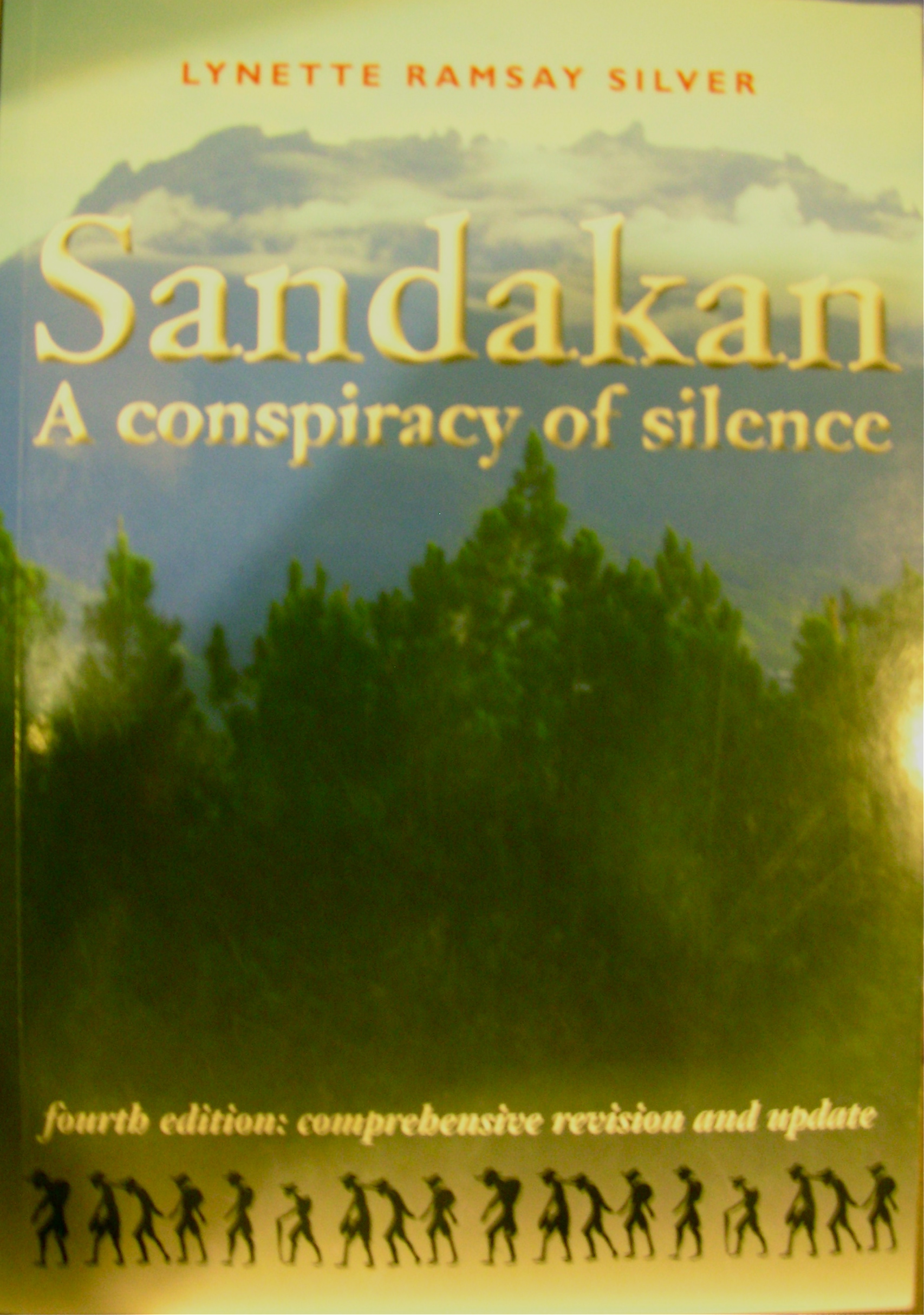
These two books, A Visit from the Goon Squad by Jennifer Egan and Sandakan A Conspiracy of Silence by Lynette Ramsay Silver, are both important, admirable, interesting to read and yet painful in different ways.

Jennifer Egan’s A Visit to the Goon Squad came with starry recommendations from many sources. The writing is sharp, uncomfortably realistic and funny. It tracks forwards and backwards through the individual lives of a group of people who all have connections with each other. For me, the milieu – the American music and celebrity scene from the 1960s to some terrifying future – is strange and alien.DSCN4543 - Version 2 So, as a reader I felt a bit of an outsider peering through the bars in a zoo. Only occasionally could I empathise with the characters.

This distance vanishes with the graphic section (flow charts, not comic strips) of the book (set in the year 202-). This is a child’s diary and also a brilliant description of day-to-day family life with an autistic sibling. I loved this, it is 3D writing at its best, it has the concentration of poetry, but an almost sculptural structure.

Did I enjoy this book? Not really, but I am immensely glad I read it.

Lynette Ramsay Silver’s Sandarkan, A Conspiracy of Silence (4th Edition), I bought for research purposes. It is the story of the death by disease, malnutrition, brutality and outright murder of 2428 POWs in Borneo during WWII and the failure of Allied plans to effect any rescue. The majority of the men, 1787, were Australian, but the among the 641 British were four young men from Barry’s 27 Line Section. DSCN4542 - Version 2There was a total of six survivors, all Australian. This book is a monument to the memory of these men and to painstaking research. Every name, every known detail of the men, their lives, their deaths, the recovery of bodies and possessions littering inaccessible jungle areas and their burial, has been uncovered and recorded.

My research has made me familiar with the worst deprivations, diseases, brutalities and appalling working conditions of Far East POWs in WWII. So as I started reading about the Sandakan POWs, the early years of their incarceration, though grim, seemed better than for POWs on the Thailand-Burma Railroad. From late 1944 onwards, however, their lives grew unspeakably awful and death inevitable. Large numbers of the men were marched in groups across impossible territory until they fell out and either died or were despatched by their guards. Others were starved to death, massacred in Sandakan or even killed by allied bombing.

The book is even more painful to read because, with hindsight, we know that all their attempts to survive were futile. The ones who died early on were the lucky ones. Even worse is the knowledge that rescue attempts, planned but cancelled, could have been successful.

I am in awe of the monumental task undertaken by Lynette Ramsay Silver and very grateful to her for the scope of her grim, but I hope rewarding, research. For me it has been necessary, but anguished, reading.

Mandela beats Machiavelli

Two days ago I watched a programme (http://www.bbc.co.uk/iplayer/episode/b03kqdnb/imagine…_Winter_2013_Whos_Afraid_of_Machiavelli/) about Machiavelli’s The Prince, his theoretical treatise on how to manage power. This turns out to have been bed-time reading for, among others, Mussolini, Napoleon and Stalin. More to the point it is the pillow book du choix for many modern statesmen, corporate bosses, generals and other powerful individuals.

Interviews with some of these guys were very convincing; to wield power successfully, achieving results for the good of the majority, following the Machiavelli recipe is a winner. A leader needs to ditch ethical considerations, honour, the notion of being loved and do whatever works to hold onto power and make things happen. Instilling a level of fear is necessary, delegating unpleasant actions and decisions to a henchman makes sense. You will be judged, especially historically, by appearances and results, rather than methods.

Yes, it makes sense and yes, it works… but… Only towards the end of the programme where any doubts raised about the original premise – that all men (and women) are unreliable, self-serving and corruptible. The Prince was written by a man who was in a very low spot in his life. He himself never achieved power, the prince he had in mind probably never read his thesis and it was not published until 5 years after his death.

I have no problem with The Prince as a thought experiment, the result of an intelligent man thinking through a trauma in his life… but… I think he was wrong about humanity. I have no religion, I don’t think men and women are born good or bad – just human. Life events and genes contribute to how they turn out. I also think there have been several humane, just, ethical, beloved and successful leaders who have wielded power. One supreme example will do.

Nelson Mandela proves that Machiavelli’s Prince is neither the only, and certainly not the best, model to follow.

Phyllis and the War Office – POWs 20

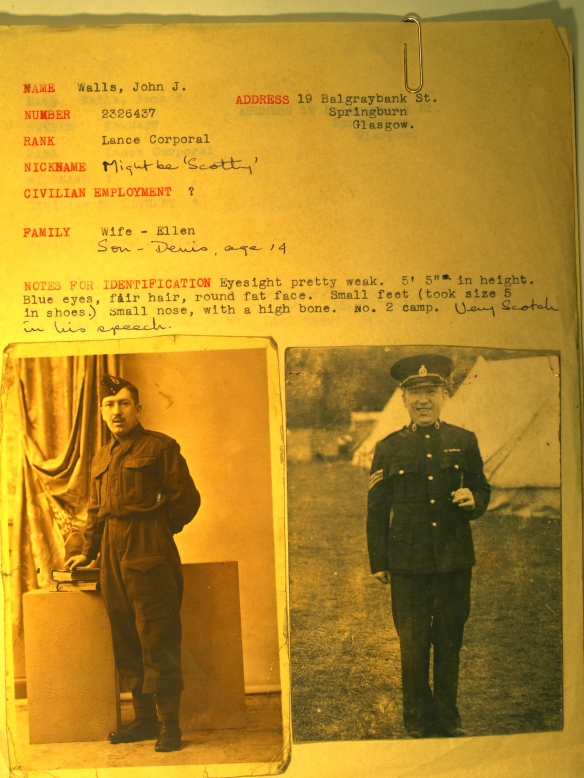
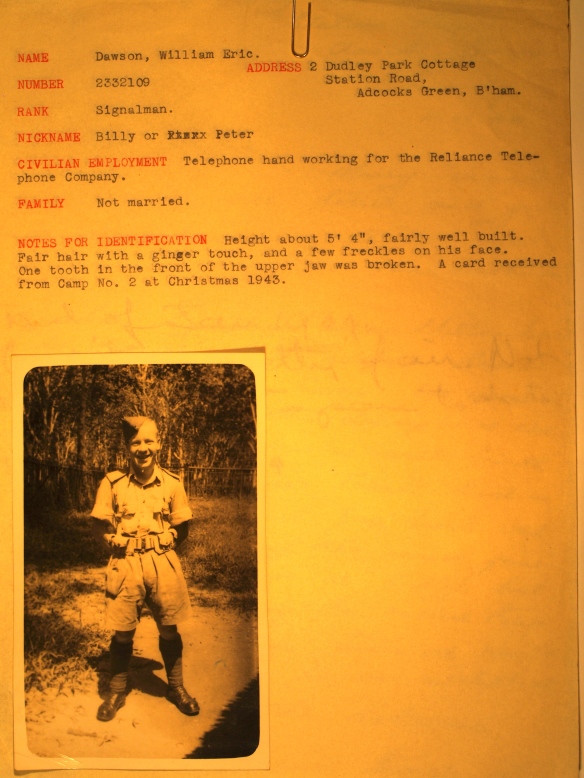
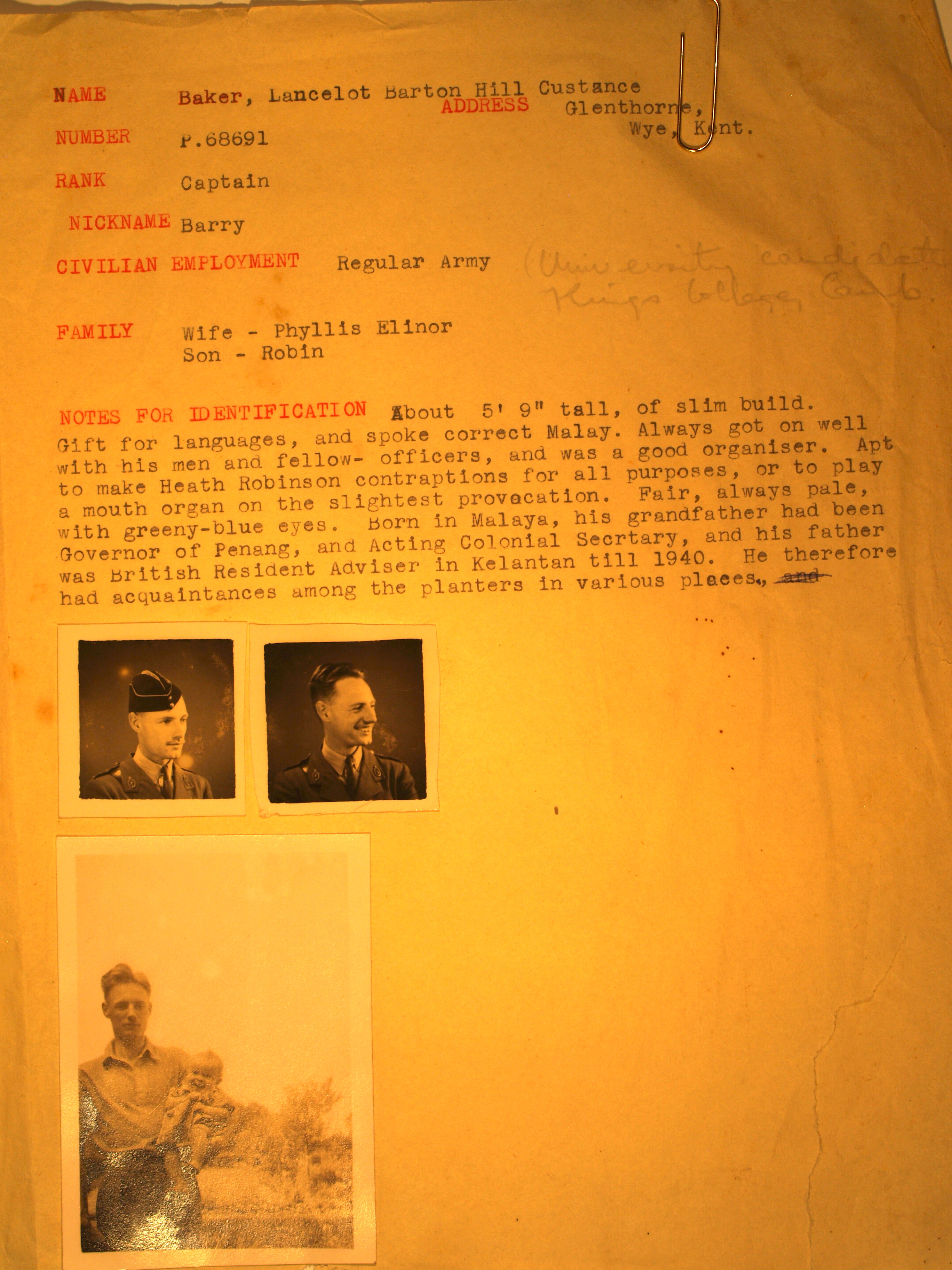
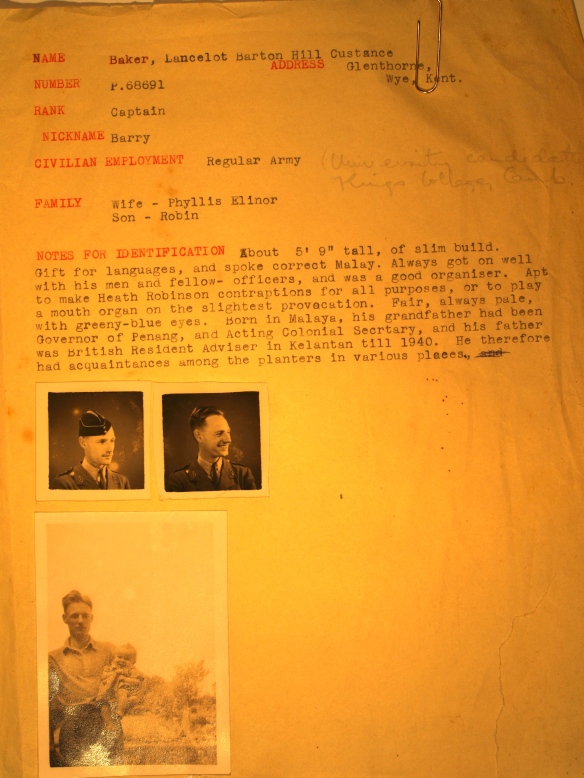
Page of Dossier for War Office

Page of Dossier for War Office

In September 1944 the Hofoku Maru (http://www.wrecksite.eu/wreck.aspx?59634), one of infamous Japanese transport ships (hellships), suffered aerial bombardment from the Allies. Among some 150 prisoners rescued, about 60 were British POWs from Thailand, including men from the Royal Corps of Signals. Interest in their accounts was intense. The War Office planned to debrief each survivor to try to ascertain the fates of the 40,000 British troops missing in the Far East.

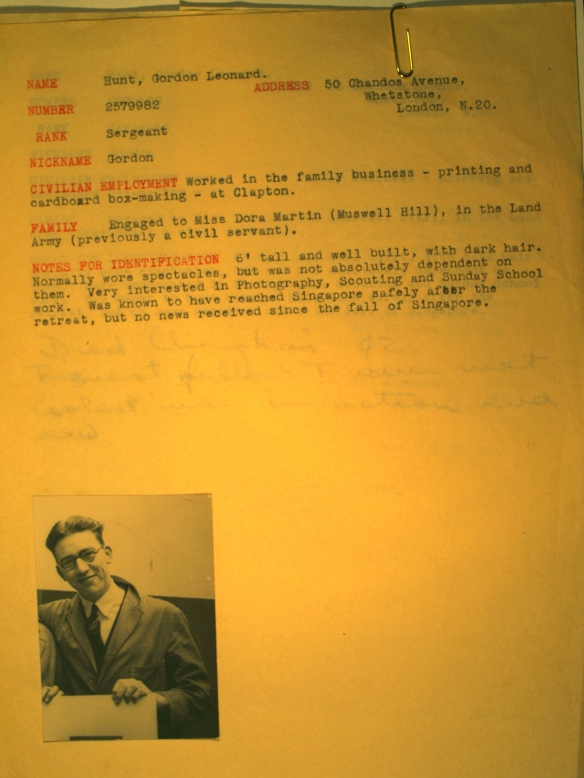
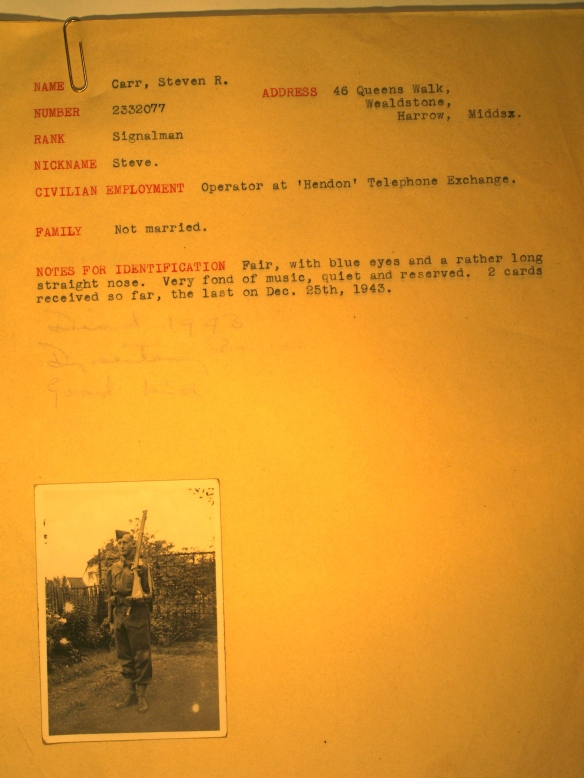
Phyllis, thinking about Barry’s men, contacted the War Office. She realised the immensity of their task in finding out about the thousands of missing men from the few rescued individuals. With the help of Queenie, the wife of Lieutenant Robert Garrod, she decided to compile a dossier with personal details and if possible photographs of the men in 27 Line Section for use in the debriefing sessions. She wrote to relatives the replies flooded in.

Dear Mrs Baker,… it does certainly help to know that someone is personally doing their best for us. … Your heart must ache many a time like mine and we can only pray for strength to bear it. I am enclosing a snap of my husband [George] taken in Malaya soon after they arrived there, I have marked my man with a cross. He is of average height about 5’5” and of a slim build. His hair is medium brown and blue eyes. The only prominent feature is his nose, which is rather big.

In civilian life my husband was employed at John Walton’s Bleach-works, a firm which belongs to Tootal, Broadhurst, Lee, Co. Ltd., but which always goes under that name. His dept at that time was Anti-Crease, you will remember Tootals Products are famed for their crease resisting properties, that was a part of his job, treating the material to be crease resisting.

(George had already died on the Railway, probably of dysentery, on 8 August 1943)

Dear Madam I am writing on behalf of my sister Mrs Bamford as her and her husband is no scolar and I have to do all the writing for them, now in regards to her son William Bamford which is a prisoner his Mother had a card from him last July 1944 to say he was alright working with pay … as far as we know he had no nick name just Willie he did not speak very clear the last time we seen him but he had false teeth before he went oversea but we did not have the pleasure of seeing him with them in before he went away, … now I do hope and trust you may be able to send his mother some good news concerning her son as he is their only child and they are just living for their boy.

(Willie had already died of septicaemia from a tropical ulcer in Tha Khanun on 30 September 1943. Willie was, according to another POW, a: ‘Good kid, 100% well liked by everybody. Died quickly’.)

Sometimes the information was lost in an outpouring from desperate relatives.

Dear Madam,    In the first place I am not very good at letter writing, so I must ask you to excuse me if this is badly written…

He is my Grandson and I brought him up from a Baby having lost his mother and father. and unfortunately I lost my Husband so I was forced to put him and his brother into the National Childrens Home and he had just finished serving his time at the printing Trade, when he was called up. so I don’t think I have seen him for about 3 1/2 years. in the first place he was sent to Malaya, and no doubt you know what happened their, when the Japanese got their. So having received that card at Exmas it is a little bit assuring don’t you think so, although they are such a long time before they reach you, one never knows as they are not dated, as their is a person who lives close by me, and I believe her Husband is in Siam well he wrote her a card in May and she has only just received it. But I must tell you that I send him a Japanese P.C. one a fortnight and I address it as this. A.H. Newton 2361041. Signalman, British. P.OW. Sandaka. Borneo, and I also have to put my address, but of course whether he receives them or not that is another matter, but it is not for want of trying for I do my best. and occasionally I write to the Red Cross in fact I sent to them at Christmas asking them to put a message of 10 words through for me so you see I am not backward in doing all I possibly can to try and let him hear from me.

I am every so sorry for the Relatives and friends of all those poor fellows that were on that Ship In fact for all those who are going through such a terrible time in this bitter cold weather, it is Heartacheing when you think of it all. not only our poor fellows but all of them, that has been done to Death, I sometimes wonder why God lets such things happen, although we have been bombed out of our home, that is nothing compared to what they are going through. I am sorry to say that I only have one Photo of my Grandson and that I cannot spare, but I have one that was taken at the Home if you would care to see that. Well I think I have told you all I know, and I wish I knew more, but I do hope what I have said is correct so I will just go on living in hopes and trust in God and pray that we may come together in not so long a time so wishing you all success in your most trying work…

Phyllis extracted all the information from the letters and made a page for each man (including many not on 27 Line Section). Finally, on 12 January 1945, Phyllis went to the War Office and handed in her dossier to a Mr Rogers. He did not know this at the time, but he was going to hear a lot more of Phyllis between now and late 1945.

More pages from the dossier.
OLYMPUS DIGITAL CAMERA

OLYMPUS DIGITAL CAMERA

OLYMPUS DIGITAL CAMERA


OLYMPUS DIGITAL CAMERA

Mixed fortunes

The week has been disconcerting.

I have, with relief, finished reading yet another book I did not enjoy very much (I swear the last time I will do this), though it did travel across countryside I am fond of. At least I am only reading three books now. 

Every attempt to settle to writing on my new novel has been thwarted, however my finished novel has had a bite from an agent… I am not holding my breath.

I have been working on the Far East POW book again (new post tomorrow night).

In the garden warm weather has led to some strange anomalies. A spring clematis, Wada’s Primrose is flowering.

DSCN4521

Another maple is only just now shedding its autumn colour.

DSCN4519

But sadly one of my favourite maples, Sengokaku, was showing canker and today I have had to cut a big stem out of it.

Tomorrow I shall be at a Lindy Hopping workshop all day – happiness!

Small is exceedingly beautiful

Pencil drawing – Amy Green

Pencil drawing – Amy Green

Yesterday we went to a private house for a small exhibition of drawings by Amy Green. Amy’s work has moved over the years from large paintings to the small drawings that are now her exclusive output (but who is to say when or if that will change again). The pencil work is exquisite and repays nose-to-paper examination, or even a magnifying glass.

My photographic skills are not up to this task, but here is a flavour of the work.

DSCN4482

The way each drawing occupies a page with enough space and looseness, gives them a very calm quality.

DSCN4486 - Version 3

DSCN4486

Pencil drawings – Amy Green

Pencil drawings – Amy Green

Amy is my daughter, but I safely say that my appreciation of her work is shared by many others.

There are lots of Amy Greens on the net, her work is at http://amygreen.tumblr.com

Operatic tragedy Nutcracker style

I’ve just got to get a couple of things off my chest.

I had been looking forward to my first production of the early Verdi opera Sicilian Vespers for some months. I was a little concerned by reviews which talked of excessive violence. This opera is a political tragedy set in the 12th century and murder, rape and treason are very much at its heart. HOWEVER, the director had decided to set it in the 18th century (when it was first written and performed) in ballet mode. The cast of Swan Lake appeared to have strayed onto the stage (and were promptly ravaged en masse), they reappeared several times for more of the same treatment. The villain doubled as a distinctly camp dancing master. The Sicilian conspirators lined up at a bar to execute ballet steps and the executioner was a barely-clad child-as-cherub with an axe.

There were some very clever wheezes when the audience appeared to be watching themselves on stage, the singing was often beautiful and moving AND the saving grace was the sublime music and the conducting skills of Antonio Pappano. But… I like tragedy to be tragic, I want to be moved to tears not giggles.

Grouse two. I read one of a series of books by a popular historical fiction writer (for a book group). I was given some facts I never knew. Fine. I was also treated to a scummy, slanderous, prurient version of the mental state of several historical figures. I was left with a feeling of disgust – a real mental indigestion.

Here is a suitably sad silver birch in winter to express my feelings.

Betula Tristis

Betula Tristis

Winter Walk

We took a friend to Anglesea Abbey and the gods were kind with the weather.

Anglesea Abbey, Winter Walk

Anglesea Abbey, Winter Walk

DSCN4472 DSCN4473 DSCN4476

When we reached home our own copper beech was showing off its autumn glory too.

Fagus sylvatica rohanii

Fagus sylvatica rohanii

Chorus Girl – POWs 19

In Chungkai camp over the period late 1944 to early 1945 there were some highlights in the POWs lives, in particular the theatre provided not only distraction but some lifelong happy memories. Barry remembers:

In the summer of 1944, one of the Dutch POWs started a concert party and built a small stage. I was co-opted into the early productions as a stage carpenter and odd job man. Later on a fine new theatre for plays was built and used by several different groups of producers. As a small slim, handsome young man and a good dancer, my true potential as a chorus girl and romantic actress were eventually recognised. Most of the shows were mixed variety concerts with a line of chorus girls.

Cast includes Bob Garrod & Barry (Custance Baker)

Cast includes Bob Garrod & Barry (Custance Baker)

Leo Britt, a Corporal in the RASC, put on a number of straight plays in which I had minor parts. Leo was very strict with us ‘girls’. Report to the theatre after first rice and from then on wear skirts and high heels to become used to moving like a woman. Some of us became anxious that we might possibly be becoming ‘too too’ girlish, and to prevent this we kept a stock of barbells and weight bars (bamboo and logs) behind the stage, which we could lift from time to time as an assurance that our manly muscles were still there.

The parts for the plays were either copied out from books, which we happened to have in the camp, or more often written down by someone who knew the play well from having acted in it or produced it before the war. In my best scene (in Hay Fever), twisting around on a very hard bamboo sofa with the host, I was often worried that our kisses might cause giggles or rude comment, but we got away with it and the host, Leo himself, once whispered to me, “They’re taking it OK, do it just once more”. So we did, and the Japs who came every night and sat in the front row just loved it.

A small part with Dickie Lucas, the main leading lady at the time in a Café Colette show has given me my best-loved anecdote. We did a dance routine to the tune of “Yam” a popular song of the thirties. We danced separately and then as a pair, finally in the chorus line. When walking back to my hut after the show I overheard two soldiers, one of whom I knew, discussing the show. “Those two fucking tarts, they were more like real fucking tarts than any fucking tarts I’ve ever met”. My best theatre crit.

Other members of Barry’s original unit, 27 Line Section, who fetched up in Chungkai, were also stars of the stage. His lieutenant Bob Garrod acted in a very successful production of “Night Must Fall” in June 1944.

Night Must Fall  Chungkai Theatre

Night Must Fall Chungkai Theatre

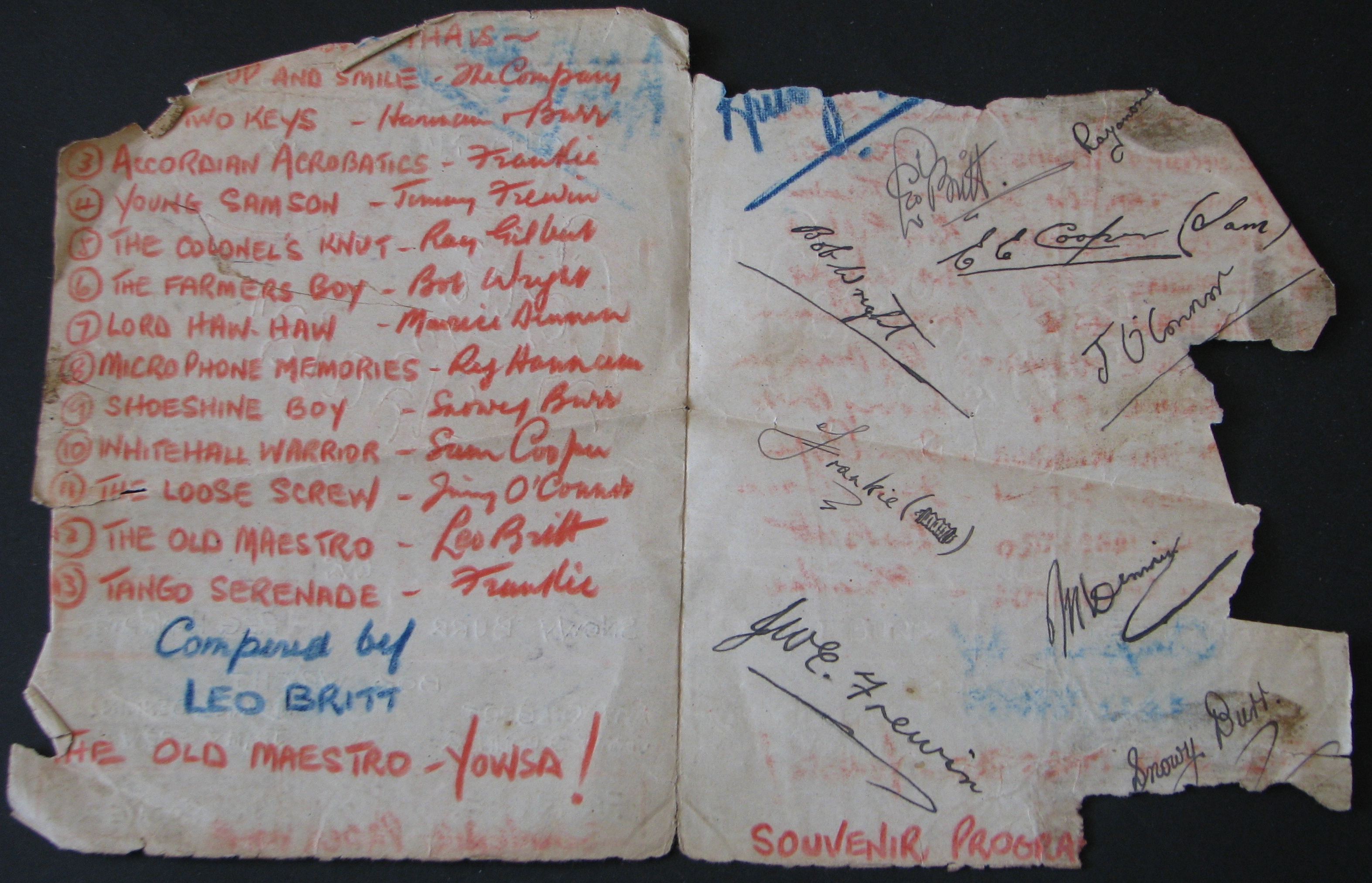
Meanwhile another member of the unit, Reg Hannam, was still on the railway driving lorries on maintenance work and in spite of this also performing regularly. His son (also Reg Hannam) found concert programmes for shows in Brankassi Camp at 208 km up the line. There was clearly a flourishing cabaret act in which Hannam and his friends performed to entertain their mates.

Reg Hannam in Love Thais

Reg Hannam in Love Thais

It is difficult to overestimate the morale-boosting effects of theatrical performances. The enthusiasm and dedication of those who performed were crucial to the survival of many of their fellow POWs. How much these events mattered can be seen by the fact that such fragile mementoes were preserved.

The cast of Love Thais

The cast of Love Thais