Carmen in the Garden

Carmen, with an orchestra of 6 and a cast of 6 in a marquee in the grounds of a beautiful house (Thurston End Hall) in the wilds of Suffolk.

DSCN4137 DSCN4139

A balmy summer evening, a garden smelling of roses, everyone picnicking happily on the grass, (very high quality Portaloos), and an entertaining, well sung interpretation of Carmen. This was in English (which I don’t usually like) but as they had set it in a New York bar with a boxing theme, it worked perfectly and I heard every word. Escamillo, the Toreador, was a boxer. Carmen, Frasquite and Remendado were immigrant siblings running a bar. And Jose was a new police recruit with a murky past, while his commander, Zuniga, ran a protection racket. This cast of six managed to be chorus and all parts, it was impressive, fun and wonderful to hear. The orchestra created amazing effects.

Forgotten African heroes

Last night Griff Rees-Jones had a programme about his father, an army doctor, posted during WWII to The Gold Coast (now Ghana) in West Africa. The African regiments who did much of the fighting to free Burma in WWII are largely forgotten in the films and popular history books. Apparently the British Establishment assumed that all Africans lived in the jungle and would therefore be used to the conditions in Burma. Most of those who enlisted were brought up in grassland areas.  Griff interviewed amazing 90-year-old veterans of the campaign. Very moving and a salutary reminder of the people to whom we owe our freedom.

The programme was called Burma, My Father and the Forgotten Army and was on BBC2 on Sunday 7 July

The evening buzz

I was weeding as the light was fading and became aware of a continuous buzzing noise. The great lime tree next door, covered in blossom, was almost shivering with bees. You could hear the humming right across the garden.

DSCN4160

Swifts were screaming over and round the house and I could hear the nesting martins burbling away under the eaves. A second nest has been inhabited late in the season and is full of young. We are not the only ones enjoying the hot weather. Mind you, I had to rescue some very limp lettuce earlier today.

Roderick Suddaby – much sadness

The wonderful supporter of many researchers on Far East prisoners of war has died. He was, until 2010, Keeper of the Department of Documents at The Imperial War Museum. I got to know him after this when he had semi-retired. He was the most incredible source of information for those of us with relatives who had been POWs in the Far East. With great enthusiasm and patience, he listened to me as I talked of the documents and memoirs of my father. He used complicated sources to discover small hidden details about the 69 men who were in my father’s unit. He read and commented at length on my father’s memoirs and a draft of my book of WWII letters. I emailed him only two days ago, and I will never receive an answer, which I find devastating. He not only had an irreplaceable fund of knowledge and awareness of the materials in this area, but he shared them so generously, putting researchers in touch with one another. There is a short film of him on this link.

https://www.facebook.com/pages/Researching-FEPOW-History/279314032101180?hc_location=stream

‘Don’t stand still.’ Changi to Bukit Timah – POWs 8

In September 1942 Barry’s Line Section was sent by their captors, as a working party, from Changi to Bukit Timah near Singapore town. They were to build a memorial for soldiers of both sides killed during the invasion of Malaya. They marched the 16 miles to the new camp, carrying everything they owned. Barry remembers:

 As our party, No. 27 and the rest of No. 1 Company, arrived at the site one of the POWs already working there whispered to our Commanding Officer, “Just keep the tools moving. Make a noise. Don’t stand still.” We noted guards standing around the site all with fixed bayonets and each of them carrying a stout bamboo rod to encourage the laggards. We had not met this situation before as none of us had yet experienced the sensation of working directly under the eyes of a Jap guard.

Some of my Glasgow men had inevitably been in prison at some time in their careers and we had good advice from them. “Keep your head down, do not be noticed. Do what you are told to do and never give the slightest hint of reluctance. If you are hurt or very tired carry on with every appearance of bravery and co-operation and perhaps a guard will take pity and give you a rest.”

Some men seemed quite unable to grasp the fact that their very survival depended on their maintaining a very humble appearance, obeying orders, combined with eagerness to please our masters. A sour look, a shrug, a turned away shoulder or any such gesture earned an immediate swipe, accompanied by loud shouts.

Butterfly in Venice

Since EG had three day’s work in Venice, he naturally needed my support. I learnt more than I probably needed to know about managing digital archives (though a session on appraising records was very helpful. I will now write a plan of what needs keeping, set a timetable, then select and delete accordingly. The loft will lose some of it boxes-of-paper insulation, but there will be less to deal with in the long run.)

I love Venice.

Canaletto lives.

DSCN4049

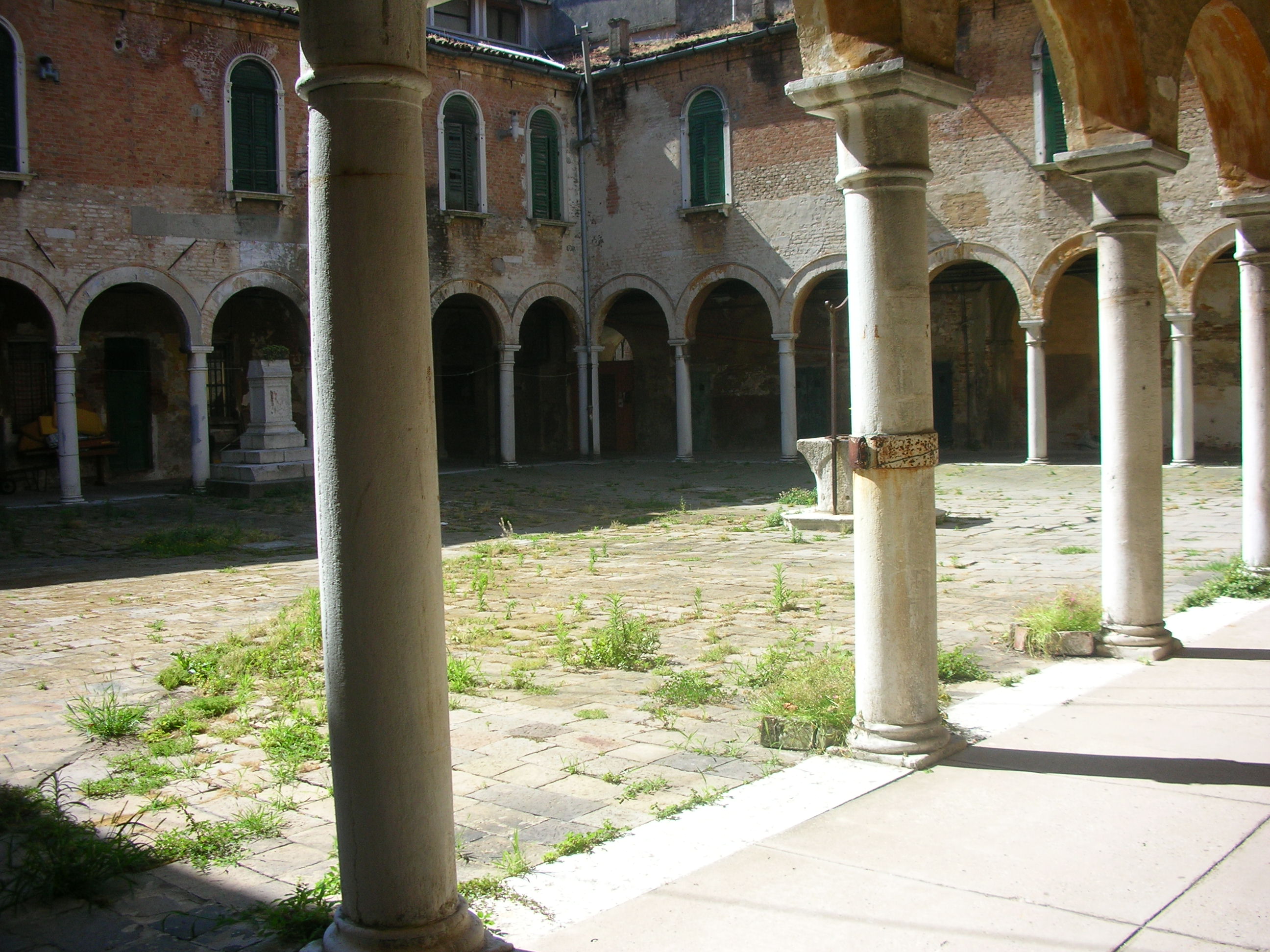
Walk one minute in any direction off the main drags and you find a cool, empty, grey-green world.

DSCN4106 DSCN4070

DSCN4025

DSCN4032

We got lost in one empty quarter and were rescued by a cheerful elderly lady with a trolley who marched us to the vaporetto stop. She explained that she was a little deaf, yet she chatted, coping well with my stumbling Italian, and at the same time guiding my footsteps round every small obstacle (polythene bag, dog mess, loose flagstone).

And then there is La Fenice opera house. We were able to buy (restricted view) tickets for Madame Butterfly and spent a happy evening peering over people’s shoulders and listening to a terrific production. The humming chorus was sung from the back of the auditorium and during Butterfly’s long night of waiting, after she had left the stage, a backdrop came down leaving Suzuki and the boy asleep in view. Then vast and incredible cosmic fireworks were shown while they orchestra played to match. We knew none of the singers, but all were good.

A city you could visit over an over again and still find something new.

Bee bath and stupid garden bargains

We moved a funny old home-made brick urn into a flower bed and filled it with water, to match a similar one that we use as a bird bath. We’ve not seen many birds, but it is in full use.

DSCN4118

In January 2009 I succumbed to an offer – a so-called Garden Bargain mini Orchard. I received three bare-rooted named fruit trees: a Moorpark apricot, a Victoria plum and a Sunburst cherry – all guaranteed to flower and fruit in the first year. I planted all three, but was concerned about the resin oozing from a wound on the apricot – I was told to report back again later in the year. Neither the cherry nor the apricot flowered in year one. The plum flowered; it looked remarkably like an apple, but as a late frost wiped out the blooms, I couldn’t prove it. The apricot continued to weep, but I had to agree that it was still alive.

DSCN1607

Year two, still no flowers on the cherry or the apricot. The plum was definitely an apple, but the fruit fell in a late frost before I had photographed it. The apricot was still alive and its wound beginning to heal. I stopped making any attempt to contact the vendors.

Year three – nothing. We moved the apple and bought a Victoria plum.

Year four – March 2012. The not-plum apple flowered well and set fruit, the new real plum flowered, but did not set fruit. The cherry had a couple of blooms, but no fruit. The apricot flowered, looked stunning, and set some fruit. Late frosts again wiped out all fruit.

OLYMPUS DIGITAL CAMERA OLYMPUS DIGITAL CAMERA

Year five – three blooms on the apricot and no fruit. The new plum, the not-plum apple, and the cherry flowered and have growing fruit. I can’t wait. I have no idea what kind of apple the ‘plum’ will turn out to be.

Lesson learned.

Vision in one eye?

Oliver Sacks did end up with vision in only one eye and in his book (http://www.oliversacks.com/books/the-minds-eye/) he describes this experience and its effect on him. How any one individual would experience vision with only one eye, would vary depending on the age at which that vision was lost, and how the brain adapted to monocular vision.

I mention this as there seems to be a question on my dashboard, though it has not appeared elsewhere in the blog. If you are interested, do visit Oliver Sack’s website and The Mind’s Eye is a great read.

Spinach marathon

There will be a few days quiet on the blog as we will be travelling. I find that I have a great inclination to tidy up if I am leaving the house so I finally decided to cut all the bolting spinach and found that there were masses of edible leaves. So hours later after washing, de-stalking and blanching half of them I have some for the freezer, some for the fridge and some for supper.

I do find heucheras the prettiest and most versatile of plantsDSCN4017DSCN4019

Silence in England – POWs 7

After the Fall of Singapore in February 1942, Phyllis and the other wives and mothers of 27 Line Section wait anxiously to hear what has happened to their men. The silence is absolute. No one in authority can tell them anything, The men of 27 Line Section could be dead, evacuated or prisoners of war. Phyllis has addresses for many of the wives and mothers. She sends out a circular and several write to thank her for: “…your kind letter which has given me new heart at a time when I have nearly made myself ill with anxiety.”

Phyllis starts writing to Barry: “Dear Love, I haven’t written a letter for a fortnight hoping each day may bring me good news  from you…”

Nine months later she is still writing and waiting. So are almost all the other relatives, though there is now a presumption, unless they died in the battle for Singapore, they are now prisoners of the Japanese. The War Office finally thrash out an agreement with Japan to exchange information and send post using the Swiss Red Cross and a complex route across Russia. Relatives can now write – though it is into the blue and they still have no idea where the men are. For the Japanese, overwhelmed by the numbers of prisoners they have captured, the gathering and release of names is very low priority.

Finally, on the 12 December 1942, Phyllis hears that Barry is a prisoner. She writes :

My own dear husband, At last that blessed news has come to me – the assurance that you are a prisoner of war. I am awaiting the letter from the war office now with further details. The relief has left me a little lightheaded, I think. Dear darling, I fear my letters have been dreadful lately – but it was like holding a telephone conversation with a deaf & dumb person. Things have become real again now, & worth while.

Phyllis is lucky and she knows it, because she keeps in touch with the other wives and mothers. Some have to wait several more months for that news. Others hear nothing at all for another two and a half years.