New acer seedling

In the last couple of years, we have had many seedling round the maples, particularly Matzukaze. I am very excited by the two-year-old one below, which has looked delightful all year. The nearest other-parent maple is Sengokaku, but there is also a green dissectum in the garden and this looks a more likely parent (there is a second bronzier seedling in the same pot.

Matsukaze seedling

Matsukaze seedling

Yesterday we travelled through Suffolk (UK) in brilliant sunlight. Even though it is November many trees are still in full green leaf, others sporting every shade from butter yellow to crimson. In our own garden the trees and shrubs showing their best colour for many years.

DSCN4438 DSCN4458

Disintegrating Earth – don’t panic!

I have just finished Jared Diamond’s book, Collapse: How Societies Choose to Fail or Survive. I found it riveting, though being so full of information it is a substantial read. He looks in detail at societies, ancient and modern, that have failed, imploded or are now struggling (e.g. Greenland Norse, Easter Island, Maya, Rwanda, Haiti etc). He analyses the  many factors from natural climate change (cold periods, drought), through human activity (deforestation, poisonous mining outfall) to political (every type). What emerges clearly is that there are nearly always multiple factors at play many of which we can, if we have the foresight, control (population, pollution etc). He also points out that some nations in the past have perceived their problems and acted in time (e.g. Japan two centuries ago and the Dominican Republic more recently to reverse serious deforestation). The chapters on China and Australia are packed with information that was much of it news to me. I should note that Collapse was published in 2005, but the data remains entirely relevant.

This book also showed how people have individually and collectively persuaded those wielding power in politics and business to change and sort out some major problems. The remaining problems are an immediate threat and will affect the next generation. But I have been left with a determination to make changes in my own small corner.

This positive feeling was enhanced by the delightful lecture broadcast on the BBC This World a couple of days ago titled: Don’t Panic – The Truth About Population, given by Professor Hans Rosling (statistician and physician) http://www.bbc.co.uk/programmes/b03h8r1j . With gentle humour he exposed the misapprehensions of the majority of first world people about the life and problems of the third world (we didn’t know that the birth rate in Bangladesh is now under 2.5% and world literacy is now at 80%). There are gigantic challenges, but we are, he claims, doing better than we think.

Those of us who have, must learn to have a little less, share scarce resources and manage those that are remaining a lot better than we have to date. I didn’t mean to sound quite so evangelical. Back to the DIY insulation and put on another jumper.

Meanwhile roses are still blooming.

Rosa Susan

Rosa Susan

WWII letters across the world – POWs 18

In January 1944 , in response to a circular letter from Phyllis to the relatives of Barry’s men in 27 Line Section, several of them wrote back to say that they have had cards from their men. Although one wife writes:

…You see, Mrs Baker, I received a postcard from my husband in August but it had taken a year to come from the time of writing and he was fit and well then, next came the War Office communication confirming that he was a P.O.W. [more than a year after he went missing].

Just a few weeks later the War Office notified me that my husband had died from malaria in Thai Camp and that the date of his death was unknown…

While devastating for this family, this information may have given false hope to others, thinking that if they had heard nothing their men were still alive and well. Phyllis, still without any direct communication from Barry since early 1942, keeps sending the brief permitted typed slips.
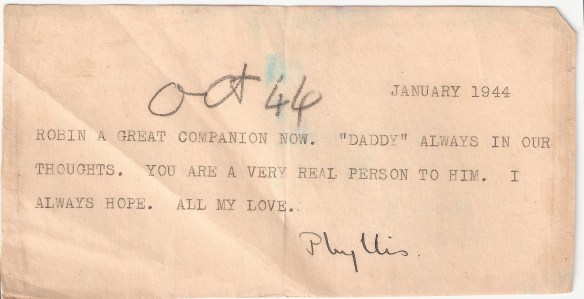
Phyllis notes1

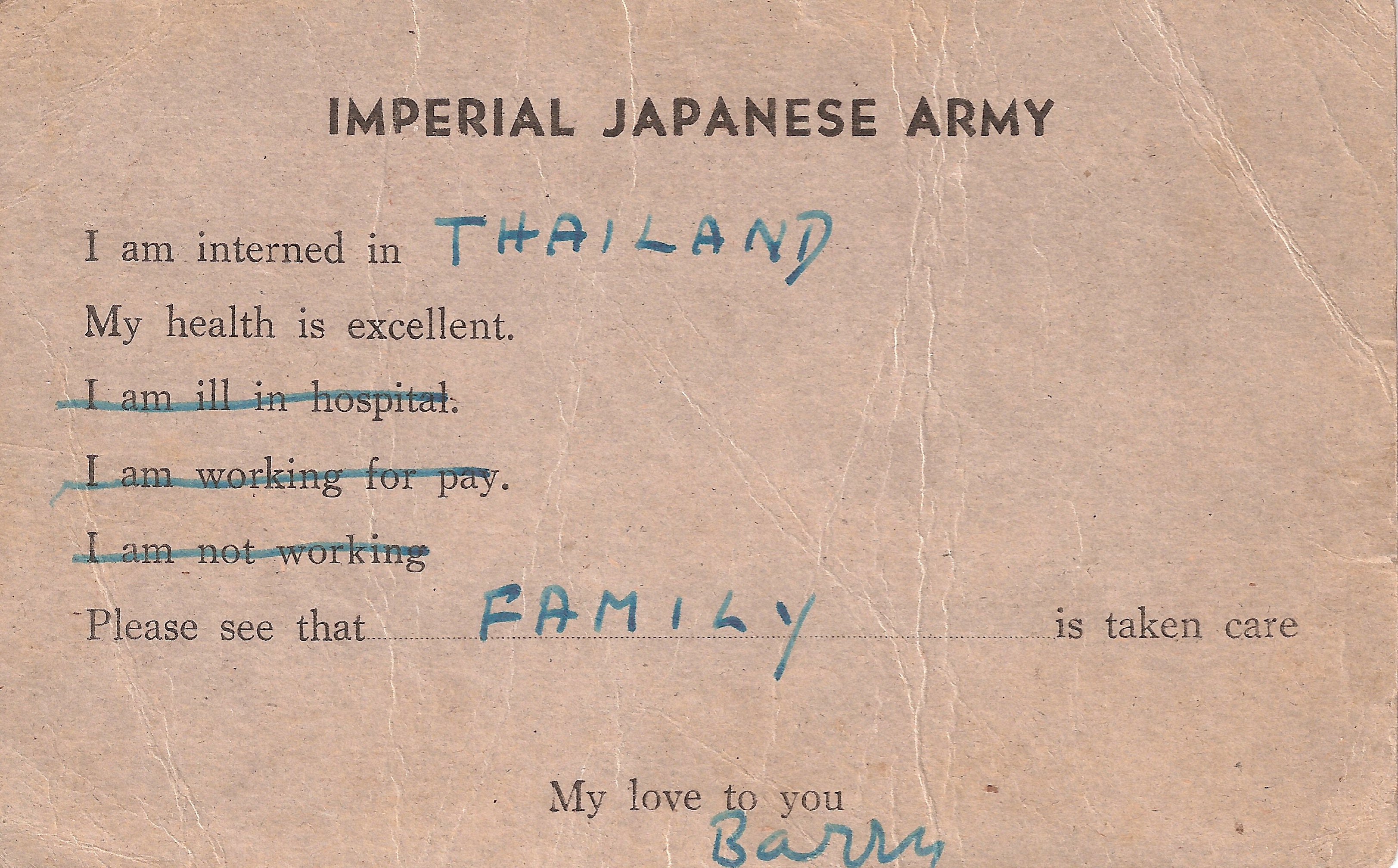
This one, sent in January 1944, miraculously reached Barry 9 months later.

Sometime later in January 1944 Phyllis had her moment of hope, a POW card from Barry reached England. This was addressed to his parents house and the Post Office readdressed it across the Atlantic to Barry’s parents in San Francisco, where they were broadcasting to the Far East in Malay. This small card, having traversed the globe, reached Barry’s parents who then cabled Phyllis with the good news.

BCB POW card1

BCB POW card1R

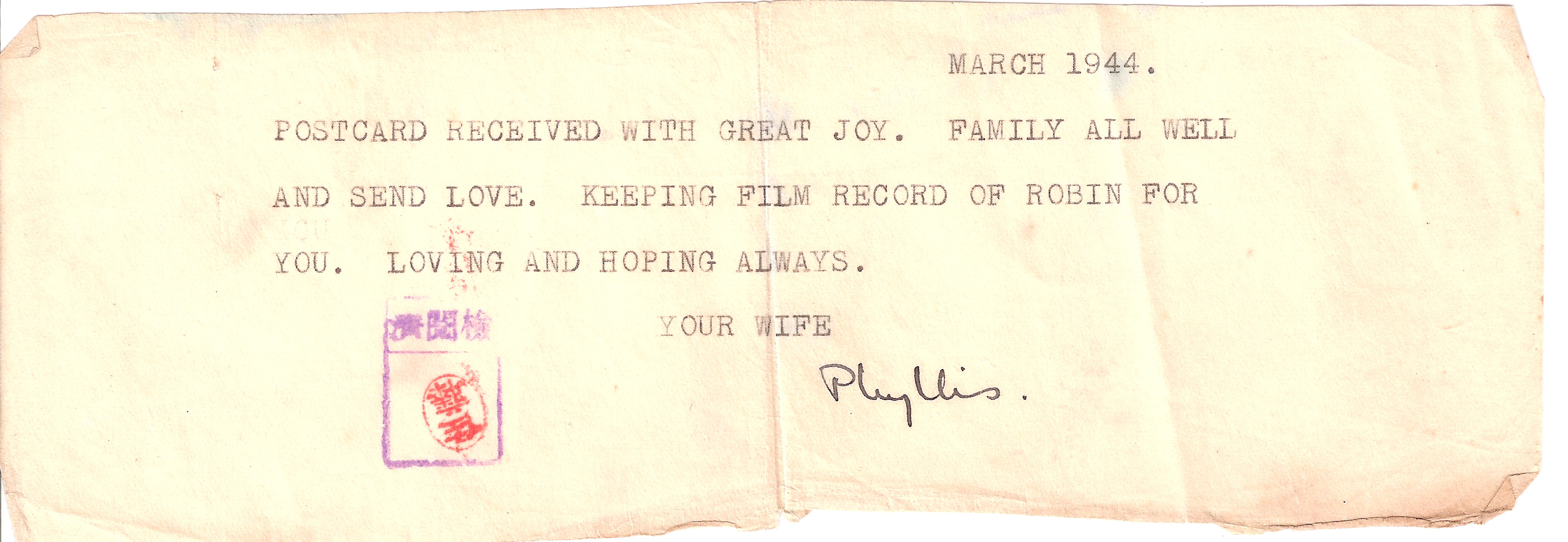
Phyllis was now among the lucky ones, she sent another slip to Barry.

Phyllis notes2

And she shared her joy with the other relatives of 27 line section. This reply, from the wife of one of the men who saved Barry’s life nine months earlier, shows that by now relatives are at least partially aware of the bad treatment of Far East POWs.

Dear Mrs Baker, Many thanks for your nice letter, and let me say how glad I am to know that your husband is safe and in the same camp as my own husband. [Relatives naturally assumed that “Camp or Group 2” referred to a fixed Prison camp.]

Things seem to be moving a bit now, with the Japs getting a foretaste of what’s to come, so maybe a few more blows will make them decide that better treatment of their prisoners would be beneficial.

Also that twenty-five words included the date, which I had not known, so I’m hoping, that my previous notes, have got through.

I was most interested to hear that you have a small son Mrs Baker, as I am very fond of children, and having one of my own, I know what a comfort he must be to you. My little boy is nearly seven, and it’s due to him that I kept going during the long period which his daddy was posted as missing.

It will be a wrench parting from him to take a job, but in the circumstances I think it would be best for you and will help to keep you from worrying. Often I have wished I could take a job myself, but having my father and sister to look after, (they are doing important work) along with my son, I seem always to have plenty to do.

I don’t think any more mail has arrived from the Far East since December, and although it’s unlikely that another postcard will arrive for a time, I’m just longing to hear that the men have received some mail from home.

Badly off as we think we are, it’s so much worse for them, not knowing how things are at home or how their dear ones are faring. Your father-in-law’s remark that the government hasn’t just let things slide, is very heartening, since he is in a position to know, so it’s up to us to be as brave and patient as our men, and who knows, it might not be too long before they return, when we will be able to make up to them a little for what they have gone through.

Hoping this finds you and your little son well and happy.

In late 1944 this correspondence that Phyllis kept up with the relatives became crucial when some Far East prisoners were rescued after the sinking of a transport ship.

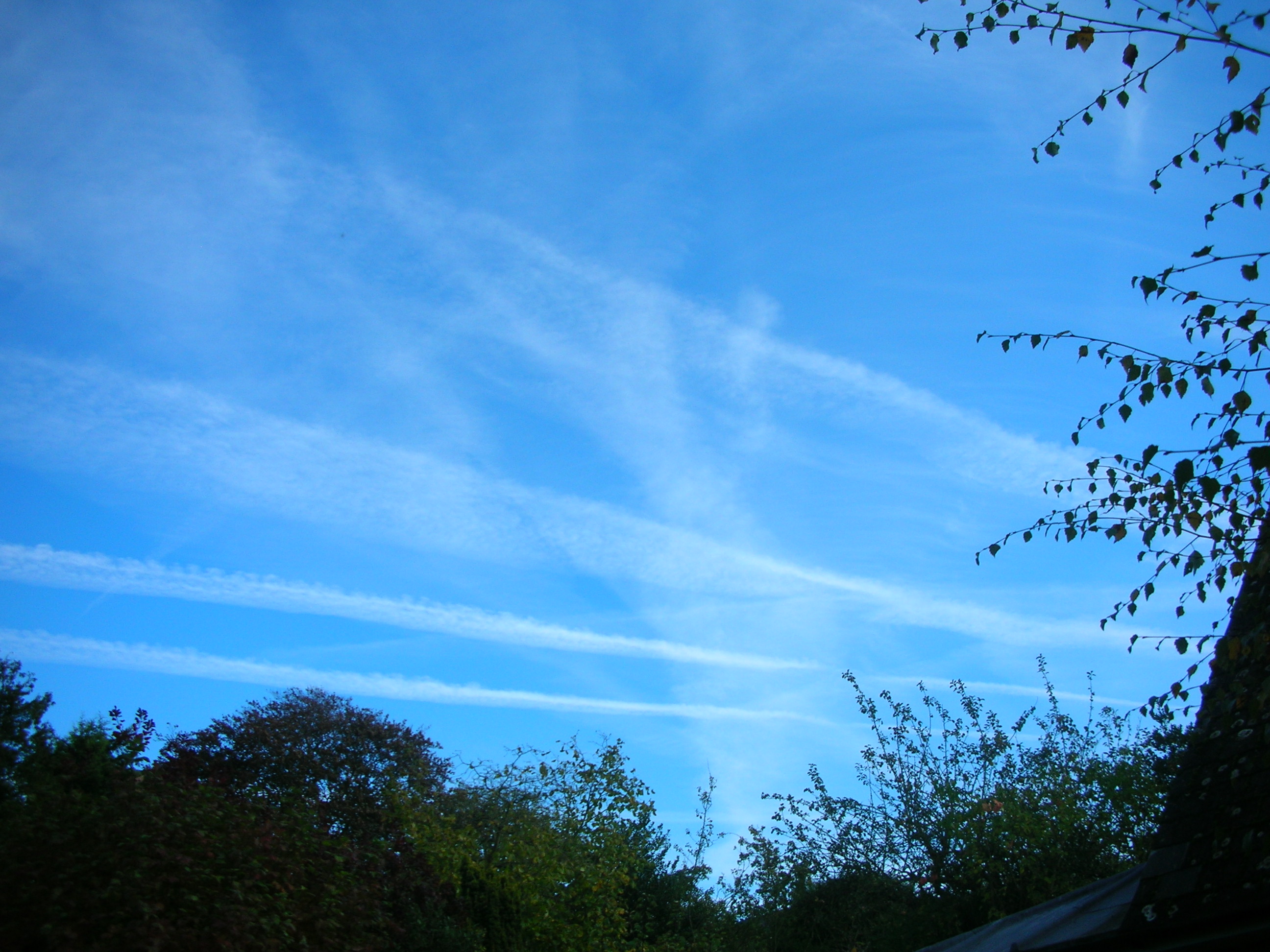
Contrails in November sky and white nerine

I don’t know where everyone was going, but it was a day of amazing contrails, from early morning.

DSCN4428

To midday.

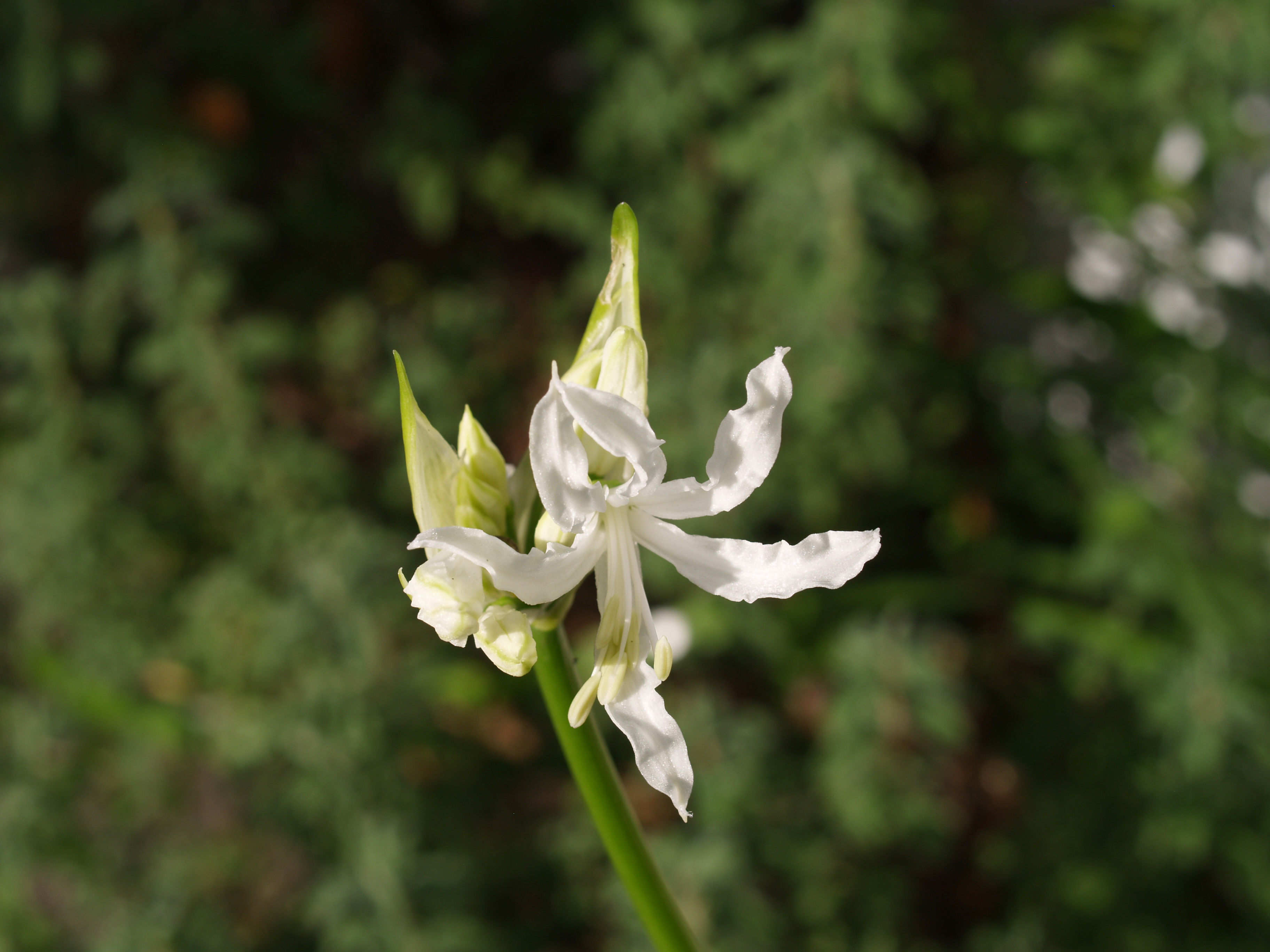
DSCN4434 DSCN4432Great joy! The lovely miniature white nerine I was given last year is coming into flower.

white nerine

white nerine

The creative process?

I’m having a strange experience. Yesterday I finally gave myself permission to play with the novel I started writing in March – and haven’t touched since April. I love this phase, when ideas are in free play with no worries about the end product.

I have two scenes in Paris in 1947 and 1958 and I can hear Edith Piaf’s Milord playing in the background. There is an office in modern London and a house in Highbury, some digs in wartime (WWII) Oxford, a scene somewhere in America (seriously vague that), a musical mishap in Moscow with comic overtones. Some drafts are in the first person, some third, some in the present tense some in the past.

In the past I have started with a structure, like the armature of a sculpture, and let the story grow up and around this frame. This new story has a single central figure with plotlines radiating outwards, particularly into the past. I don’t at present see how it will ever shape into a continuous narrative.

Ideas for this book go back several years, and I have been disconcerted to find at least five different opening pages, several vague and/or contradictory plot outlines, some pages of character studies and dozens of unlikely names. There are four people alive and active in one or more of these scenes, but how the two from the earlier period interact with the more recent ones is still mostly opaque to me.

This is an octopus and I really don’t know which arm to investigate first. Actually, it’s more like a piece of knitting, with sections of sleeve or cuff half knitted on different size needles in different colours with different weights of wool.

Since I have created this chaos I should be able to sort out the strands and turn them into a serviceable rope. Hmm. In the meantime, I shall keep on playing Milord.

From Palembang to Chichester – Singing to Survive

Last night we sat in the beautiful open nave of St Paul’s Chichester as thirty barefoot women filed past and took their places at the altar end. These were the singers of the Chichester Women’s Vocal Orchestra, conducted by Chris Larley about to re-create an extraordinary enterprise of WWII.

In early 1942, civilians caught up in the Japanese invasion sweeping across South East Asia, were rounded up and imprisoned. One group of about 600 women and children, from more than 20 nationalities, existed for the next three years in a series of camps on the island of Sumatra. They suffered starvation, lethal diseases and forced labour. For the full story see:

See http://www.singingtosurvive.com

By late 1943 morale had sunk disastrously and cultural misunderstandings between nationalities flourished. Then two women, Margaret Dryburgh and Norah Chambers, were inspired to create a language-free form of music. They created an ‘orchestra’ by dividing thirty women into four groups by voice (First and second sopranos, first and second altos). They then set well known quartet or even orchestral passages for these voices, using vowel and consonant sounds, but not words. The effect of this ‘orchestra’ on morale, cultural relationships was instantaneous – even their Japanese guards responded to the beauty of it.

Last night the Chichester Women’s Vocal Orchestra, with three members of the cast of Tenko, Stephanie Cole and Louise Jameson speaking and Veronica Roberts directing, performed the story. They used letters, poems and interviews with survivors for the narrative. For the musical passages, the choir used the original settings to recreate the  sounds that the women in this amazing jungle ‘orchestra’ made. They sang pieces such as the Largo from Dvorák’s New World Symphony, Beethoven’s Minuet on G, Bach’s Jesu Joy and many others.

The sound was unique and difficult to describe. It had a silky, liquid quality, softer and warmer in tone than orchestral or even string sounds. In a well-judged direction, we were asked not to applaud until the concert ended. This made the interleaving of story music even more spell-binding and fluent and there was a fully deserved standing ovation at the end.

Hospital reader and Lady Almoner – POWs 17

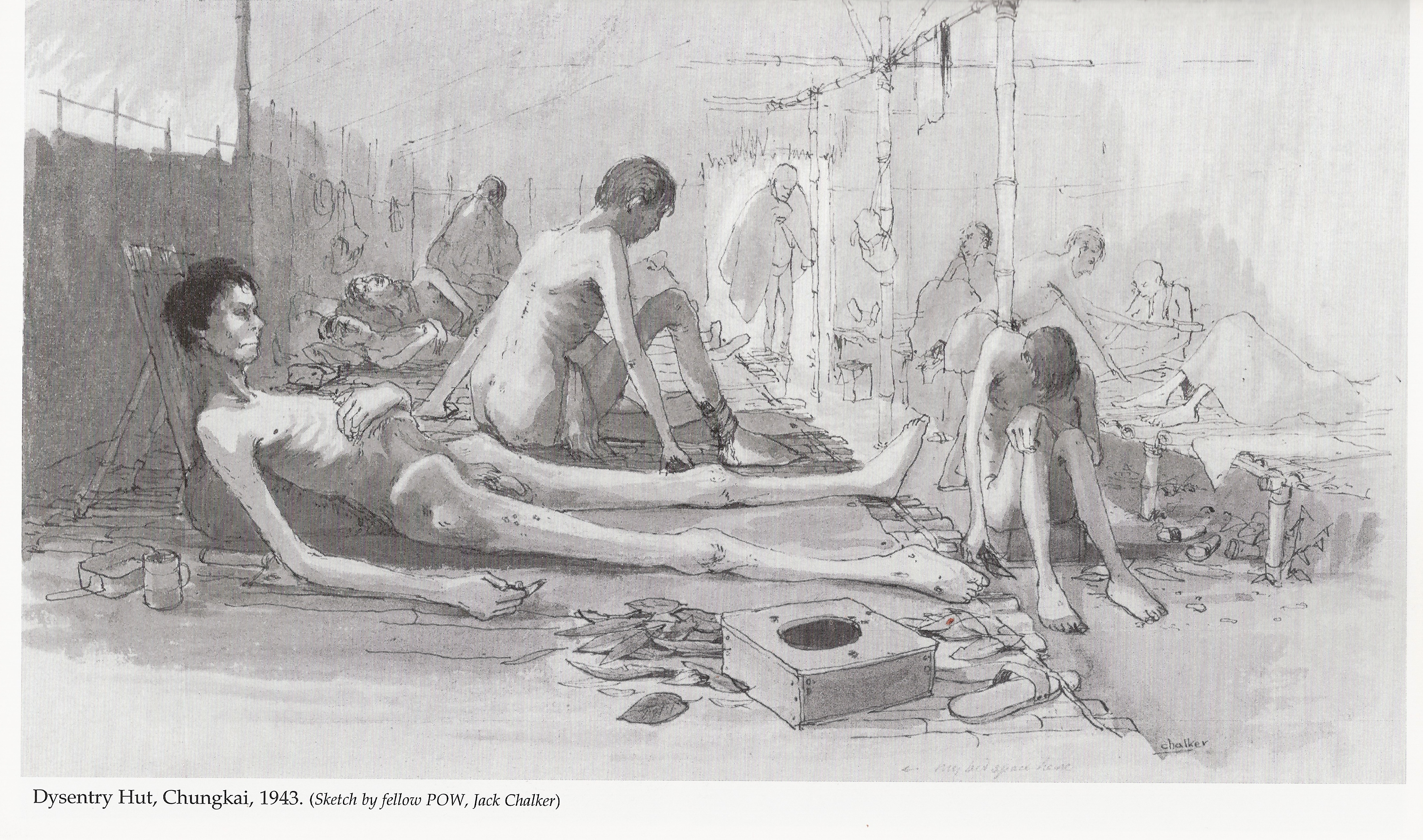
All through spring and summer of 1943 starving and diseased POWs from the up-country railway work camps (in Thailand) trickled south to the bigger camps such as Chungkai. Barry reached this camp in July 1943 and was soon fit enough to do some work.

My first and simplest job was basically as a storyteller or rather reader. I would take a likely book from the camp library and sit down on the end of a bed space in one of the sick huts, and read a chapter or two. Then I would move down the hut, twenty or thirty yards, and read the same piece to another lot of sick men. This was judged to be a useful employment, so I was never called on to join a maintenance party.

In October the two parts of the railway, Thailand and Burma, joined up at Konkuita and from then on sick and dying men poured into Chungkai transported by barges or on the railway itself. Meanwhile Barry began to enjoy the theatre and concerts got up by enterprising prisoners, but found that:

These jolly functions contrasted harshly with our work in the sick huts, which got steadily worse as more parties of sick and dying arrived from up river. We were burying ten, fifteen, or even twenty every day, and it was disconcerting during my readings to become aware that one or two of my audience were never going to hear the next chapter.

From Peter Fyans biography of Fergus Anckorn: Captivity, Slavery and Survival as a Far East POW, the Conjuror on the Kwai

From Peter Fyans biography of Fergus Anckorn: Captivity, Slavery and Survival as a Far East POW, the Conjuror on the Kwai

He progressed from reader to Lady Almoner

The job of Almoner, or “Lady Almoner” as it was called, involved the actual distribution of goodies bought from the welfare fund, to the sick men in the huts. The most useful purchases were eggs, honey, palm syrup, and occasional pots of vegemite, the Australian marmite. There was, of course, not nearly enough for everyone, the M.O. in charge of a particular hut would give me a list of the men due to receive these extras and the quantities for each one.

I did not at first realise the difficulty of the job but it became clear soon enough. Most of the very sick men got nothing at all because, as the M.O. told me, they would die anyway. The extras, very carefully husbanded, would go to those men who were able to profit from them and might just recover with their help but who would die without. At least I was spared the agony of deciding who got what, but every day I was faced with the need to find answers. “I am much sicker than Joe, Sir, why does he get two eggs this week and I get none?” An unanswerable question to which I had to find some reasonable answer day after day. I talked to the other Almoners and had no comfort from them, all in the same position as I was. “Tell them Orders is Orders, and you are just doing what you are told to do.”

Where have all the Robins gone?

Today I was digging up tree roots. Fifteen years ago such activity would have been accompanied by endless whirring of wings and fierce comments if I was too close to a juicy vine weevil. I always used to have at least two in attendance, and once six! (presumably a family). In an hour of work today I saw none at all. Yet they are there in the garden, as I see them on the feeders. I can’t believe they prefer dry grains to live tidbits and I am sure they have not turned vegetarian.

I worried that this Hydrangea paniculata pink diamond (white flowers fading to pink), might not work in this big glazed brown pot. Guess I was wrong!

hydrangea paniculata pink diamond

hydrangea paniculata pink diamond

Reading, reading, reading

I think this article on libraries and reading by Neil Gaiman is clear, persuasive and wonderfully straightforward. I missed it when it appeared and was alerted to it by a Facebook post from a Swedish relative – vive la Internet.

http://www.theguardian.com/books/2013/oct/15/neil-gaiman-future-libraries-reading-daydreaming

Shy saxifrage and bold maples

All day in the garden today. There is so much still in bloom. One of my favourite flowers is this saxifrage fortunei. It is maddeningly slow to increase, but worth the wait.

saxifraga fortunei

saxifraga fortunei


saxifraga fortunei

saxifraga fortunei

Some of the maples are in their most dramatic phase.

DSCN4370

Acer palmatum Matsukaze

Acer palmatum Matsukaze

Harlequin ladybird

Harlequin ladybird

And I have just found a bud on the miniature white nerine I was given last year – happy gardener.